ToolMage
Sign in

Best 1 Staffing AI tools

Popular Staffing AI tools include Spaculus, helping you work more efficiently.

Paid

Spaculus

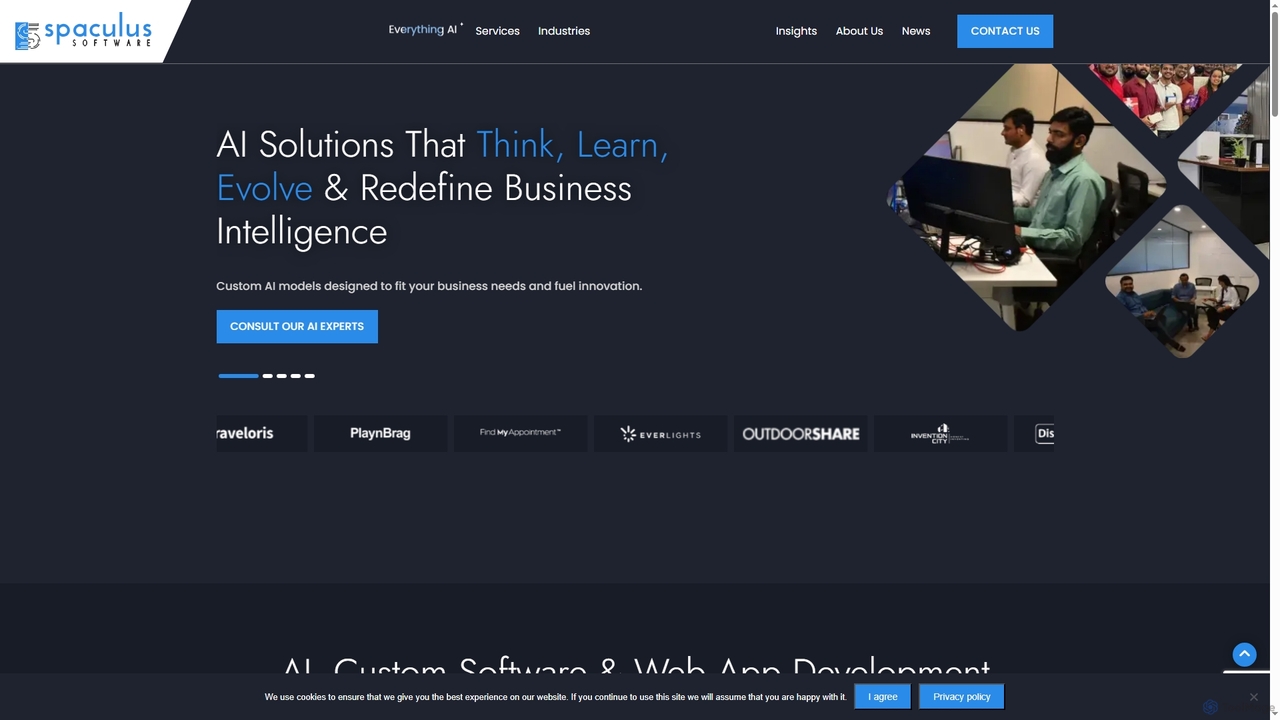
Spaculus is a leading technology company specializing in AI, custom software, and web app development. They provide tailored solutions including advanced AI models, machine learning, generative AI, and intelligent chatbots to help businesses automate processes, enhance decision-making, and drive innovation. They also offer mobile app development and expert AI engineering talent.

Generative Models
Visits 5.7KFavorites 111Likes 109

About Staffing

Staffing AI tools are a category of advanced software designed to optimize and automate various aspects of human resource management, from recruitment to workforce planning and talent retention. These tools leverage artificial intelligence, machine learning, and natural language processing to analyze vast amounts of data, predict trends, and facilitate more efficient, unbiased, and data-driven decision-making. They empower organizations to streamline hiring processes, enhance talent acquisition strategies, and strategically manage their workforce, ultimately improving operational efficiency, fostering a positive employee experience, and ensuring long-term organizational success.

Core Features

  • Automated Sourcing & Screening: AI-powered systems efficiently identify, engage, and pre-screen suitable candidates from diverse talent pools, including job boards, social media, and internal databases, significantly reducing manual effort and time-to-hire.
  • Candidate Matching & Assessment: Advanced algorithms precisely match candidates to job requirements based on skills, experience, and cultural fit, often incorporating AI-driven assessments for objective evaluation and reduced bias.
  • Workforce Planning & Optimization: Predictive analytics forecast future staffing needs, identify potential skill gaps, and optimize resource allocation across departments and projects, ensuring the right talent is in the right place at the right time.
  • Onboarding & Retention Support: AI assists with creating personalized onboarding experiences for new hires and analyzes employee data to predict turnover risk, enabling HR teams to implement proactive retention strategies.
  • Performance Management Insights: Some tools offer AI-driven insights into employee performance and development needs, helping managers identify growth opportunities and tailor training programs.

Use Cases

Staffing AI tools are invaluable for companies facing high-volume recruitment challenges, those aiming to build diverse and inclusive teams, or organizations seeking to optimize their long-term workforce strategy and talent development. They are widely adopted in sectors like technology, healthcare, retail, and manufacturing to efficiently manage talent pipelines, significantly reduce time-to-hire, and ensure optimal employee deployment and engagement across the enterprise.

How to Choose

When selecting a Staffing AI tool, consider its seamless integration capabilities with your existing HRIS and ATS, the accuracy, transparency, and explainability of its AI algorithms, and its scalability to match your organization's current and future growth. Evaluate specific functionalities such as advanced bias detection, robust predictive analytics, and comprehensive candidate experience features, alongside stringent data security protocols and compliance with relevant labor laws and regulations.

Featured tool rankings

Staffing use cases

1

Automated Candidate Sourcing & Initial Screening

Recruitment teams in large enterprises often spend significant time manually sifting through thousands of resumes. Staffing AI tools automate this by scanning job boards, professional networks, and internal databases to identify qualified candidates. They then perform initial screenings based on predefined criteria, filtering out unsuitable applicants and presenting a refined list to recruiters, drastically reducing the time-to-shortlist and improving candidate quality.

2

Strategic Workforce Planning & Skill Gap Analysis

Operations managers and HR leaders need to anticipate future talent needs to ensure business continuity and growth. AI staffing tools analyze historical data, market trends, and project pipelines to forecast future staffing requirements and identify potential skill gaps within the organization. This enables proactive hiring, upskilling, or reskilling initiatives, ensuring the workforce is prepared for evolving business demands.

3

Enhancing Candidate Experience with AI Chatbots

Candidates frequently have questions about job applications, company culture, or interview processes. AI-powered chatbots integrated into career pages or application portals provide instant, 24/7 support. They answer FAQs, guide candidates through application steps, and even schedule interviews, creating a positive and efficient experience while freeing up HR staff from repetitive inquiries.

4

Reducing Unconscious Bias in Hiring Decisions

Hiring managers strive for fair and objective evaluations, but unconscious biases can inadvertently influence decisions. Staffing AI tools help mitigate this by analyzing job descriptions for biased language, anonymizing candidate profiles during initial review, and focusing on skills-based matching. This promotes a more diverse and inclusive hiring process, leading to a broader talent pool and equitable opportunities.

5

Predictive Analytics for Employee Retention

High employee turnover can be costly for organizations. HR business partners utilize AI staffing tools to analyze various employee data points, such as performance reviews, tenure, compensation, and feedback, to predict which employees might be at risk of leaving. This allows management to proactively intervene with targeted retention strategies, like personalized development plans or mentorship programs, reducing attrition rates.

6

Personalized Onboarding & Training Path Generation

New hires often face an overwhelming amount of information and generic training. AI staffing tools can personalize the onboarding journey by assessing a new employee's role, existing skills, and learning style. They then recommend tailored training modules, resources, and mentors, accelerating their ramp-up time and ensuring they quickly become productive and engaged members of the team.

Staffing FAQ

What are Staffing AI tools?

Staffing AI tools are software solutions that leverage artificial intelligence, machine learning, and natural language processing to automate and optimize various human resource functions. They are designed to streamline processes like candidate sourcing, screening, matching, workforce planning, and employee retention. These tools aim to enhance efficiency, reduce human bias, and provide data-driven insights for better talent management decisions across an organization.

How do Staffing AI tools reduce bias in hiring?

Staffing AI tools reduce bias by focusing on objective, skills-based criteria rather than subjective factors. They can analyze job descriptions to identify and flag biased language, anonymize candidate profiles during initial review stages, and use algorithms that prioritize relevant qualifications and experience. This helps create a more equitable evaluation process, ensuring that hiring decisions are based on merit and potential, fostering diversity and inclusion.

What are the main benefits of using AI in staffing?

The main benefits of using AI in staffing include significant improvements in efficiency and cost reduction by automating repetitive tasks like resume screening and scheduling. AI enhances candidate quality through precise matching algorithms and reduces unconscious bias, leading to more diverse hires. Furthermore, it provides predictive insights for workforce planning and employee retention, enabling proactive talent management and a better overall employee experience.

What are the key considerations when implementing Staffing AI tools?

When implementing Staffing AI tools, key considerations include ensuring data privacy and security, as these tools handle sensitive personal information. It's crucial to understand the transparency and explainability of the AI algorithms to avoid "black box" decisions and maintain fairness. Organizations must also plan for seamless integration with existing HR systems, provide adequate training for HR staff, and establish clear human oversight to manage potential ethical concerns and ensure compliance.

How do Staffing AI tools contribute to strategic workforce planning?

Staffing AI tools contribute to strategic workforce planning by providing advanced predictive analytics. They analyze internal data (e.g., employee skills, performance, turnover rates) combined with external market trends (e.g., industry growth, talent availability) to forecast future staffing needs and identify potential skill gaps. This enables organizations to proactively develop talent pipelines, plan for upskilling or reskilling initiatives, and optimize resource allocation to align with long-term business objectives.