Nurovant
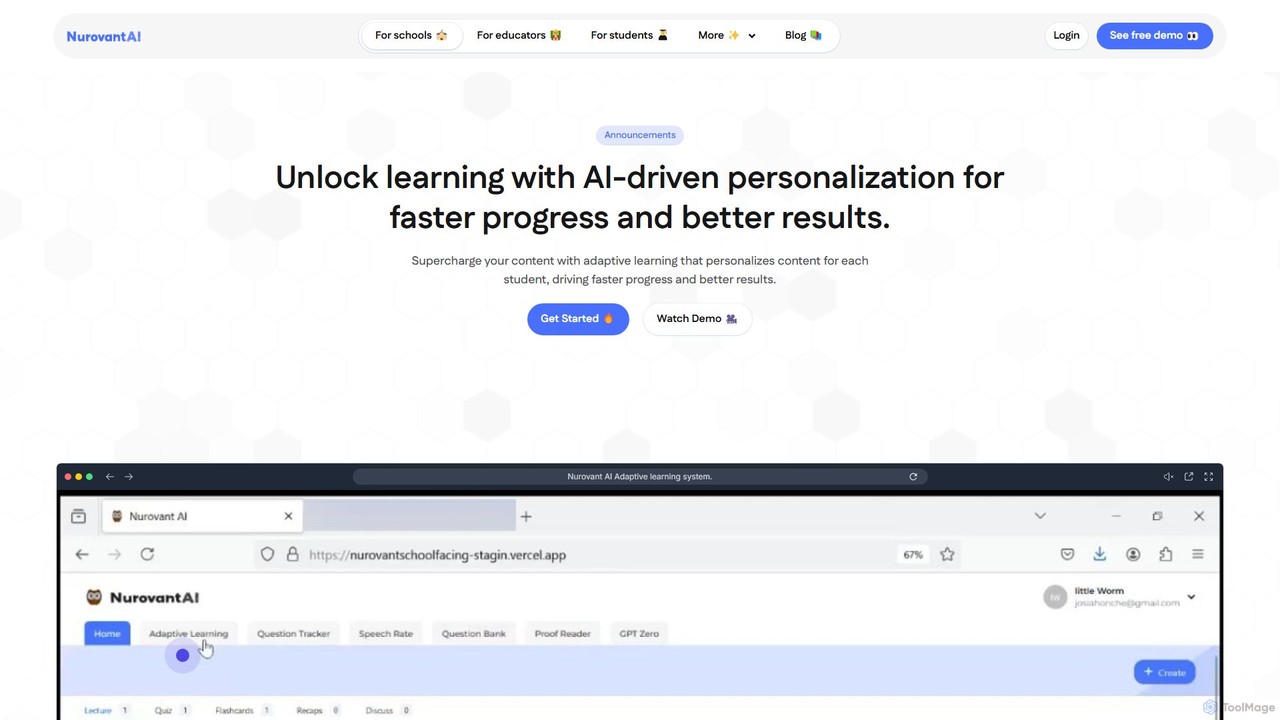
Nurovant is an AI-powered adaptive learning platform designed for students, educators, and schools. It personalizes educational content for …
Nurovant is an AI-powered adaptive learning platform designed for students, educators, and schools. It personalizes educational content for each user, identifies learning gaps, provides immediate feedback, and automates tedious tasks for teachers. By transforming dense materials into manageable study aids like summaries, quizzes, and flashcards, Nurovant accelerates learning, boosts engagement, and improves academic outcomes.
Quino
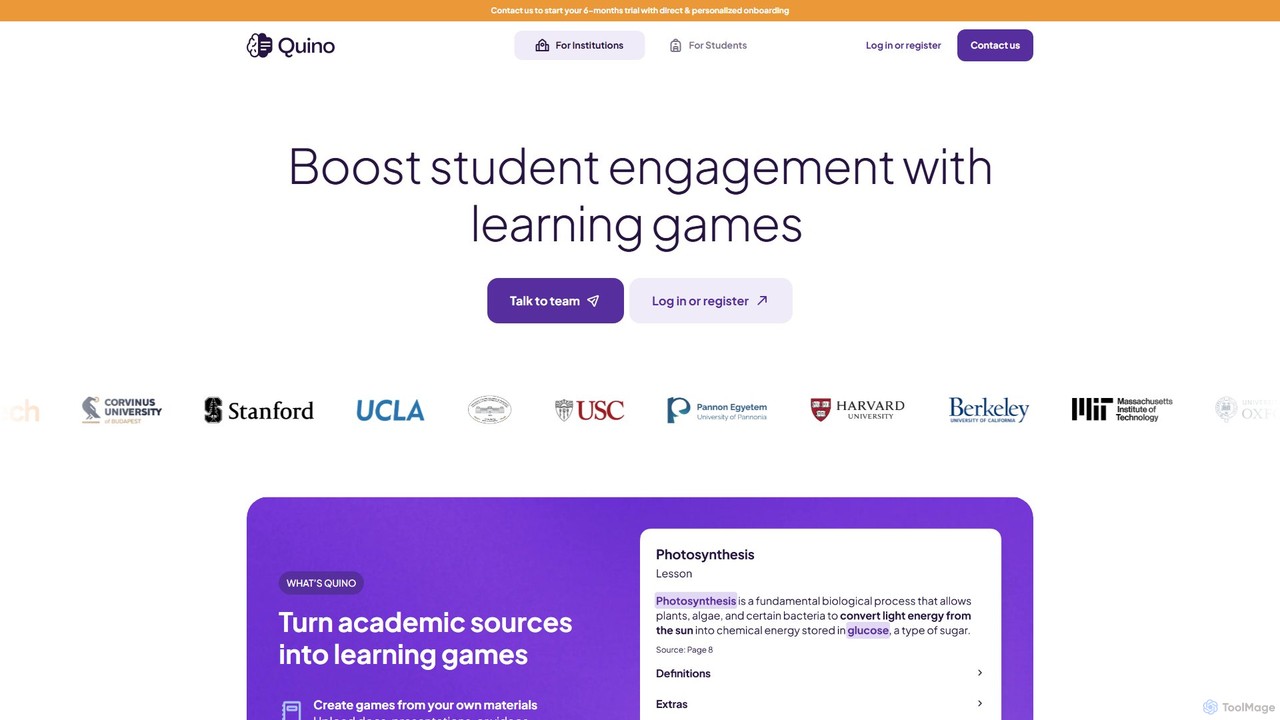
Quino is an AI-driven learning platform that transforms academic materials into engaging learning games and interactive study tools. …
Quino is an AI-driven learning platform that transforms academic materials into engaging learning games and interactive study tools. Designed for both educational institutions and students, it automates lesson creation, boosts student engagement, and provides powerful AI research tools like document summarization and Q&A to foster deeper understanding and academic integrity.
About Administration
AI Administration tools are a category of AI-powered solutions designed to streamline and automate various administrative tasks for educators and educational institutions. These tools leverage artificial intelligence to manage everything from student data and scheduling to communication and assessment, significantly reducing manual workload. They empower teachers and administrators to focus more on teaching and strategic planning by enhancing operational efficiency and data-driven decision-making within the educational environment.
Core Features
- Automated Grading & Feedback: AI algorithms can assess assignments, quizzes, and essays, providing instant feedback to students and saving teachers considerable time.
- Intelligent Scheduling: Optimizes class timetables, resource allocation, and meeting schedules, considering various constraints and preferences.
- Student Progress Tracking: Monitors individual student performance, identifies learning gaps, and predicts potential academic challenges.
- Communication Management: Facilitates streamlined communication with students, parents, and staff through automated notifications and personalized messages.
- Curriculum Planning Support: Assists in organizing learning materials, aligning content with standards, and suggesting relevant resources.
Applicable Scenarios
These tools are invaluable for individual teachers managing multiple classes, school administrators overseeing entire departments, and educational institutions aiming to optimize their operational workflows. They are used in daily tasks like attendance tracking, report generation, and long-term planning for academic years, ensuring smoother educational delivery and improved resource utilization.
How to Choose
When selecting AI Administration tools, prioritize seamless integration with existing Learning Management Systems (LMS) and student information systems. Evaluate data security and privacy features, as sensitive student information will be handled. Consider the level of customization offered to adapt to specific institutional needs, and assess the user-friendliness for both educators and students to ensure high adoption rates.
AdministrationUse Cases
Automating Assignment Grading and Feedback
A high school English teacher uses an AI administration tool to automatically grade multiple-choice quizzes and provide initial feedback on essay submissions. The AI identifies common grammatical errors and suggests improvements, saving the teacher hours of manual grading time each week. This allows the teacher to focus on providing more in-depth, personalized comments on critical thinking and content, enhancing student learning outcomes.
Automated Assignment Grading and Feedback
A high school English teacher uses an AI administration tool to automatically grade multiple-choice quizzes and provide initial feedback on essay submissions. The AI identifies common grammatical errors and suggests improvements, allowing the teacher to focus on higher-level content analysis and personalized guidance, saving hours each week on routine grading tasks.
Automated Assignment Grading & Personalized Feedback
A high school English teacher uses an AI administration tool to automatically grade essays based on predefined rubrics. The AI not only assigns scores but also provides personalized, constructive feedback on grammar, style, and content, allowing the teacher to review nuanced aspects and focus on individual student development rather than repetitive grading tasks. This saves hours of manual work each week, enabling more one-on-one student interaction.
Streamlining Student Progress Reporting to Parents
An elementary school teacher utilizes an AI administration tool to generate personalized progress reports for each student at the end of a grading period. The tool compiles data from various assignments, attendance records, and behavioral observations, then drafts a concise, parent-friendly summary. This significantly reduces the administrative burden of report card season, ensuring timely and consistent communication with parents about their child's academic and social development.
Student Performance Analytics and Intervention
An elementary school teacher utilizes an AI administration tool to track student performance across various subjects. The tool analyzes assessment data, identifies students struggling in specific areas, and generates visual reports for parent-teacher conferences. This enables the teacher to proactively implement targeted interventions and tailor teaching strategies for individual student needs.
Optimizing Class Schedules & Resource Allocation
A university department head utilizes AI administration software to create optimal class schedules for hundreds of students and dozens of faculty members. The tool considers room availability, professor specializations, student course prerequisites, and preferred learning times, minimizing conflicts and maximizing resource utilization. This complex task, which previously took days, is now completed in hours with higher efficiency and fewer errors.
Efficient Management of Classroom Resources and Schedules
A middle school science teacher employs an AI administration tool to manage laboratory equipment inventory, schedule shared resources like projectors or computer labs, and plan field trips. The AI optimizes scheduling to avoid conflicts and suggests the most efficient use of resources based on class needs and availability. This ensures that all necessary materials are available when needed, minimizing logistical headaches and maximizing instructional time.
Automated Parent-Teacher Communication
A middle school teacher uses an AI administration tool to automate routine communications with parents. The tool can send personalized weekly progress reports, attendance alerts, and reminders for upcoming school events or deadlines. This ensures consistent communication, reduces the teacher's manual effort, and keeps parents well-informed about their child's academic journey.
Proactive Student Performance Monitoring
An elementary school counselor employs an AI administration system to track student academic performance and behavioral patterns across all classes. The AI identifies students who show early signs of struggling or disengagement by analyzing grades, attendance, and participation data. This allows the counselor and teachers to intervene proactively with targeted support, preventing academic decline and fostering a more supportive learning environment.
Personalizing Learning Paths and Interventions
An elementary school teacher uses an AI administration tool to analyze student performance across various subjects and identify individual learning styles and areas of difficulty. The tool then suggests personalized learning resources, differentiated assignments, or targeted interventions for students who are struggling. This proactive approach, driven by AI insights, helps teachers tailor their instruction to meet diverse student needs more effectively, improving overall academic achievement.
Efficient Classroom Resource Management
A university lecturer manages multiple courses and a vast array of digital learning resources. An AI administration tool helps categorize, tag, and recommend relevant articles, videos, and interactive exercises based on course topics and student engagement data. This streamlines resource discovery for both the lecturer and students, ensuring up-to-date and accessible learning materials.
Streamlining Parent-Teacher Communication
A primary school teacher uses an AI administration platform to manage communications with parents. The tool automates sending weekly progress reports, attendance alerts, and reminders for school events. Parents can also use the platform to schedule meetings or ask questions, with the AI routing inquiries to the appropriate staff member or providing instant answers to common questions, ensuring timely and consistent communication.
Automating Communication for Parent-Teacher Conferences
A school administrator or lead teacher uses an AI administration tool to manage the scheduling and communication for parent-teacher conferences. The AI sends out automated invitations, allows parents to select preferred time slots, and sends reminders, significantly reducing the manual effort involved in coordinating hundreds of meetings. This ensures higher parent participation rates and more efficient use of both teacher and parent time, fostering stronger home-school partnerships.
Personalized Learning Path Generation
A special education teacher uses an AI administration tool to generate personalized learning paths for students with diverse needs. Based on diagnostic assessments and ongoing performance data, the AI suggests tailored activities, modified assignments, and supplementary resources, helping the teacher to effectively differentiate instruction and support each student's unique learning journey.
Student Performance Tracking & Early Intervention
An elementary school counselor employs an AI administration system to track student academic performance and behavioral patterns across all classes. The AI identifies students who show early signs of struggling or disengagement by analyzing grades, attendance, and participation data. This allows the counselor and teachers to intervene proactively with targeted support, preventing academic decline and fostering a more supportive learning environment.
Managing Student Attendance and Behavioral Records
A primary school teacher uses an AI administration tool to efficiently record and monitor student attendance and behavioral incidents. The tool allows for quick digital logging of daily attendance and any classroom disruptions. Over time, the AI can identify patterns in attendance or behavior, alerting the teacher to students who might need additional support or intervention. This systematic approach ensures accurate record-keeping and facilitates early intervention strategies.
Streamlining Attendance and Record Keeping
A primary school teacher uses an AI administration tool to automate attendance tracking and student record keeping. The tool can integrate with smart classroom systems to automatically mark attendance or allow quick manual input, then generate daily or weekly attendance reports. This reduces administrative burden, minimizes errors, and ensures accurate records for compliance and student welfare.
Curriculum Content Organization & Alignment
A district curriculum developer uses an AI administration tool to organize and align educational content across multiple grade levels and subjects. The AI analyzes learning objectives, state standards, and existing materials, suggesting gaps or redundancies. It helps in structuring lesson plans, recommending supplementary resources, and ensuring curriculum consistency, making the development process more efficient and effective.