Best of the Year 1 results Url Shortener AI Tools

Popular AI tools in the Url Shortener field include URLcut, etc., helping you quickly improve efficiency.

URLcut

URLcut

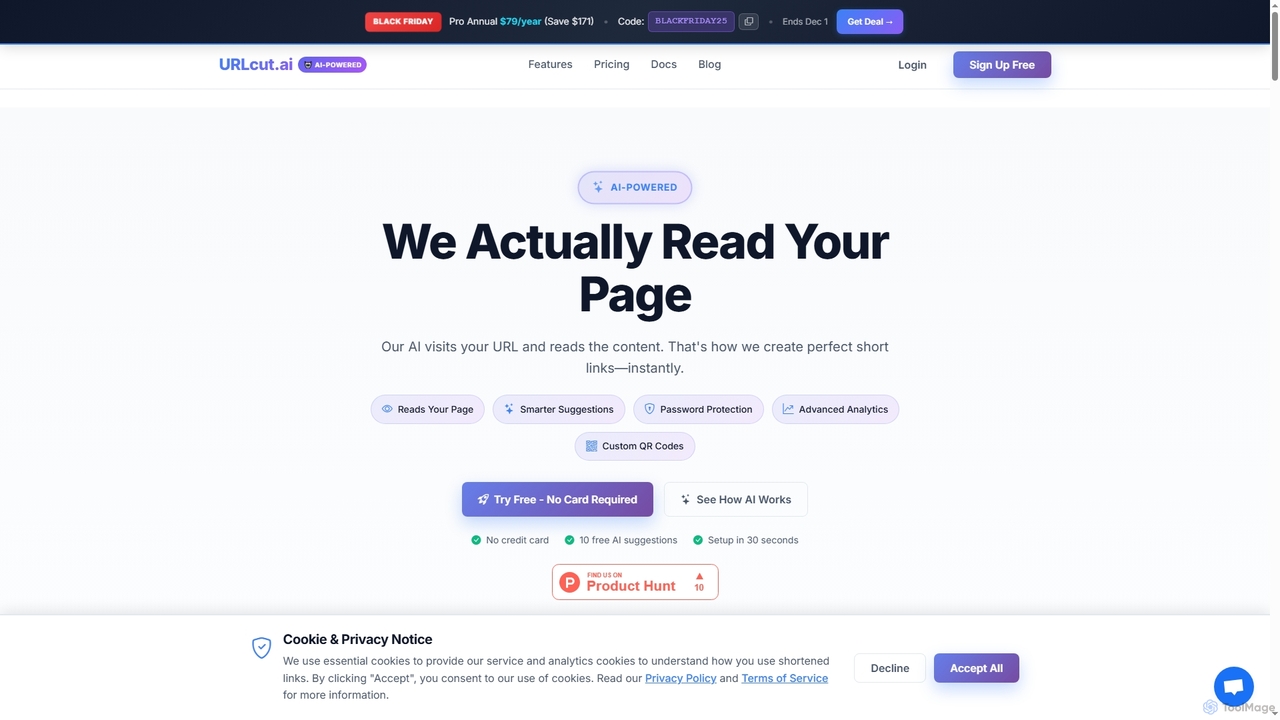
URLcut is an AI-powered URL shortener that intelligently analyzes your page content to generate smart, memorable, and SEO-friendly …

3.5K

About Url Shortener

URL Shorteners are tools designed to convert long, complex web addresses into short, manageable, and shareable links. These tools work by creating a unique, short alias that redirects to the original long URL. Modern URL shorteners often incorporate advanced features like click tracking, detailed analytics, link branding with custom domains, and QR code generation. They are essential for digital marketing, social media management, and performance analysis, providing valuable insights into link engagement and audience behavior.

Core Features

  • Custom Branded Links: Create short URLs using your own domain name to increase brand recognition and trust.
  • Advanced Analytics: Track the number of clicks, geographic location of users, referral sources, and device types.
  • Link Management: Organize, tag, search, and edit all your shortened links from a centralized dashboard.
  • QR Code Generation: Instantly create static or dynamic QR codes for your short links, suitable for print and digital media.
  • A/B Testing: Route traffic from a single short link to multiple destination URLs to test the performance of different web pages.

Use Cases

URL shorteners are widely used by digital marketers to track campaign ROI, social media managers to share clean links within character limits, and content creators to manage affiliate links. Businesses also use them on physical marketing materials like flyers and business cards to provide an easy-to-type web address, bridging the gap between offline and online engagement.

How to Choose

When selecting a URL shortener, consider the following: the ability to use a custom domain for branding, the depth and real-time nature of the analytics provided, integration capabilities with other marketing tools, and the scalability of the pricing plan. Also, evaluate the tool's link management features and security protocols to ensure your links are reliable and protected.

Url ShortenerUse Cases

1

Tracking Social Media Campaign Performance

A digital marketer launches a new product campaign across multiple social media platforms like Twitter, Facebook, and LinkedIn. To measure the effectiveness of each channel, they create a unique branded short link for the campaign's landing page for each platform. By monitoring the analytics dashboard, the marketer can precisely track which platform drives the most clicks, conversions, and engagement, allowing them to optimize their ad spend and focus efforts on the highest-performing channels for future campaigns.

2

Tracking Social Media Campaign Performance

A social media manager launches a new product campaign across multiple platforms like Twitter, Facebook, and LinkedIn. For each platform, they create a unique short URL pointing to the product's landing page. By using the URL shortener's analytics dashboard, they can precisely track which platform generates the most clicks, engagement, and conversions. This data-driven approach allows them to allocate their advertising budget more effectively, focusing resources on the channels with the highest return on investment.

3

Managing Affiliate Links for Content Creators

A YouTuber who reviews tech products uses an affiliate program to earn commissions. Instead of using long, unattractive affiliate URLs in their video descriptions, they use a URL shortener to create clean, memorable links like 'brand.com/product-name'. This not only looks more professional but also allows them to track which videos and products generate the most clicks. If an affiliate link changes, they can update the destination URL in their link management dashboard without having to edit the descriptions of all their past videos.

4

Creating Branded Links for Marketing Materials

A marketing team is preparing for a trade show and needs to include a link to their online portfolio on printed materials like brochures and business cards. Instead of a long, hard-to-remember URL, they use a URL shortener with their custom domain (e.g., `brand.co/portfolio`). This not only makes the link easy for potential clients to type into a browser but also reinforces their brand identity. The link is also trackable, allowing the team to measure how many people from the event visited their portfolio.

5

Bridging Offline and Online Marketing with QR Codes

A restaurant owner wants to promote a new digital menu and online ordering system. They use a URL shortener to create a simple link to their menu page and then generate a corresponding QR code. This QR code is printed on flyers, table tents, and posters in the restaurant. Customers can easily scan the code with their smartphones to access the menu. The owner can track how many scans the QR code receives, providing valuable data on the effectiveness of their offline promotional materials in driving online traffic.

6

A/B Testing Landing Page Conversion Rates

A digital marketer has created two versions of a landing page (A and B) to see which one converts better. They use an advanced URL shortener that supports A/B testing. They set up a single short link that automatically splits traffic, sending 50% of visitors to page A and 50% to page B. After running the campaign for a week, the tool's analytics clearly show that page B has a 15% higher conversion rate. The marketer can then confidently direct 100% of future traffic to the better-performing page, maximizing campaign results.

7

A/B Testing Landing Pages for Conversion Optimization

A marketing team wants to test two versions of a landing page (A and B) to see which one has a better conversion rate. They create two separate short links, one pointing to page A and the other to page B. They then run an ad campaign, directing 50% of the traffic to the first link and 50% to the second. By comparing the click-through rates and conversion data from both links, the team can definitively determine which landing page design is more effective and allocate their entire budget to the winning version.

8

Managing and Cloaking Affiliate Links

An affiliate marketer promotes products from various merchants, resulting in numerous long and unattractive affiliate links. They use a URL shortener to transform these links into clean, trustworthy, and memorable URLs (e.g., `myblog.com/product-review`). This process, often called link cloaking, improves click-through rates as users are more likely to click on a familiar domain. The tool's dashboard allows them to organize all links by campaign or merchant, track performance for each, and easily update a destination URL if a product link changes, without having to edit every blog post where it was shared.

9

Improving SMS and Mobile Marketing Readability

A retail company sends promotional offers to customers via SMS. Since text messages have a strict character limit and long URLs are difficult to tap on mobile, they use a URL shortener for all links. This ensures the message is concise and the link is clean and easy to click. The company can also track click-through rates directly from their SMS campaigns, giving them clear insight into how many customers are engaging with their mobile offers and which promotions are most popular.

10

Generating Dynamic QR Codes for Events

An event organizer needs a way for attendees to access the event schedule, which might change last-minute. They create a short URL pointing to the online schedule. Using the URL shortener, they generate a dynamic QR code from this link and print it on badges and posters. If the schedule URL needs to be updated, they can simply change the destination of the short link in their dashboard. The QR code itself remains the same and does not need to be reprinted, saving time and resources while ensuring attendees always have access to the latest information.

11

Sharing Resources in Educational or Corporate Settings

A university professor needs to share links to online articles, research papers, and lecture slides with students. Instead of a long list of complex URLs, the professor uses a URL shortener to create simple, intuitive links like 'university.edu/class-topic'. These links are easy to display on a presentation slide, write on a whiteboard, or include in an email. This simplifies access for students and presents a more organized and professional approach to sharing educational materials.

12

Optimizing Links for SMS and Email Marketing

An e-commerce store runs an SMS marketing campaign to announce a flash sale. Given the strict character limits of SMS messages, using a full product URL is impractical. The marketing team uses a URL shortener to create a concise link for the sale page. This maximizes the space available for the promotional message. Furthermore, they can track the click-through rate (CTR) of the SMS campaign in real-time, helping them gauge its effectiveness and compare it with other channels like email, where they also use unique short links for the same purpose.

Url ShortenerFrequently Asked Questions