
VoiceOS
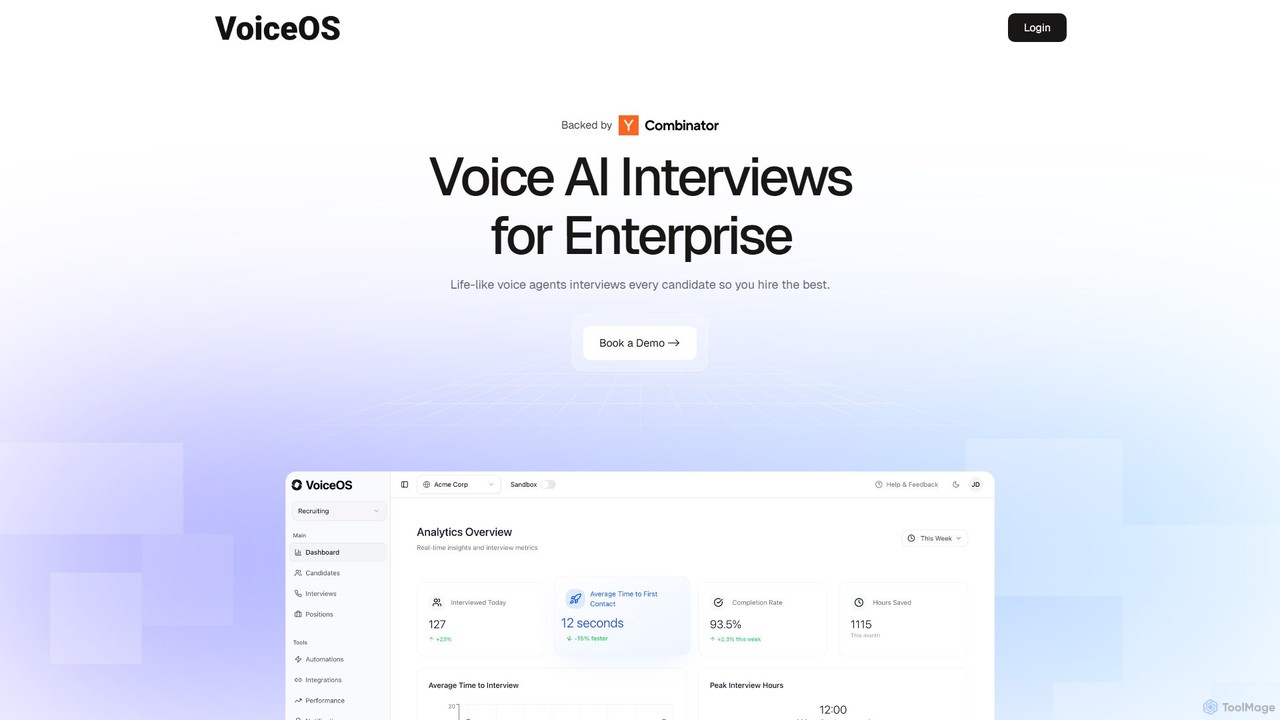
VoiceOS is an AI-powered platform for enterprises that automates initial candidate screening through life-like voice interviews. It integrates …
VoiceOS is an AI-powered platform for enterprises that automates initial candidate screening through life-like voice interviews. It integrates with any ATS, conducts interviews 24/7, and provides advanced analysis on sentiment, culture fit, and experience. This streamlines high-volume recruiting, reduces bias, and allows hiring teams to focus on the most qualified applicants, accelerating the hiring process.
About Voice Synthesis
Voice Synthesis tools are AI-powered applications that convert written text into natural-sounding human speech. Utilizing advanced deep learning models and natural language processing, these tools generate lifelike audio output with customizable voices, tones, and emotions. They provide a versatile solution for creating engaging audio content, enhancing accessibility, and automating voice interactions across various digital platforms.
Core Features
- Natural Language Generation: Produces highly realistic and fluent speech that mimics human intonation and rhythm.
- Customizable Voices: Offers a wide range of voice styles, genders, ages, and emotional nuances to match specific content needs.
- Multilingual Support: Generates speech in numerous languages and dialects, enabling global content reach.
- SSML (Speech Synthesis Markup Language) Integration: Allows for fine-grained control over pronunciation, pauses, emphasis, and speaking rate.
- Voice Cloning & Generation: Some advanced tools can replicate existing voices or create entirely new synthetic voices from minimal audio samples.
Applicable Scenarios
Voice synthesis is widely adopted in sectors requiring automated or scalable audio content. This includes content creators producing audiobooks and podcasts, e-learning platforms generating voiceovers for courses, and businesses deploying virtual assistants or interactive voice response (IVR) systems.
How to Choose
When selecting a voice synthesis tool, consider the naturalness and quality of the generated voices, the breadth of language and accent support, available customization options (e.g., emotion, speaking style), API integration capabilities for developers, and the pricing model based on usage volume.
Voice SynthesisUse Cases
Creating Engaging Audiobooks and Podcasts
Content creators and publishers can transform written manuscripts or blog posts into professional-quality audiobooks and podcast episodes. By leveraging diverse AI voices, they can quickly produce engaging narratives, interviews, and educational content, significantly reducing the time and cost associated with human voice actors and studio recordings.
Developing E-learning and Training Modules
Educators and corporate trainers utilize voice synthesis to generate clear, consistent voiceovers for online courses, tutorials, and internal training materials. This ensures uniform pronunciation and tone across all modules, making learning more accessible and scalable, especially for multilingual audiences, without the need for repeated recording sessions.
Enhancing Virtual Assistants and Chatbots
Businesses integrate voice synthesis into their virtual assistants, customer service chatbots, and interactive voice response (IVR) systems to provide more natural and human-like conversational experiences. This improves user engagement and satisfaction by delivering clear, articulate responses that sound less robotic and more empathetic.
Providing Accessibility for Visually Impaired Users
Website owners and content providers employ voice synthesis to convert text-based content (articles, news, documents) into audio formats. This crucial application makes digital information accessible to individuals with visual impairments, dyslexia, or those who prefer listening over reading, thereby broadening audience reach and inclusivity.
Generating Marketing and Advertising Voiceovers
Marketing teams and advertisers use voice synthesis to create compelling voiceovers for commercials, promotional videos, and social media ads. The ability to quickly generate and iterate on different voice styles and languages allows for rapid A/B testing and targeted campaigns, optimizing engagement and brand messaging without high production costs.
Automating Public Announcements and Notifications
Transportation hubs, public institutions, and smart home systems leverage voice synthesis for automated announcements, alerts, and notifications. This ensures timely and consistent delivery of critical information, such as flight delays, train arrivals, or security warnings, in multiple languages, enhancing operational efficiency and public safety.