i18nlocale
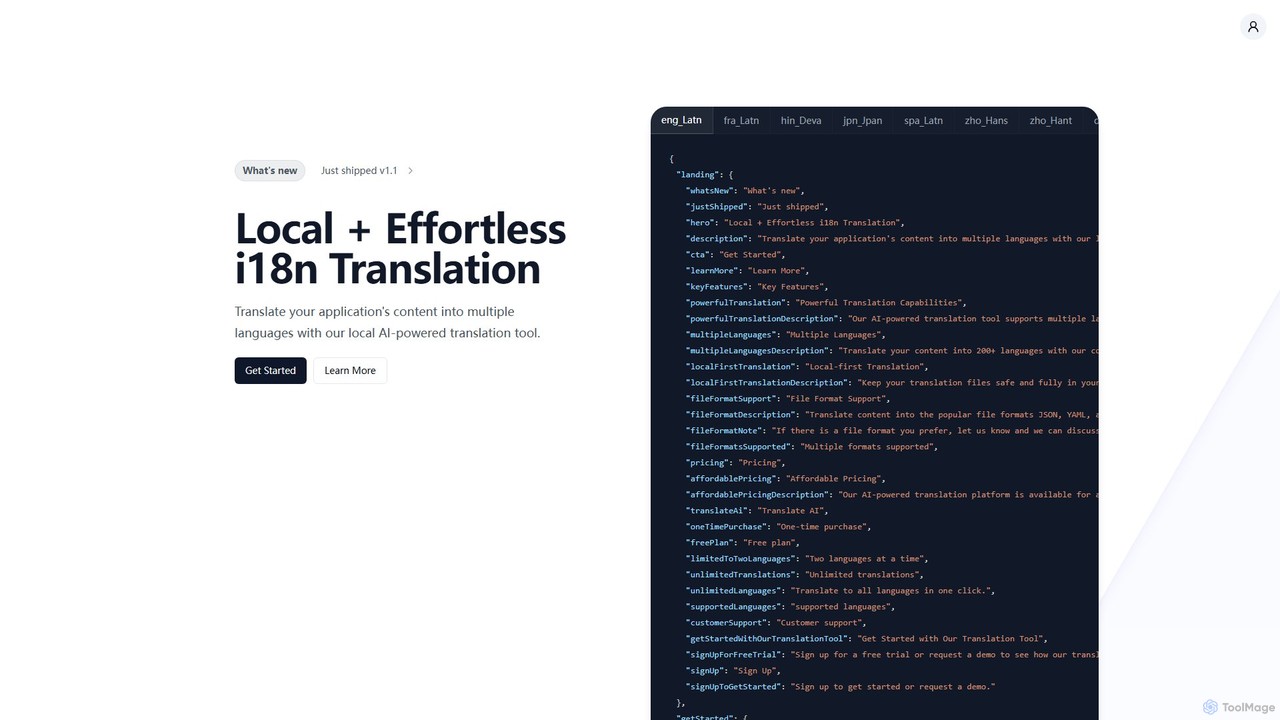
i18nlocale is an AI-powered translation tool for developers that simplifies internationalization (i18n). It operates entirely locally on your …
i18nlocale is an AI-powered translation tool for developers that simplifies internationalization (i18n). It operates entirely locally on your device, ensuring your application's content files (JSON, YAML, JS/TS) are translated into over 200 languages with complete privacy and security. No data ever leaves your computer. It offers a free plan and an affordable one-time purchase for pro features.
About Utilities
AI Utilities are specialized AI-powered tools designed to streamline and enhance supporting tasks throughout the app development lifecycle, falling under the broader category of App Development. These tools leverage advanced machine learning algorithms to automate repetitive processes, provide intelligent insights, and significantly improve developer productivity. They play a crucial role in optimizing workflows from intelligent code analysis and automated testing to efficient deployment and continuous maintenance, ensuring higher quality, faster delivery, and greater reliability of applications with reduced manual effort.
Core Features
- Intelligent Code Analysis: Automatically identifies potential bugs, security vulnerabilities, and performance bottlenecks within the codebase, offering actionable suggestions for remediation and adherence to coding standards.
- Automated Test Generation: Generates comprehensive and diverse test cases and scenarios based on code logic, user behavior patterns, and historical data, significantly expanding test coverage and reducing manual effort.
- API Management & Optimization: Assists in designing, documenting, testing, and optimizing APIs by analyzing usage patterns and performance metrics, leading to more robust and efficient service integrations.
- Performance Monitoring & Diagnostics: Provides real-time insights into application performance, pinpointing the root cause of issues, predicting potential failures, and suggesting proactive optimizations to maintain high availability.
- Smart Debugging Assistance: Offers intelligent suggestions, context-aware explanations, and root cause analysis by processing logs and runtime data, dramatically accelerating the debugging process and minimizing downtime.
- Automated Documentation Generation: Automatically creates or updates technical documentation, including API specifications and code comments, ensuring accuracy and consistency across the project.
Applicable Scenarios
Developers use AI utilities to quickly identify and fix code issues, reducing manual review time and improving overall code quality. DevOps teams leverage these tools for automated build and deployment pipeline optimization, ensuring smoother, faster, and more reliable releases. QA engineers utilize AI utilities for generating diverse and effective test cases, enhancing test coverage and efficiency to ensure robust application quality before release. Security teams integrate them for continuous vulnerability scanning, building more secure applications from the ground up.
How to Choose
When selecting AI utilities, consider their seamless integration capabilities with your existing development environments, version control systems, and CI/CD pipelines. Evaluate the accuracy, relevance, and explainability of the AI-driven insights and suggestions provided. Assess the breadth and depth of automation offered, from intelligent code generation and refactoring to comprehensive testing and deployment support. Furthermore, review the tool's security features, data privacy policies, and compliance standards, especially for projects handling sensitive information. Finally, consider the vendor's support, community, and the tool's scalability to grow with your project needs.

UtilitiesUse Cases
Automating Code Review for Quality Assurance
Software development teams utilize AI utilities to perform automated code reviews, identifying potential bugs, style violations, and security vulnerabilities in real-time. This allows developers to receive instant feedback, fix issues early in the development cycle, and maintain high code quality standards without extensive manual oversight, significantly accelerating the review process and reducing technical debt.
Generating Comprehensive Test Cases
QA engineers employ AI-powered testing utilities to automatically generate diverse and effective test cases for new features or bug fixes. By analyzing code changes, existing test suites, and potential user interactions, the AI can suggest edge cases and scenarios that might be overlooked, ensuring broader test coverage and significantly reducing the time spent on manual test script creation and maintenance.
Optimizing API Performance and Documentation
Backend developers use AI utilities to analyze API traffic patterns and performance metrics, identifying bottlenecks and suggesting optimizations for faster response times and improved reliability. These tools can also automatically generate or update API documentation based on code changes and usage, ensuring accuracy and consistency for frontend developers and external integrators, thereby streamlining collaboration.
Proactive Security Vulnerability Scanning
Security teams integrate AI-driven utilities into their CI/CD pipelines to continuously scan application code, dependencies, and configurations for known and emerging security vulnerabilities. The AI can prioritize critical issues, provide context-aware remediation suggestions, and help developers build more secure applications from the ground up, minimizing risks and ensuring compliance before deployment to production environments.
Intelligent Debugging and Error Resolution
Developers facing complex bugs leverage AI debugging assistants that analyze crash reports, log files, and code execution paths to pinpoint the root cause of issues. These utilities can suggest potential fixes, reference similar problems solved previously, and accelerate the troubleshooting process, reducing downtime, developer frustration, and the overall cost of bug resolution.
Streamlining Build and Deployment Pipelines
DevOps engineers utilize AI utilities to monitor and optimize automated build and deployment processes. The AI can predict potential failures, suggest resource allocation improvements, and identify inefficiencies in the pipeline, leading to faster, more reliable deployments, reduced operational overhead, and continuous delivery of high-quality software to end-users.