Website & App Builders Best in category 1 results Website Builder AI Tool

Popular AI tools in the Website Builder field of Website & App Builders include umbispace, etc., helping you quickly improve efficiency.

umbispace

umbispace

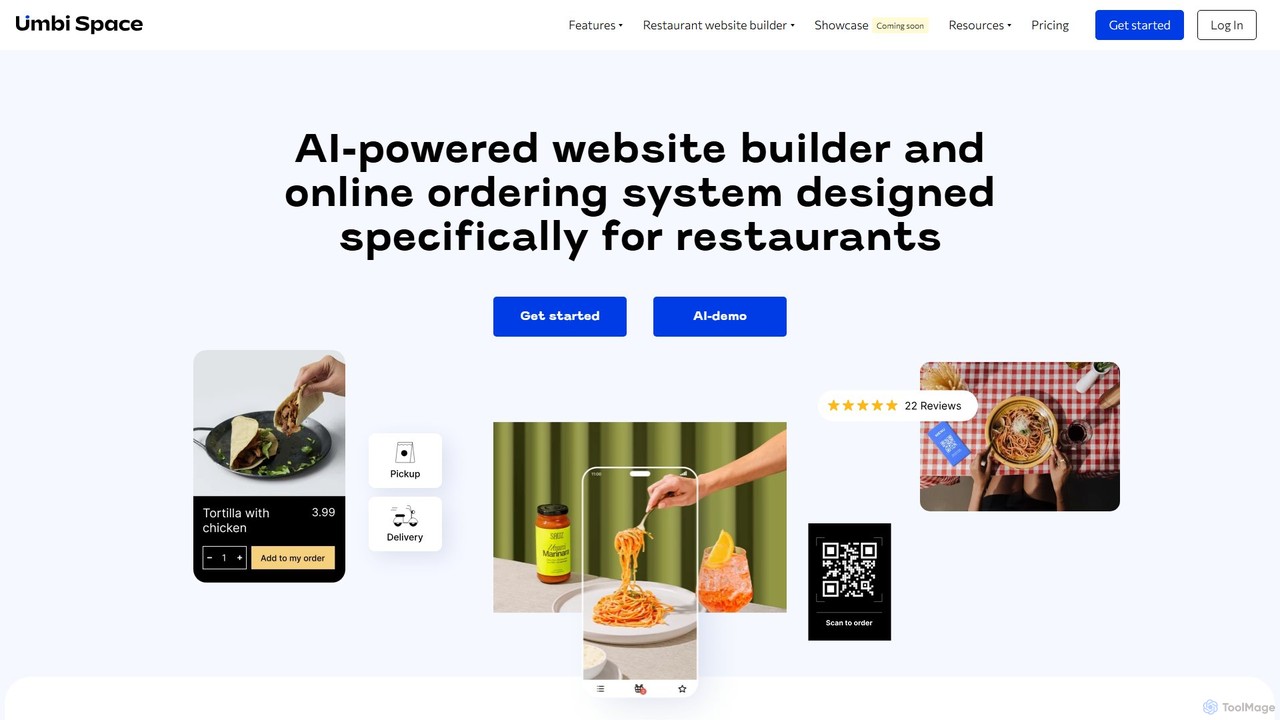
Umbi Space is an AI-powered, all-in-one platform designed for restaurants. It enables users to build professional websites, integrate …

2.4K

About Website Builder

AI Website Builders are tools that leverage artificial intelligence to automatically generate and design websites from user prompts. These platforms use generative AI models to create layouts, write copy, select images, and establish a brand identity with minimal manual input. This significantly accelerates the development process, making professional web design accessible to users without technical or design skills. The core value lies in transforming a simple idea or business description into a functional, aesthetically pleasing, and mobile-responsive website in minutes.

Core Features

  • AI-Powered Site Generation: Creates entire website structures, including pages and layouts, based on text descriptions of a business or project.
  • Automated Content Creation: Generates relevant headlines, paragraphs, and call-to-action text tailored to the website's purpose.
  • Intelligent Design Assistance: Suggests and applies cohesive color palettes, font pairings, and imagery that match the user's brand.
  • Built-in SEO Optimization: Automatically generates meta tags, alt text for images, and suggests keywords to improve search engine visibility.
  • No-Code Customization: Provides intuitive drag-and-drop editors to refine and personalize the AI-generated design.

Use Cases

AI Website Builders are ideal for small business owners, freelancers, artists, and entrepreneurs who need to establish an online presence quickly and affordably. They are perfectly suited for creating portfolio sites, landing pages for marketing campaigns, simple e-commerce stores, or informational websites for local businesses. The focus is on speed and simplicity, enabling rapid prototyping and launch without hiring a developer.

How to Choose

When selecting an AI Website Builder, consider the quality and flexibility of its AI generation capabilities—can it truly understand your prompts? Evaluate the level of post-generation customization available; you should be able to easily edit every element. Also, check for essential features like hosting, domain connectivity, e-commerce functionality, and integration options with other marketing tools. Finally, compare pricing models to find one that aligns with your budget and long-term needs.

Website BuilderUse Cases

1

Launch a Website for a New Small Business

A local bakery owner needs a professional online presence quickly to attract customers. Using an AI Website Builder, they simply type in 'local artisan bakery in Brooklyn specializing in sourdough bread and custom cakes'. The AI instantly generates a multi-page website with a homepage featuring beautiful bread imagery, an 'About Us' page with generated text, a product gallery, and a contact form integrated with maps. The owner can then slightly tweak the colors to match their logo and publish the site within an hour, saving thousands of dollars and weeks of time compared to hiring an agency.

2

Create a Professional Portfolio for a Freelancer

A freelance photographer wants to showcase their work but lacks web design skills. They use an AI Website Builder and provide a prompt like 'professional photography portfolio for a portrait and wedding photographer'. The AI generates a sleek, image-focused design with a gallery, a services page detailing packages, a client testimonials section, and a booking inquiry form. The photographer simply uploads their best photos into the pre-made gallery layouts, and their professional portfolio is ready to share with potential clients in an afternoon.

3

Generate a High-Converting Landing Page

A marketing team is launching a new SaaS product and needs a landing page for their ad campaign. Time is critical. They input key product features, target audience ('startups and small businesses'), and the desired action ('Sign up for a free trial'). The AI Website Builder generates a complete landing page following a proven conversion-focused structure: a compelling hero section, feature-benefit blocks, social proof elements, a pricing table, and multiple call-to-action buttons. The team can then A/B test different headlines generated by the AI to optimize performance.

4

Set Up a Simple E-commerce Store

An artist wants to sell prints of their work online but has no experience with e-commerce platforms. They use an AI Website Builder with integrated e-commerce features. The prompt is 'online art store selling high-quality landscape prints'. The AI creates a visually appealing storefront, automatically sets up product pages, a shopping cart, and a secure checkout process. The artist only needs to upload images of their prints, set prices, and connect their payment processor. The entire store is operational in a few hours, ready to take the first order.

5

Create a Website for a Local Service Business

A plumbing company needs a website to showcase its services, build trust, and generate leads. The business owner provides the prompt: 'website for a reliable plumbing service in Austin, Texas, offering emergency repairs and installations'. The AI builder generates a site with a clear phone number display, a 'Services' page detailing different offerings, a section for customer reviews, and a 'Request a Quote' form. The AI also writes professional, trustworthy copy, helping the business establish credibility with potential customers searching online.

6

Rapidly Prototype a Website Idea

A startup founder has an idea for a new online service but needs a visual prototype to show investors and early users. Instead of spending weeks on wireframes and mockups, they use an AI Website Builder. They describe the core concept and user flow. Within minutes, the AI generates a functional, multi-page website prototype. This allows the founder to click through the user journey, gather immediate feedback, and make rapid iterations on the concept, dramatically shortening the validation cycle from weeks to hours.

Website BuilderFrequently Asked Questions