Rewebly
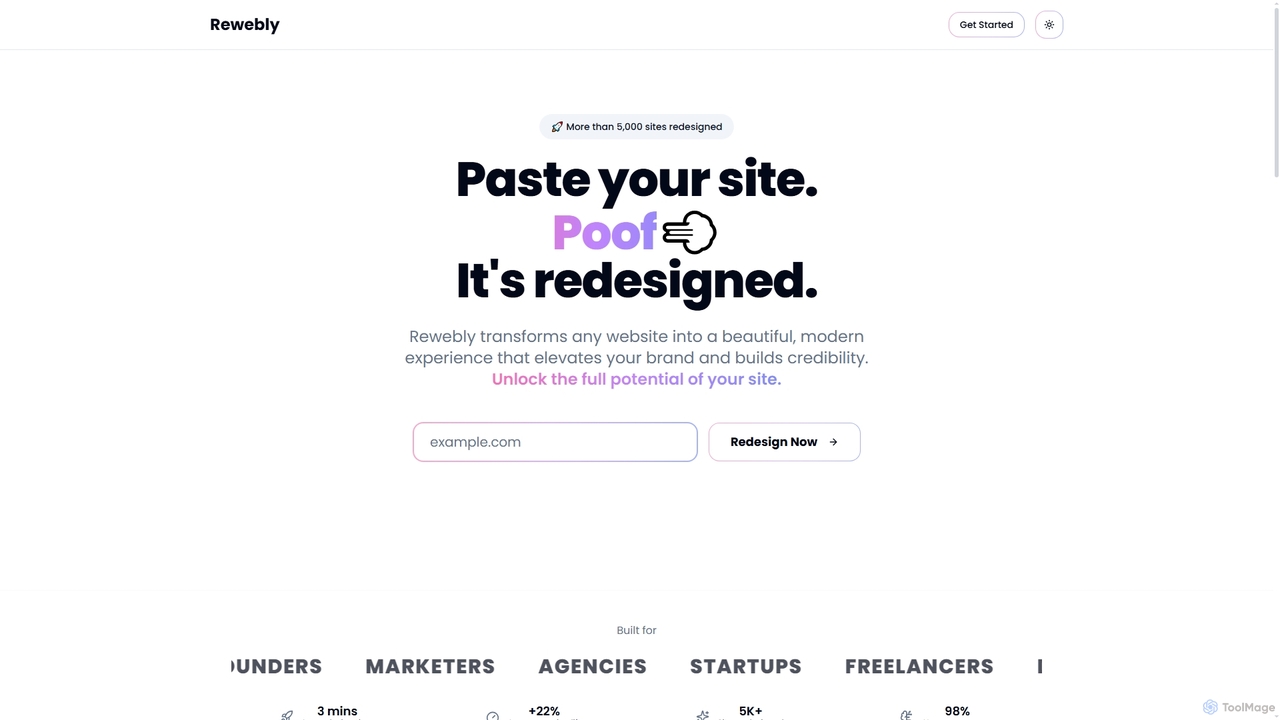
Rewebly is an AI-powered website redesign tool that transforms any existing website into a modern, visually appealing, and …
Rewebly is an AI-powered website redesign tool that transforms any existing website into a modern, visually appealing, and high-converting experience in minutes. It focuses on design quality, brand consistency, and user accessibility, making professional web makeovers accessible to various professionals.
About Redesign
Redesign tools are AI-powered platforms specifically designed to analyze, optimize, and transform existing websites or digital interfaces. These tools leverage advanced algorithms to evaluate user experience, visual aesthetics, and performance metrics, providing data-driven recommendations for improvement. They aim to enhance user engagement, conversion rates, and overall site functionality, making the redesign process more efficient and effective within the broader context of website design.
Core Features
- Visual & UX Analysis: Automatically identifies design flaws, usability issues, and areas for visual improvement based on best practices and user behavior data.
- Content Restructuring Suggestions: Recommends optimal content layouts, hierarchy, and presentation to improve readability and information flow.
- A/B Testing & Optimization: Generates and tests multiple design variations to determine the most effective elements for specific user goals.
- Automated Style Guide Generation: Extracts existing design patterns and suggests consistent styling rules for a cohesive brand identity.
- Performance Enhancement Recommendations: Pinpoints elements impacting loading speed, responsiveness, and SEO, offering solutions for technical optimization.
Applicable Scenarios
Businesses looking to refresh their outdated websites, e-commerce platforms aiming to boost conversion rates, or content publishers seeking to improve reader engagement. These tools are invaluable for marketing teams, UX designers, and product managers focused on iterative improvements.
How to Choose
Consider the tool's analytical depth (e.g., heatmaps, session recordings), its ability to generate actionable design suggestions, integration with existing design or analytics platforms, and the level of customization offered for AI-generated recommendations. Evaluate the cost-effectiveness for your project scale.

RedesignUse Cases
Optimizing E-commerce Product Pages
An e-commerce manager uses an AI redesign tool to analyze product page layouts, identifying elements that deter purchases. The tool suggests alternative CTA placements, image sizes, and review section designs, leading to A/B tests that significantly increase conversion rates.
Refreshing an Outdated Corporate Website
A marketing team employs a redesign AI to evaluate their decade-old corporate site. The tool pinpoints navigation complexities, inconsistent branding, and slow loading times, then proposes a modern, responsive layout with improved information architecture, enhancing brand perception and lead generation.
Improving Blog Readability and Engagement
A content creator utilizes a redesign platform to analyze their blog's user flow and reading patterns. The AI suggests optimizing paragraph length, adding interactive elements, and re-arranging related article sections, resulting in longer average session durations and reduced bounce rates.
Enhancing Mobile App UI/UX
A mobile app developer integrates a redesign AI to analyze user interactions within their app. The tool identifies common drop-off points and confusing UI elements, then provides recommendations for simplifying workflows and improving button discoverability, leading to a more intuitive user experience.
Streamlining SaaS Onboarding Flows
A product manager for a SaaS company uses a redesign tool to analyze their user onboarding process. The AI highlights areas where users get stuck or abandon registration, suggesting clearer instructions, simplified forms, and personalized welcome sequences to improve user activation rates.
Accessibility Compliance Redesign
A web development agency uses an AI redesign tool to audit a client's website for accessibility issues (WCAG compliance). The tool automatically identifies low-contrast text, missing alt tags, and keyboard navigation problems, then suggests specific design and code adjustments to meet accessibility standards.