
Workforce Planning Best in category 1 results Career Pathing AI Tool

Popular AI tools in the Career Pathing field of Workforce Planning include Axell, etc., helping you quickly improve efficiency.

Axell

Axell

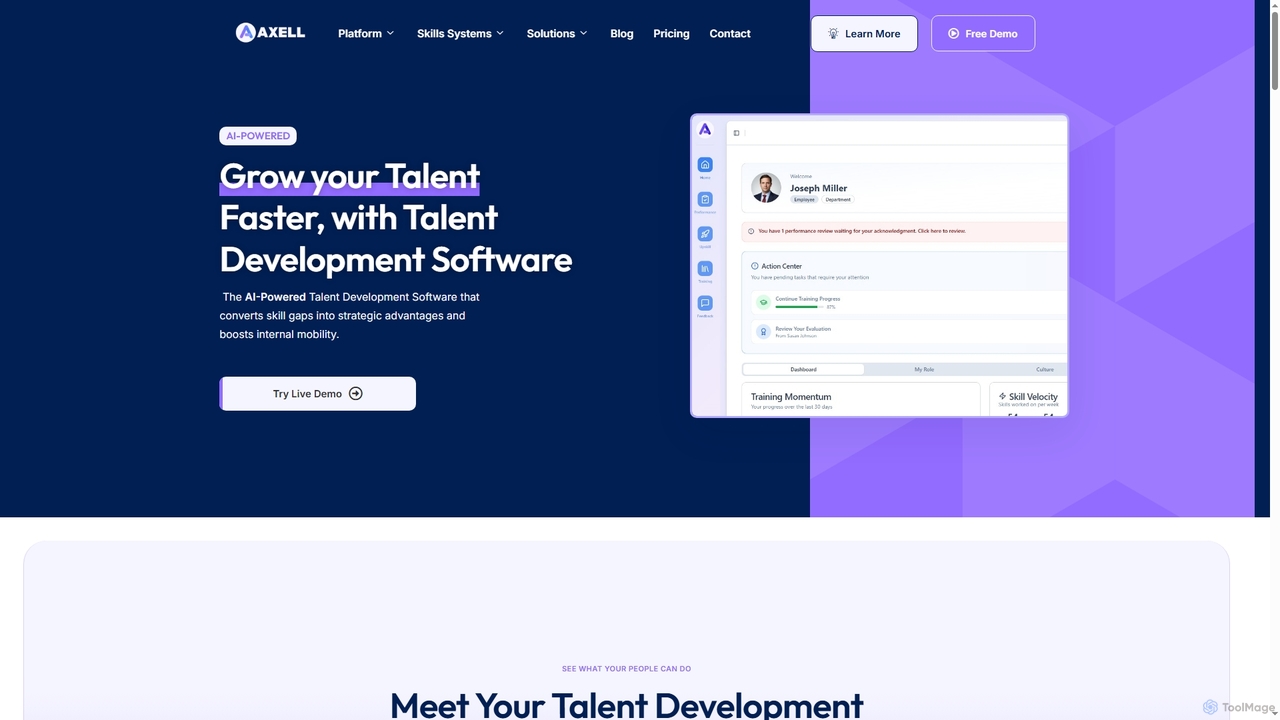
Axell is an AI-powered talent development software designed to transform skill gaps into strategic advantages. It automates performance …

4.9K

About Career Pathing

Career Pathing tools are AI-powered platforms designed to help individuals and organizations map out professional growth trajectories. These tools leverage data analytics and machine learning to identify potential career paths, skill gaps, and development opportunities within the broader context of workforce planning. They provide personalized guidance for employees to advance their careers, aligning individual aspirations with organizational needs.

Core Features

  • Skill Gap Analysis: Identifies discrepancies between current skills and those required for desired roles.
  • Personalized Path Recommendations: Suggests tailored career progression routes based on individual profiles and organizational needs.
  • Learning Resource Matching: Connects users with relevant courses, certifications, and training programs to acquire necessary skills.
  • Succession Planning Integration: Supports organizational succession strategies by identifying internal talent for future leadership roles.
  • Market Trend Insights: Provides data-driven insights into industry trends and future skill demands to inform career decisions.

Applicable Scenarios

Career Pathing tools are invaluable for HR departments, talent development specialists, and individual employees. HR teams use them to foster internal mobility and retention, while employees leverage them for self-directed professional growth. They are particularly useful in large enterprises seeking to optimize talent utilization and reduce recruitment costs by promoting internal advancement.

How to Choose

When selecting a Career Pathing tool, consider its data integration capabilities with existing HRIS, the depth of its skill assessment and recommendation engine, and its user-friendliness. Evaluate the breadth of learning resources it can suggest or integrate with, and ensure it aligns with your organization's specific talent development goals and compliance requirements.

Career PathingUse Cases

1

Crafting Personalized Skill Development Plans

An individual employee utilizes an AI Career Pathing tool to identify specific skill gaps for their desired promotion. The tool analyzes their current competencies against the target role's requirements, then generates a tailored learning roadmap, including recommended online courses, internal workshops, and mentorship opportunities, enabling them to systematically acquire necessary skills and accelerate their career progression.

2

Identifying Skill Gaps for Promotion

An employee aspiring for a managerial role can use a Career Pathing tool to compare their current skill set against the requirements of the target position. The tool analyzes their profile, highlights specific skill deficiencies, and recommends targeted online courses or internal projects to bridge these gaps, providing a clear development roadmap for promotion.

3

Streamlining Leadership Succession Planning

A human resources department in a large corporation deploys Career Pathing AI to identify high-potential employees ready for leadership roles. The system assesses performance data, leadership competencies, and expressed career aspirations, then maps out individualized development paths, including stretch assignments and executive coaching, ensuring a robust pipeline of qualified candidates for critical future positions and minimizing leadership transition risks.

4

Developing Internal Talent for Succession Planning

HR managers in a large corporation utilize Career Pathing platforms to proactively identify high-potential employees for future leadership roles. By analyzing performance data, skill assessments, and career aspirations, the tool helps create personalized development plans for these individuals, ensuring a robust internal talent pipeline for critical positions.

5

Facilitating Internal Talent Mobility

A global enterprise uses Career Pathing tools to enhance internal mobility. Employees can input their skills and career interests, and the AI matches them with suitable internal job openings, project roles, or cross-functional assignments that align with their development goals. This reduces recruitment costs, leverages existing talent, and provides employees with diverse growth opportunities without leaving the company.

6

Guiding New Graduates in Career Exploration

Recent university graduates entering a company can feel overwhelmed by career choices. A Career Pathing tool helps them explore various internal roles, understand the required skills for each, and visualize potential progression paths within the organization. This reduces early career uncertainty and improves retention by showing clear growth opportunities.

7

Guiding Career Transitions for Mid-Career Professionals

A mid-career professional seeking a career change leverages an AI Career Pathing platform to explore new industries. The tool analyzes their transferable skills from previous roles, suggests potential new career fields, and outlines the additional skills or certifications required. It provides a structured approach to understanding market demands and preparing for a successful transition, offering clarity and actionable steps.

8

Reskilling Employees for Evolving Industry Needs

As industries transform, employees may need to acquire entirely new skill sets. A Career Pathing tool can assess an employee's transferable skills, identify emerging roles within the company or industry, and recommend specific reskilling programs. This enables organizations to adapt to market changes by upskilling their existing workforce efficiently.

9

Enhancing Employee Retention Through Growth Visibility

A company implements AI Career Pathing to clearly demonstrate growth opportunities to its workforce. Employees can visualize potential advancement paths within the organization, understanding the skills and experiences needed for each step. This transparency fosters a sense of purpose and investment, significantly improving employee engagement and retention rates by showing a clear future within the company.

10

Personalizing Learning & Development Plans

Learning & Development specialists use Career Pathing tools to move beyond generic training programs. By integrating with individual career goals and skill assessments, the tool automatically generates highly personalized learning plans, recommending specific courses, mentors, or projects that directly contribute to an employee's desired career trajectory.

11

Optimizing Learning & Development Investment

A Learning & Development (L&D) team uses Career Pathing insights to strategically allocate training budgets. By aggregating individual career aspirations and organizational skill needs identified by the AI, the L&D team can prioritize and design training programs that directly address critical skill gaps and support future business objectives. This ensures that training investments yield maximum impact on both employee development and company performance.

12

Enhancing Employee Engagement and Retention

Employees who see a clear path for growth are more engaged and less likely to leave. Career Pathing tools provide transparency into potential advancements, skill development opportunities, and the support available. This fosters a sense of purpose and investment in their future with the company, significantly boosting engagement and retention rates.

Career PathingFrequently Asked Questions