ToolMage
Sign in

AI TOOL COMPARISON

8base vs Rowy

What is the difference, and which fits your workflow? Compare features, usage, pricing models and traffic side by side.

Jump to key differences

Product overview

8base Product overview

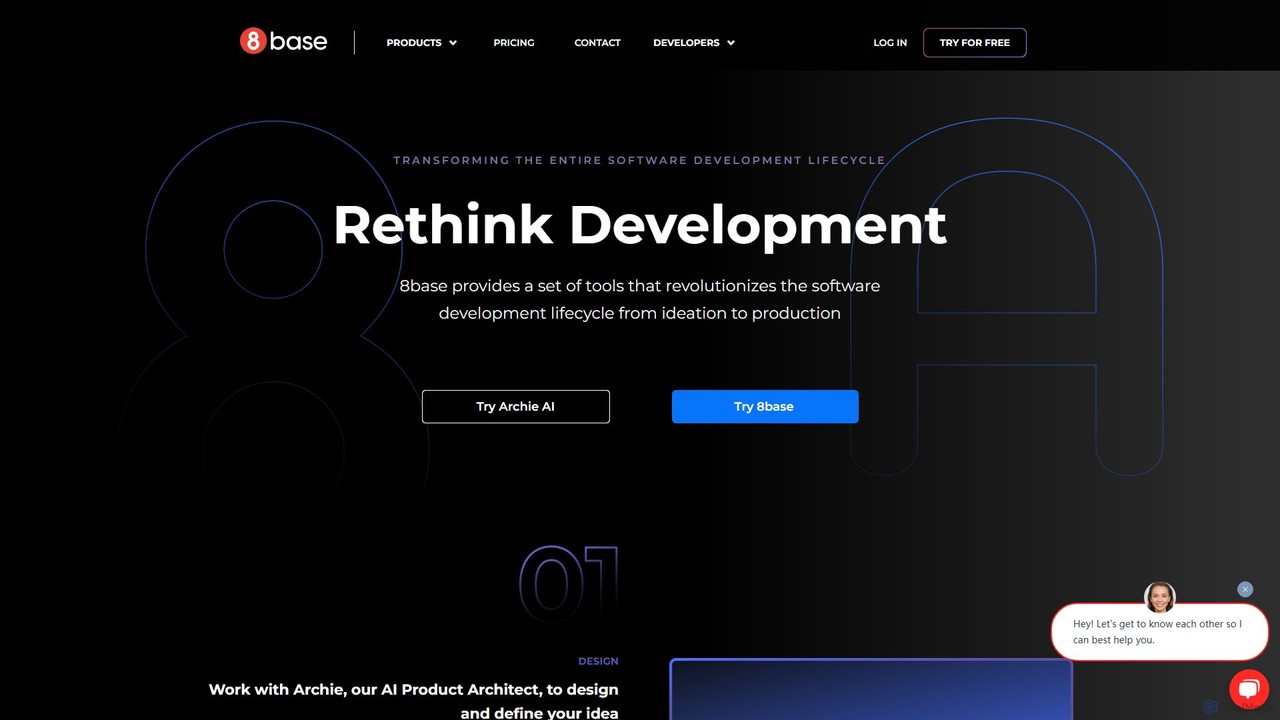
8base is an AI-powered low-code development platform that transforms the entire software development lifecycle. It features Archie, an AI Product Architect, to design applications from simple prompts, and a robust Backend-as-a-Service (BaaS) to generate scalable backends with a GraphQL API. Ideal for developers, agencies, and enterprises, 8base accelerates development, reduces costs, and simplifies infrastructure management, enabling teams to build and deploy applications faster than ever.

Preview

Rowy Product overview

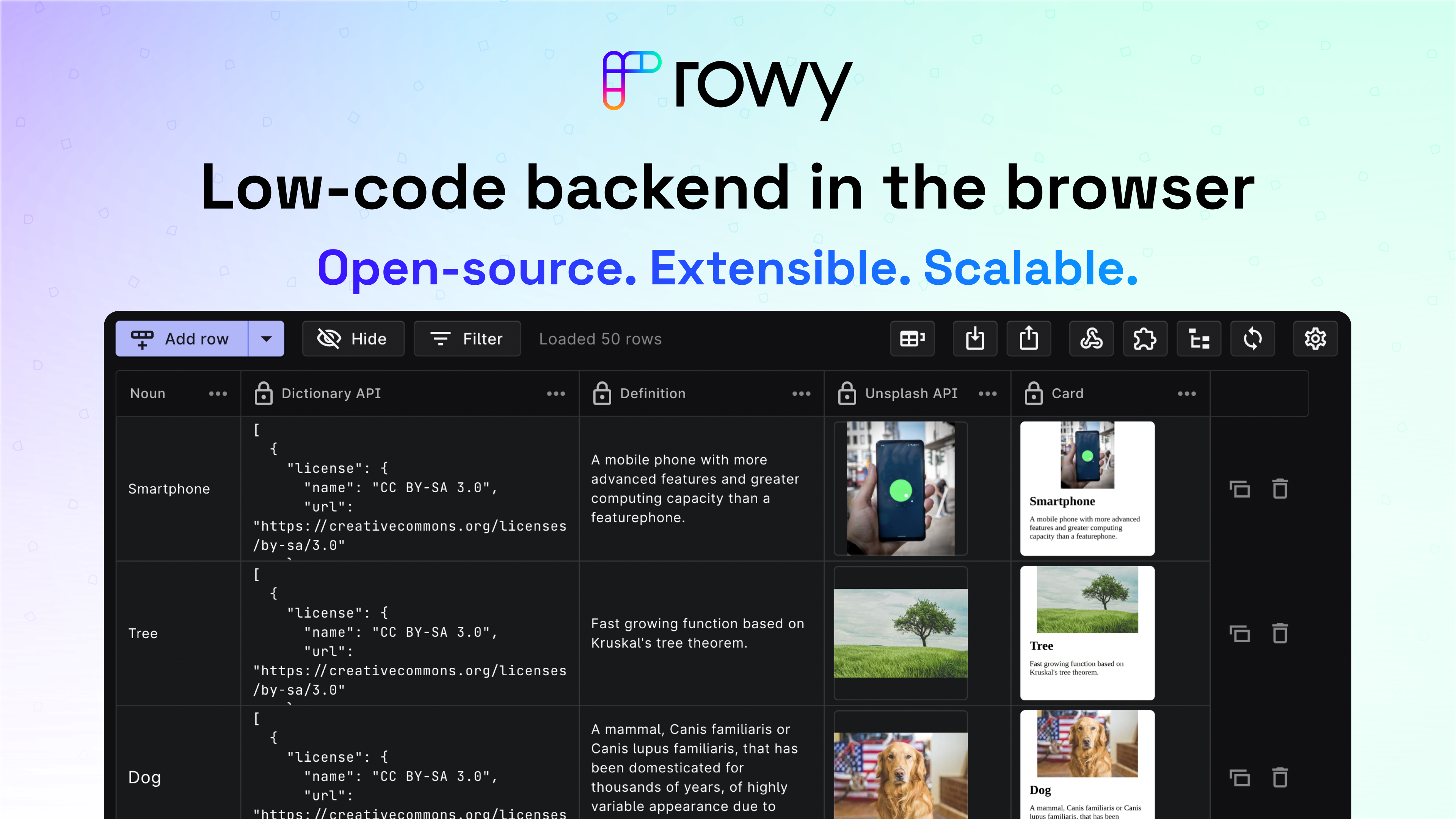
Rowy is an open-source, low-code platform that provides an Airtable-like UI for Firebase and Google Cloud. It empowers users to manage databases, build cloud functions, and automate workflows with the simplicity of a spreadsheet, combined with the power of custom code.

Preview

Quick facts

Compare product focus, pricing models and audiences. Highlighted rows indicate different listed information; unknown pricing does not mean free.

8base VS Rowy — Quick facts
Quick facts8baseRowy
Pricing modelFreemiumFreemium
Product typeWebWeb
Primary focusBackendBackend
Audience and rolesNo data availableNo data available
CategoriesBackend · Low Code No Code · Ai ChatbotBackend · Low Code No Code · Automation · Database
AddedAug 15, 2025Aug 3, 2025
UpdatedNov 19, 2026Nov 19, 2026

Features, usage and use cases

Explore the listed product descriptions, features and workflows. Taxonomy labels alone are not feature evaluations.

8base

What is 8base

8base is a revolutionary low-code and pro-code development platform designed to streamline and accelerate the entire software development lifecycle (SDLC), from initial idea to production deployment. It provides a comprehensive suite of tools that empower developers, software agencies, and enterprises to build sophisticated web and mobile applications with unprecedented speed and efficiency. At its core, 8base combines the power of generative AI with a robust backend infrastructure. The platform is built around its AI Product Architect, Archie, which can transform a simple text prompt into a detailed application blueprint, including functional and technical specifications. This is complemented by a powerful Backend-as-a-Service (BaaS) built on AWS, which automatically generates a scalable backend, a flexible GraphQL API, and serverless functions based on the design. 8base's philosophy is to abstract away redundant, low-value work, allowing developers to focus on creating unique features and business logic, while never taking away the ability to dive into the code and take full control when needed.

How to use 8base

The 8base workflow is structured into four intuitive stages, guiding users from concept to a running application:

  1. DESIGN: The process begins with Archie, the AI Product Architect. Users enter a simple prompt describing their application idea. Archie analyzes the prompt and generates a free, comprehensive blueprint of the concept, which includes functional requirements, user stories, technical design elements, and a data model. Users can collaborate with Archie to expand and refine the project to full specifications, with the option to get support from a human expert at any step.
  2. GENERATE: Once the design is finalized, users leverage the specifications to generate the application's backend. With a single click, 8base builds out the data model, populates it with test data, creates custom backend functions, and deploys a powerful GraphQL API. This step lays the complete server-side foundation for the software application in minutes.
  3. BUILD: With the backend in place, developers can focus on building the frontend and any other custom components. Teams can use their own developers or leverage 8base's network of partners. The platform is highly iterative, allowing for a fully transparent process where developers can integrate their preferred frontend frameworks and tools, connecting them seamlessly to the 8base backend via the GraphQL API.
  4. RUN: The final application runs on 8base's fully-scalable, DevOps-free computing platform, which is built on AWS. This fully-managed cloud service handles all infrastructure concerns, from scaling to security. 8base offers shared, dedicated, and self-hosting options to meet various scaling and compliance needs, including SOC 2 and HIPAA.

Core Features of 8base

  • Archie AI Product Architect: An AI agent that translates natural language prompts into detailed software blueprints and technical specifications.
  • Backend-as-a-Service (BaaS): A fully managed backend environment that includes a database, file storage, user authentication, and serverless functions.
  • Auto-Generated GraphQL API: Instantly creates a powerful, flexible, and scalable GraphQL API for your data model, supporting queries, mutations, and subscriptions.
  • Serverless Functions: Write and deploy custom backend logic in JavaScript/TypeScript without managing servers or infrastructure.
  • Low-Code App Builder: A visual development environment to build front-end interfaces and application logic with drag-and-drop components.
  • Scalable Cloud Hosting: Enterprise-grade, serverless infrastructure built on AWS, ensuring high availability and performance with various hosting options.
  • CI/CD (Continuous Integration/Continuous Deployment): Professional development lifecycle tools to manage multiple environments (development, staging, production) and streamline deployments.
  • Role-Based Permissions & Security: Granular access control to define what different user roles can see and do within the application.
  • Compliance Ready: Optional adherence to standards like SOC 2, HIPAA, and GDPR for enterprise-level applications.

Use Cases for 8base

8base is versatile and can be used to build a wide range of applications, including:

  • SaaS Application Development: Rapidly build and launch multi-tenant SaaS products with complex business logic and scalable architecture.
  • Digital & Development Agencies: Increase profitability by building and delivering client projects 3-5x faster, allowing agencies to take on more work without expanding their team.
  • Enterprise Modernization: Help large organizations build new digital products or modernize legacy systems with agility, integrating with existing services like Salesforce.
  • MVP & Prototyping: Enable startups and non-technical founders to quickly validate business ideas and launch a minimum viable product (MVP) with minimal upfront investment.
  • Custom Internal Tools: Develop bespoke internal applications such as CRMs, dashboards, and operational tools tailored to specific business workflows.

Advantages of 8base

Users love 8base for its ability to transform the development process. Key advantages include:

  • Radical Speed: Dramatically reduce time-to-market by automating the design, backend generation, and infrastructure management.
  • Cost Reduction: Significantly lower costs associated with hiring specialized backend/DevOps engineers and managing cloud infrastructure.
  • Enhanced Productivity: Frees up developers to focus on building unique, high-value features and user experiences instead of writing boilerplate code.
  • Ultimate Scalability: The serverless architecture on AWS ensures that applications can scale effortlessly from a few users to millions.
  • Developer-Friendly Flexibility: While a low-code platform, 8base provides a "pro-code" escape hatch, giving developers full control and extensibility without platform lock-in.

Pricing and Plans

8base offers a flexible pricing structure to support everyone from individual developers to large enterprises.

  • Free Plan: $0/month. Ideal for individual developers and small projects. Includes core backend features, GraphQL API, serverless functions, and community support. Capacity is limited (e.g., 2,500 database rows, 0.5 GB file storage).
  • Professional Plan: Starts at $50 per developer/month (minimum 3 developers). Designed for teams and professional development. Includes everything in Free, plus CI/CD, role-based permissions, multiple database environments, and significantly higher capacity.
  • Enterprise Plan: Starts at $75 per developer/month (minimum 10 developers). Tailored for large organizations with enterprise-level needs. Includes all Professional features plus volume discounts, advanced SQL access, self-hosting options, SLAs, and premium support.
  • Add-Ons: Capabilities like dedicated environments, premium support, and compliance (SOC II, HIPAA, GDPR) are available as add-ons for Professional and Enterprise plans.

Rowy

Rowy is a powerful, open-source low-code platform designed to revolutionize backend development on Google Cloud and Firebase. It provides a familiar and intuitive spreadsheet-like interface for managing your Firestore database, making data management accessible to both developers and non-technical team members. The platform's core philosophy is "Start like no-code, code anytime," allowing you to begin projects rapidly with a visual interface and seamlessly transition to writing custom code as your application's complexity grows.

With Rowy, you can build and deploy cloud functions directly from your browser using JavaScript/TypeScript. This eliminates the need for complex local development setups and deployment pipelines for backend logic. It's an ideal solution for creating internal tools, admin panels, and managing application data without the overhead of building a custom front-end. The platform is built for scalability, leveraging the robust infrastructure of Google Cloud.

How to use Rowy

Getting started with Rowy is a streamlined process. First, you deploy Rowy to your own Google Cloud project, which gives you full control and ownership of your data and infrastructure. Once set up, you can connect it to your Firestore database. You can then create tables that correspond to your Firestore collections and define the schema using over 30 rich field types, including text, images, files, JSON, and even relational data lookups. For building custom logic, you can write cloud functions directly in the Rowy UI. These functions can be triggered by database events (e.g., on document creation), run on a schedule, or be exposed as secure API endpoints (webhooks) to integrate with other services or your frontend application.

Core Features of Rowy

  • Airtable-like UI for Firestore: Manage your database with a user-friendly, collaborative spreadsheet interface.
  • In-browser Cloud Function Editor: Write, test, and deploy Google Cloud Functions using JavaScript/TypeScript without leaving the platform.
  • 30+ Rich Field Types: Define your data schema with a wide variety of fields, including Image, File, JSON, Rich Text, and Connectors to other tables.
  • Built-in API & Webhooks: Automatically generate secure API endpoints for your backend logic and database operations.
  • ETL & Data Management: Easily import and export data in bulk using CSV, TSV, or JSON formats. Build simple ETL pipelines.
  • Third-Party Integrations: Seamlessly connect with services like Stripe, Algolia, OpenAI, SendGrid, and more to build powerful automations.
  • Open-Source and Self-Hostable: Gain full control by hosting Rowy on your own Google Cloud infrastructure, ensuring data privacy and security.
  • Role-Based Access Control (RBAC): Manage team permissions to control who can view or edit data and backend logic.
  • Pre-built Templates: Accelerate development with ready-made templates for common applications like CRMs, AI-powered apps, and e-commerce backends.

Use Cases for Rowy

Rowy is versatile and can be used for a wide range of applications. It's perfect for building the backend for web and mobile apps, especially for SaaS products, fintech apps, and e-commerce stores. Teams use it to create powerful internal tools and admin panels in minutes, not months. It excels at workflow automation, such as automating user onboarding, generating invoices with Stripe, or managing content moderation with AI. Developers leverage Rowy as a headless CMS for platforms like Webflow, React, and FlutterFlow. It is also an excellent tool for rapidly prototyping and launching Minimum Viable Products (MVPs) by significantly reducing backend development time.

Advantages of Rowy

The primary advantage of Rowy is its ability to drastically accelerate development. It bridges the gap between no-code simplicity and full-code power, offering unparalleled flexibility. By building on Google Cloud and Firebase, it provides a highly scalable and reliable foundation for any application. Being open-source and self-hosted, it offers better cost control and data ownership compared to many proprietary platforms. Its developer-friendly environment, which combines a visual UI with an integrated code editor, enhances productivity and facilitates collaboration between technical and non-technical team members.

Pricing and Plans

Rowy is an open-source platform, which means the software itself is free to use. You can self-host it on your own Google Cloud project. The costs associated with using Rowy are based on your consumption of Google Cloud and Firebase services (e.g., Firestore reads/writes, Cloud Function invocations, and data storage). This pay-as-you-go model provides a cost-effective solution that scales with your usage, making it suitable for projects of all sizes, from small hobby apps to large-scale enterprise applications.

Positioning

Their taxonomy shows where the products overlap and where each one has a more distinct focus. Unknown fields are shown explicitly and are never filled with assumptions.

Categories

Shared
BackendLow Code No Code
Only 8base
Ai Chatbot
Only Rowy
AutomationDatabase

Tags

Shared
low-codeno-code
Only 8base
AI architectapplication developmentBaaSbackend as a servicedevopsGraphQLrapid application developmentSaaS builderserverlesssoftware development
Only Rowy
Airtable alternativeautomationbackenddatabasedeveloper toolsFirebaseGoogle Cloudheadless CMSopen sourcespreadsheet

Audience and roles

Shared
No listed items
Only 8base
No listed items
Only Rowy
No listed items

Traffic comparison

Traffic is shown on the same scale so differences in market visibility are not visually understated.

How to interpret the traffic data

Both charts share the same months and vertical scale. Each tool identifies its latest reporting month; missing months are left blank, not counted as zero. Regional and source visit counts are estimates calculated from the reported shares.

8base monthly traffic:

Latest traffic · 2026-05

Monthly visits
7.5K
Avg. visit duration
0:08
Pages per visit
1.65
Bounce rate
39.28%
Data updated 2026-06-15

Monthly traffic trend

  • 2025-09: 18.9K
  • 2026-01: 10.4K
  • 2026-02: 8.3K
  • 2026-03: 9.4K
  • 2026-04: 7.9K
  • 2026-05: 7.5K

Top regions

Top 5 countries/regions
Country/regionPercentageEstimated visits
🇺🇸United States27.57%2.1K
🇮🇳India23.72%1.8K
🇩🇪Germany17.3%1.3K
🇻🇳Vietnam16.01%1.2K
🇷🇺Russia15.4%1.2K

Search keywords

8basedevelopmentbyarchiesaas icebergsoftware deliverablesuse of funds slide

Rowy monthly traffic:

Latest traffic · 2026-05

Monthly visits
30.7K
Avg. visit duration
0:14
Pages per visit
1.73
Bounce rate
39.53%
Data updated 2026-06-15

Monthly traffic trend

  • 2025-09: 50.2K
  • 2026-01: 41K
  • 2026-02: 36K
  • 2026-03: 34.6K
  • 2026-04: 32K
  • 2026-05: 30.7K

Top regions

Top 5 countries/regions
Country/regionPercentageEstimated visits
🇺🇸United States29.61%9.1K
🇮🇳India29.4%9K
🇻🇳Vietnam16.6%5.1K
🇧🇷Brazil12.8%3.9K
🇪🇸Spain11.59%3.6K

Search keywords

google calendar apinotion api keyprompt engineering job descriptionrowyrowy full search api

Community signals

Ratings, comments, favorites, and likes are community signals—not a substitute for product fit.

8base

Rating
No data available
Comments
0
Favorites
173
Likes
171

Rowy

Rating
No data available
Comments
0
Favorites
185
Likes
211

8base vs Rowy · Comparison FAQ

What do 8base and Rowy have in common?
Both tools are listed under Backend、Low Code No Code. These categories indicate overlapping use cases; compare their detailed descriptions for workflows, capabilities and limitations.
Are 8base and Rowy free?
Listed pricing models: 8base — Freemium; Rowy — Freemium. Missing pricing is not proof of a free plan, and freemium does not mean every feature is free. Check official sites for current plans, limits and trials.
How should I choose between 8base and Rowy?
The primary listed category is Backend for 8base, and Backend for Rowy. Compare features, steps and use cases, then verify pricing, data permissions and deployment needs. This page does not include hands-on testing and does not declare a winner from traffic or tags.

Sources and comparison methodology

This page is assembled from ToolMage product listings, taxonomy, traffic statistics and on-site user feedback. It is not a hands-on test or an independent review.
  • Feature and plan descriptions reflect information in the listings, not real-time guarantees. Verify pricing, quotas, availability and privacy terms on the official sites.
  • Traffic uses the reporting months shown. Missing statistics do not mean zero visits, and different periods do not establish growth or superiority. Regional and source visit counts are estimates based on shares.
  • Different tags indicate differences in the listings, not proof that the other product lacks a capability. Ratings, favorites and visits are not used to declare a winner.

Related comparisons