AnyAPI
Api
AI TOOL COMPARISON
What is the difference, and which fits your workflow? Compare features, usage, pricing models and traffic side by side.
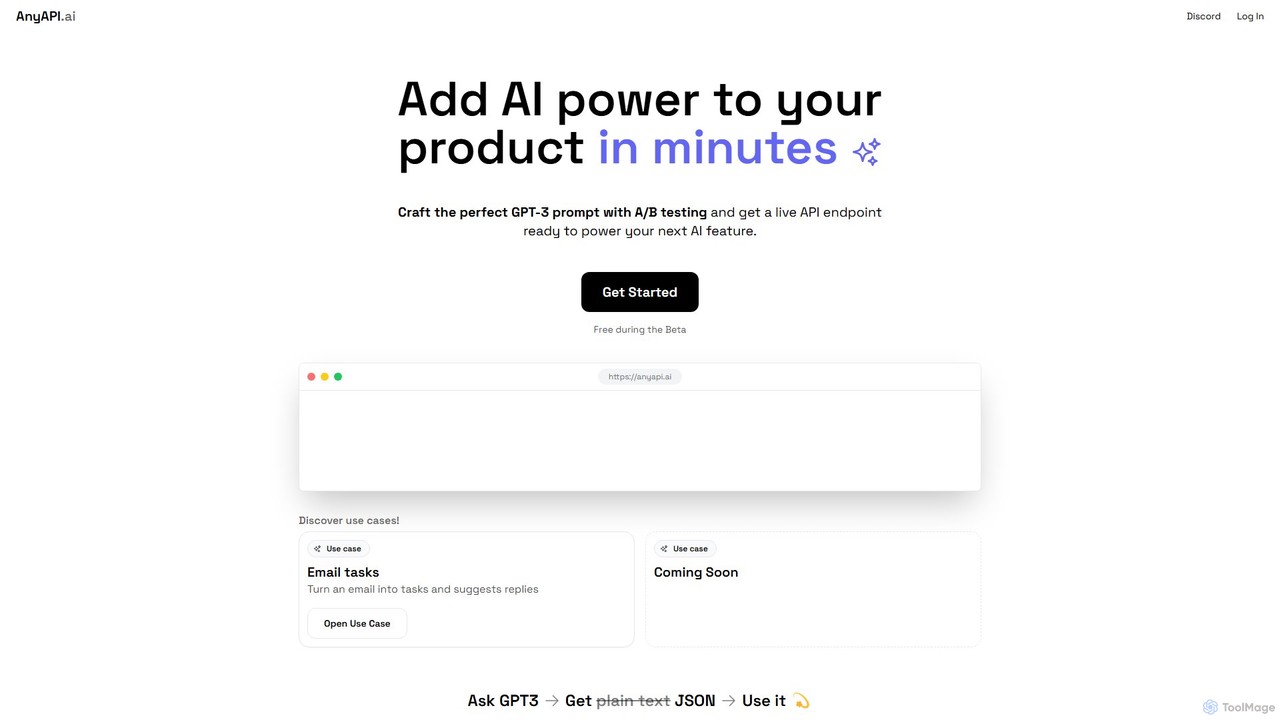
AnyAPI is a developer platform that enables you to add AI features to your product in minutes. It provides tools for crafting and A/B testing GPT-3 prompts, and instantly generates a live API endpoint for seamless integration. Simplify your AI development workflow and deploy powerful features without managing complex infrastructure.
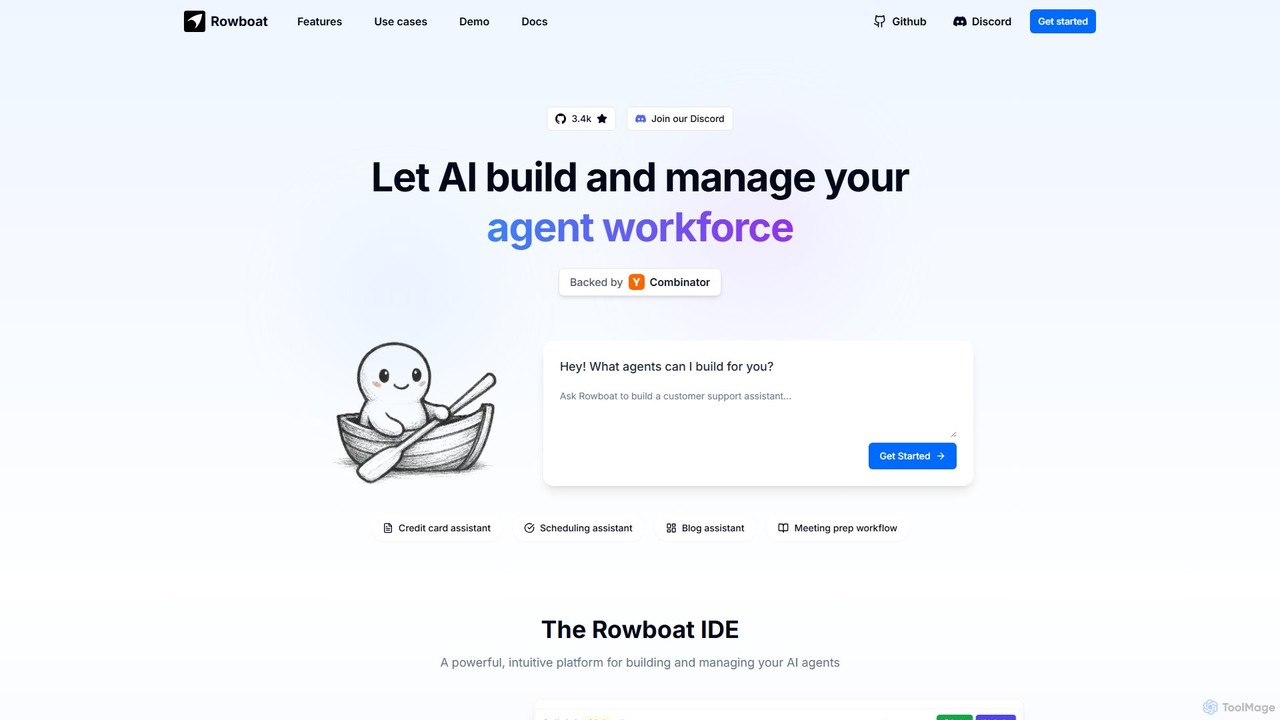
Rowboat is a powerful, AI-powered IDE for building, managing, and deploying complex multi-agent systems. Backed by Y Combinator, it allows users to describe workflows in plain English, and its AI copilot automatically generates the entire agent graph, including roles, prompts, and tool integrations. It's designed to simplify the creation of robust, real-world AI agents for productivity, e-commerce, support, and more, with features like open-source flexibility and support for over 100 LLMs.
Compare product focus, pricing models and audiences. Highlighted rows indicate different listed information; unknown pricing does not mean free.
| Quick facts | AnyAPI | Rowboat |
|---|---|---|
| Pricing model | Freemium | Freemium |
| Product type | Web | Web |
| Primary focus | Api | Agent Builder |
| Audience and roles | No data available | No data available |
| Categories | Api · Platform · Automation | Agent Builder · Platform · Automation |
| Added | Aug 2, 2025 | Aug 3, 2025 |
| Updated | Nov 19, 2026 | Nov 19, 2026 |
Explore the listed product descriptions, features and workflows. Taxonomy labels alone are not feature evaluations.
AnyAPI is a powerful and streamlined platform designed for developers and product teams who want to integrate advanced AI capabilities into their applications with minimal effort. The core mission of AnyAPI is to abstract away the complexities of interacting with large language models like GPT-3, allowing you to go from an idea to a production-ready AI feature in a matter of minutes. It serves as a bridge between your application and the power of generative AI, providing a robust toolkit for prompt engineering, testing, and deployment.
The platform is built around a central workflow that empowers users to craft the perfect prompt for their specific needs. Instead of writing backend code to handle API calls, manage keys, and parse responses, developers can use AnyAPI's intuitive interface to design and refine their prompts. This significantly accelerates the development cycle and makes AI integration accessible even to those who are not machine learning experts.
Using AnyAPI is a straightforward process designed for speed and efficiency. First, you sign up on the platform, which is currently free during its beta phase. Once logged in, you enter the prompt studio. Here, you can write and experiment with different prompts, defining variables for dynamic content. The next crucial step is optimization. AnyAPI offers a built-in A/B testing feature, allowing you to create multiple versions of a prompt and test them against each other to see which one delivers the most accurate and useful results. After you've identified the winning prompt, you can deploy it with a single click. AnyAPI instantly generates a secure, scalable, and live API endpoint. You simply copy this endpoint and integrate it into your product's codebase with a standard HTTP request. The API returns structured JSON, making it easy to use the AI-generated output directly in your application's logic and UI.
AnyAPI is versatile and can power a wide range of AI features across different industries. For example, you can use it for email automation, where it can parse incoming emails, extract key information, categorize them, and even suggest context-aware replies. In the realm of content creation, it can be used to generate blog post ideas, summarize long articles, or rephrase text for different audiences. For e-commerce platforms, it could power a feature that generates compelling product descriptions from a list of attributes. Customer support tools can leverage AnyAPI to create intelligent chatbots that understand user queries and provide accurate answers. It's also ideal for internal tools, such as automatically converting meeting notes into structured tasks and action items.
The primary advantage of AnyAPI is its incredible speed of development. What would typically take days or weeks of backend development can be accomplished in minutes. It democratizes access to powerful AI by providing a low-code solution for a complex problem. The A/B testing feature is a significant differentiator, as it introduces a data-driven approach to prompt engineering, moving it from guesswork to a scientific process. This leads to more reliable and higher-quality AI features. Furthermore, by handling the infrastructure, AnyAPI allows teams to focus on what they do best: building great user experiences, rather than worrying about the underlying AI plumbing.
AnyAPI is currently in a public beta phase and is free to use. This allows developers to explore the full range of features and integrate them into their projects without any initial cost. It is expected that after the beta period, AnyAPI will adopt a freemium model. This will likely include a generous free tier for hobbyists and small projects, followed by paid plans tiered based on the number of API calls, access to advanced features like team collaboration, and higher levels of support for production applications.
Rowboat is an innovative platform, backed by Y Combinator, designed to revolutionize the way developers and businesses build and manage AI agents. It functions as a powerful, intuitive Integrated Development Environment (IDE) specifically for creating complex multi-agent systems. The core premise of Rowboat is to let AI build your agent workforce for you. By simply describing a desired workflow in plain English, Rowboat's intelligent copilot instantly drafts a complete multi-agent graph. This graph outlines the different agent roles, their specific prompts, and the necessary tool calls, providing a solid foundation that is ready to be tweaked or deployed immediately.
The platform is built for creating robust, real-world applications, moving beyond simple chatbots to sophisticated automated systems. It addresses the entire lifecycle of agent development, from initial conception and building to deployment, monitoring, and iteration. With its open-source nature (Apache-2.0 license), Rowboat fosters a collaborative community and allows for deep customization, enabling users to fork the codebase, extend its capabilities, and ship their own unique plugins.
Using Rowboat is a streamlined, five-step process designed for both speed and power:
Rowboat's versatile platform supports a vast range of applications across various industries:
Rowboat offers significant advantages for anyone building with AI agents. Its primary benefit is the dramatic acceleration of development time, transforming complex ideas into functional multi-agent systems in minutes, not weeks. The platform provides immense flexibility through its support for over 100 LLMs and its open-source foundation. This allows for highly customized and optimized solutions. Furthermore, the built-in AI feedback and iteration capabilities ensure that the agents you build are not static; they learn and improve over time, becoming more robust and reliable. Finally, by handling all the infrastructure and deployment complexities, Rowboat empowers builders to focus solely on creating value, not managing servers.
While the website encourages users to "Get Started," specific pricing tiers are not publicly listed. This typically suggests a freemium or usage-based model. It is likely that Rowboat offers a free tier for individual developers and small projects to explore the platform's capabilities. Paid plans would likely be available for businesses and production applications, offering more resources, higher usage limits, priority support, and advanced features. For the most accurate and up-to-date information, it is recommended to visit the official Rowboat website or contact their sales team.
Their taxonomy shows where the products overlap and where each one has a more distinct focus. Unknown fields are shown explicitly and are never filled with assumptions.
Traffic is shown on the same scale so differences in market visibility are not visually understated.
Both charts share the same months and vertical scale. Each tool identifies its latest reporting month; missing months are left blank, not counted as zero. Regional and source visit counts are estimates calculated from the reported shares.
No data available
| Country/region | Percentage | Estimated visits |
|---|---|---|
| 🇺🇸United States | 39.67% | 19.8K |
| 🇨🇴Colombia | 17.25% | 8.6K |
| 🇲🇽Mexico | 14.54% | 7.3K |
| 🇪🇸Spain | 14.38% | 7.2K |
| 🇹🇭Thailand | 14.16% | 7.1K |
| Source type | Percentage | Estimated visits |
|---|---|---|
| Direct | 65.78% | 32.8K |
| Referral | 32.88% | 16.4K |
| 1.34% | 669 |
Ratings, comments, favorites, and likes are community signals—not a substitute for product fit.
This page is assembled from ToolMage product listings, taxonomy, traffic statistics and on-site user feedback. It is not a hands-on test or an independent review.