Arize
Mlops
AI TOOL COMPARISON
What is the difference, and which fits your workflow? Compare features, usage, pricing models and traffic side by side.
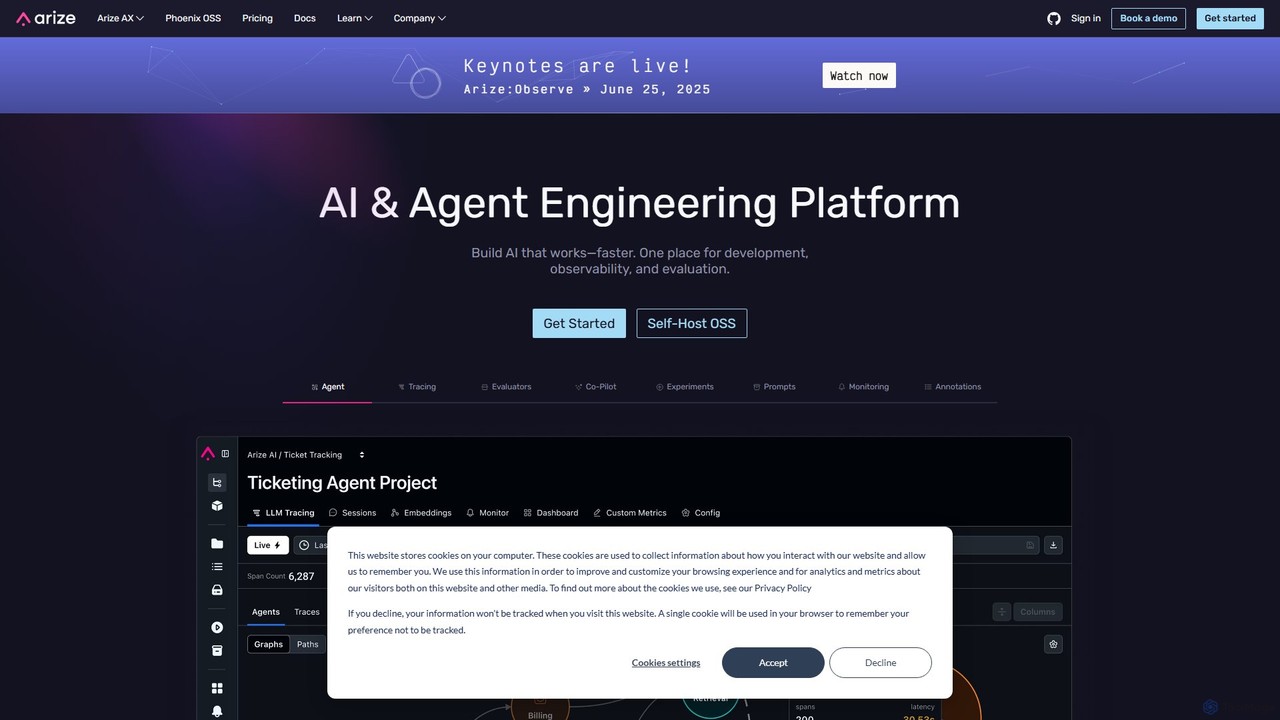
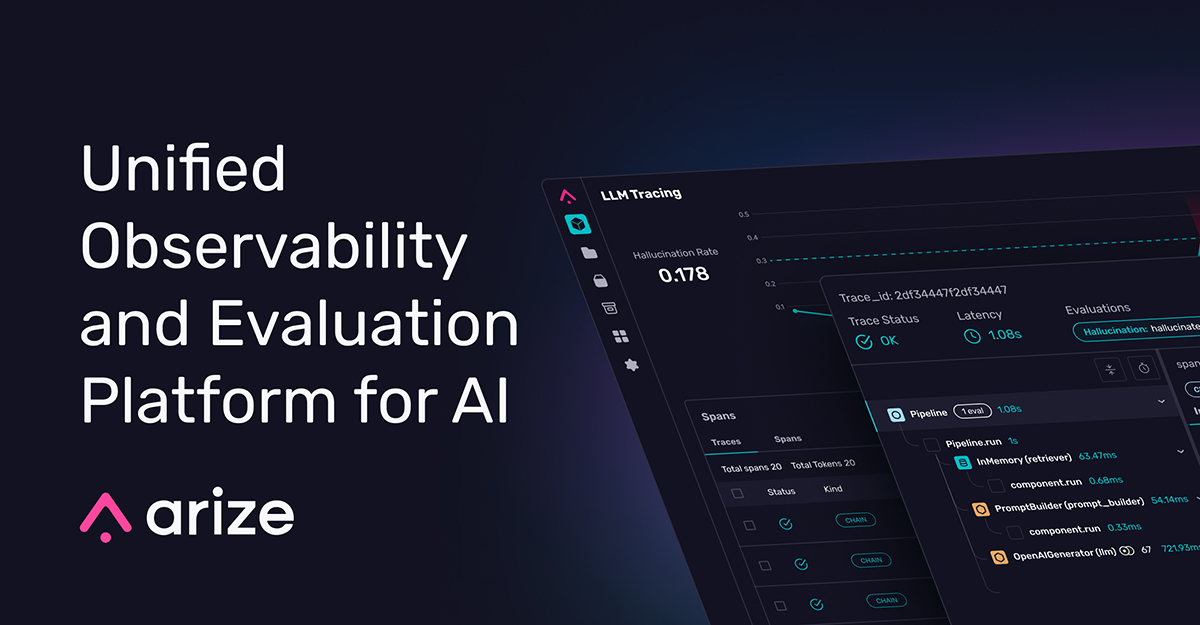
Arize is an AI & Agent Engineering Platform designed for development, observability, and evaluation. It provides a unified solution for teams to build, monitor, debug, and improve LLM and ML models faster. By closing the loop between development and production, Arize helps ensure AI systems are reliable, trustworthy, and high-performing at scale.
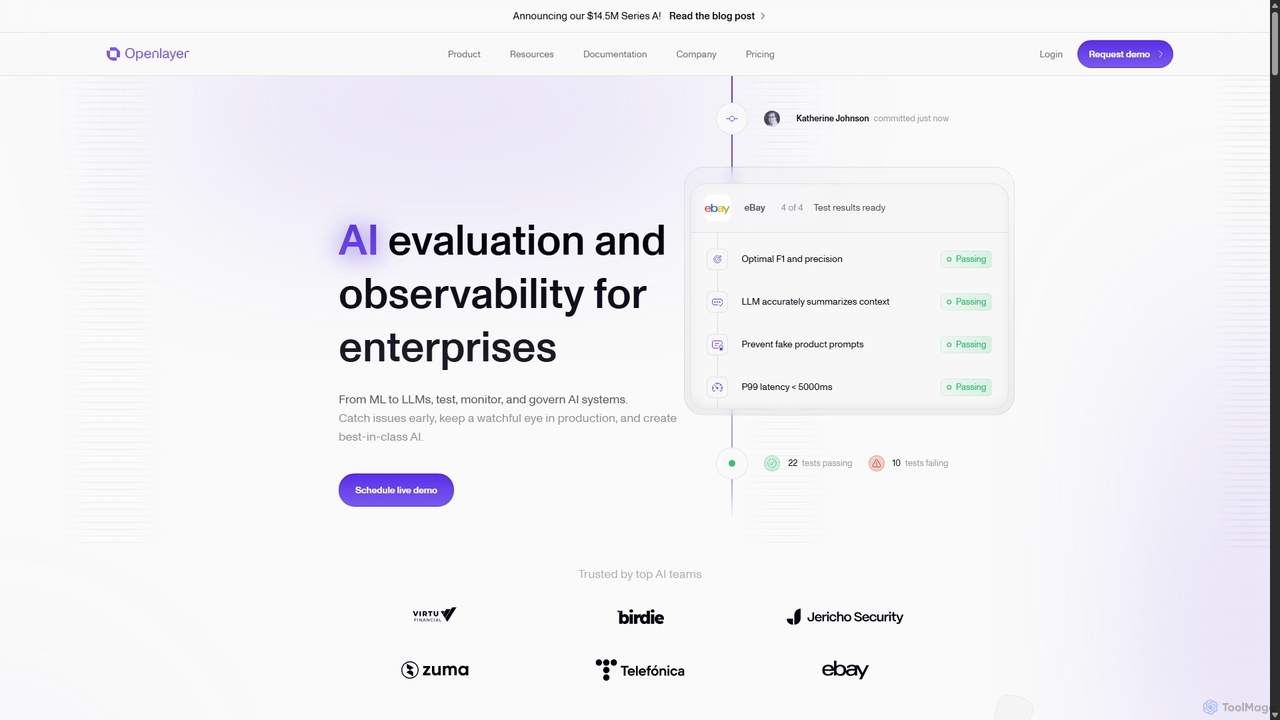
Openlayer is an enterprise-grade platform for AI evaluation and observability. It empowers teams to test, monitor, and govern both traditional machine learning models and large language models (LLMs) throughout their entire lifecycle, from development to production, ensuring reliability and compliance.
Compare product focus, pricing models and audiences. Highlighted rows indicate different listed information; unknown pricing does not mean free.
| Quick facts | Arize | Openlayer |
|---|---|---|
| Pricing model | Freemium | Freemium |
| Product type | Web | Web |
| Primary focus | Mlops | Analytics |
| Audience and roles | No data available | AI Developer · AI Researcher · CTO · Data Scientist · DevOps Engineer · Machine Learning Engineer · MLOps Engineer · Product Manager |
| Categories | Mlops · Monitoring | Analytics · Machine Learning · Testing · Monitoring |
| Added | Aug 3, 2025 | Sep 14, 2025 |
| Updated | Nov 19, 2026 | Nov 19, 2026 |
Explore the listed product descriptions, features and workflows. Taxonomy labels alone are not feature evaluations.
Arize is a comprehensive AI engineering platform built to address the critical challenges of building and maintaining AI systems in the real world. Founded by engineers who experienced the difficulties of troubleshooting production AI, Arize aims to decode the 'black box' of complex models, including LLMs, generative AI, and traditional machine learning. The platform unifies the entire AI lifecycle into a single, cohesive workflow, integrating development, observability, and evaluation. This allows AI teams to move faster and build with confidence, transforming raw production data into actionable insights for continuous improvement. Trusted by leading companies like PepsiCo, Siemens, and TripAdvisor, Arize provides the essential visibility and control needed to manage and scale AI initiatives responsibly.
Using Arize involves a systematic process to monitor and improve your AI models from development to production. First, you integrate Arize into your AI stack using their Python or JavaScript SDKs, or by leveraging the open standard OpenTelemetry for flexible, vendor-agnostic tracing of agents and frameworks. During development, you can use the Prompt Playground to replay, debug, and perfect prompts, and set up CI/CD experiments to catch regressions early. Automated evaluation using LLM-as-a-Judge helps scale your testing. Once deployed, the platform provides real-time observability dashboards to monitor model performance, data drift, and costs. You can trace the execution flow of complex agents, debug issues instantly with online evaluations, and manage human feedback loops. Finally, the insights gathered from production are used to create better evaluation datasets and inform the next iteration of development, creating a powerful, data-driven improvement cycle.
Arize is versatile and supports a wide range of AI applications. For Generative AI and LLM-powered agents, companies use it to monitor chatbots and complex agentic systems for accuracy, cost, and performance, ensuring they are trustworthy. In traditional Machine Learning, teams at companies like Handshake and GetYourGuide use Arize to monitor for model degradation, data drift, and performance issues in areas like recommendation engines and computer vision. For Enterprise AI Governance, large organizations like Siemens leverage Arize to establish trust and control over their AI systems, enabling them to roll out AI responsibly and effectively. It also serves as a critical tool for Rapid Prototyping, allowing teams to quickly iterate on LLM projects by seamlessly integrating traces and evaluations into their development workflow.
The primary advantage of Arize is its ability to unify the entire AI development lifecycle, closing the critical gap between development and production. This creates a continuous, data-driven feedback loop that accelerates improvement. Its foundation on open standards like OpenTelemetry provides unparalleled flexibility and prevents vendor lock-in. The platform offers deep, purpose-built tools for both LLM/agent engineering and traditional ML, making it a comprehensive solution. By providing granular visibility into model behavior, Arize empowers teams to troubleshoot complex issues much faster, from prompt regressions to subtle data drift. This leads to more reliable, high-performing, and trustworthy AI systems, giving businesses the confidence to scale their AI initiatives.
Arize offers a tiered pricing structure to suit different needs:
Openlayer is a comprehensive platform designed to bring reliability, transparency, and trust to AI systems. In an era where AI is transforming industries, Openlayer addresses the critical challenge of inconsistent performance and the lack of robust testing. It provides a unified environment for AI teams to confidently develop, deploy, and monitor their systems, whether they are complex machine learning models or sophisticated LLM-based applications. The platform streamlines the entire AI lifecycle, enabling teams to catch issues early, prevent regressions in production, and build best-in-class AI that is both dependable and impactful.
Integrating Openlayer into your workflow is designed to be seamless. The process typically follows these steps:
Openlayer is versatile and trusted by teams across various industries:
By using Openlayer, AI teams gain significant advantages:
Openlayer offers a flexible pricing structure to accommodate teams of all sizes:
Their taxonomy shows where the products overlap and where each one has a more distinct focus. Unknown fields are shown explicitly and are never filled with assumptions.
Traffic is shown on the same scale so differences in market visibility are not visually understated.
Both charts share the same months and vertical scale. Each tool identifies its latest reporting month; missing months are left blank, not counted as zero. Regional and source visit counts are estimates calculated from the reported shares.
| Country/region | Percentage | Estimated visits |
|---|---|---|
| 🇺🇸United States | 52.88% | 131.2K |
| 🇮🇳India | 21.11% | 52.4K |
| 🇨🇳China | 11.41% | 28.3K |
| 🇮🇪Ireland | 7.47% | 18.5K |
| 🇬🇧United Kingdom | 7.13% | 17.7K |
| Source type | Percentage | Estimated visits |
|---|---|---|
| Direct | 79.23% | 196.6K |
| Referral | 16.37% | 40.6K |
| 4.4% | 10.9K |
| Country/region | Percentage | Estimated visits |
|---|---|---|
| 🇺🇸United States | 38.9% | 9.4K |
| 🇳🇬Nigeria | 22.13% | 5.4K |
| 🇮🇳India | 20.93% | 5.1K |
| 🇩🇪Germany | 9.78% | 2.4K |
| 🇧🇷Brazil | 8.26% | 2K |
Ratings, comments, favorites, and likes are community signals—not a substitute for product fit.
This page is assembled from ToolMage product listings, taxonomy, traffic statistics and on-site user feedback. It is not a hands-on test or an independent review.