ToolMage
Sign in

AI TOOL COMPARISON

Botkube vs Pipekit

What is the difference, and which fits your workflow? Compare features, usage, pricing models and traffic side by side.

Jump to key differences

Product overview

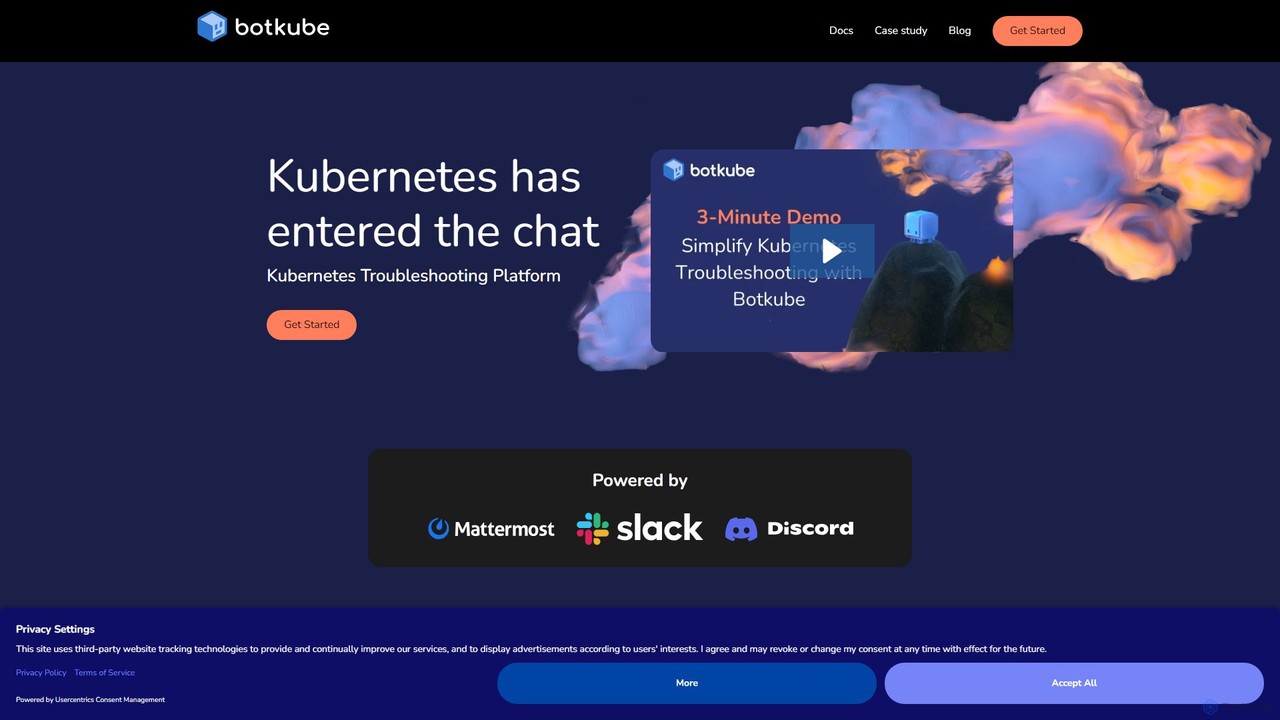
Botkube Product overview

Botkube is an open-source, collaborative AI assistant for Kubernetes. It integrates directly into your chat platforms like Slack and Microsoft Teams, centralizing real-time monitoring, alerting, and troubleshooting. It empowers developers to manage their applications independently and streamlines DevOps workflows by bringing K8s management into your daily communication tools.

Preview

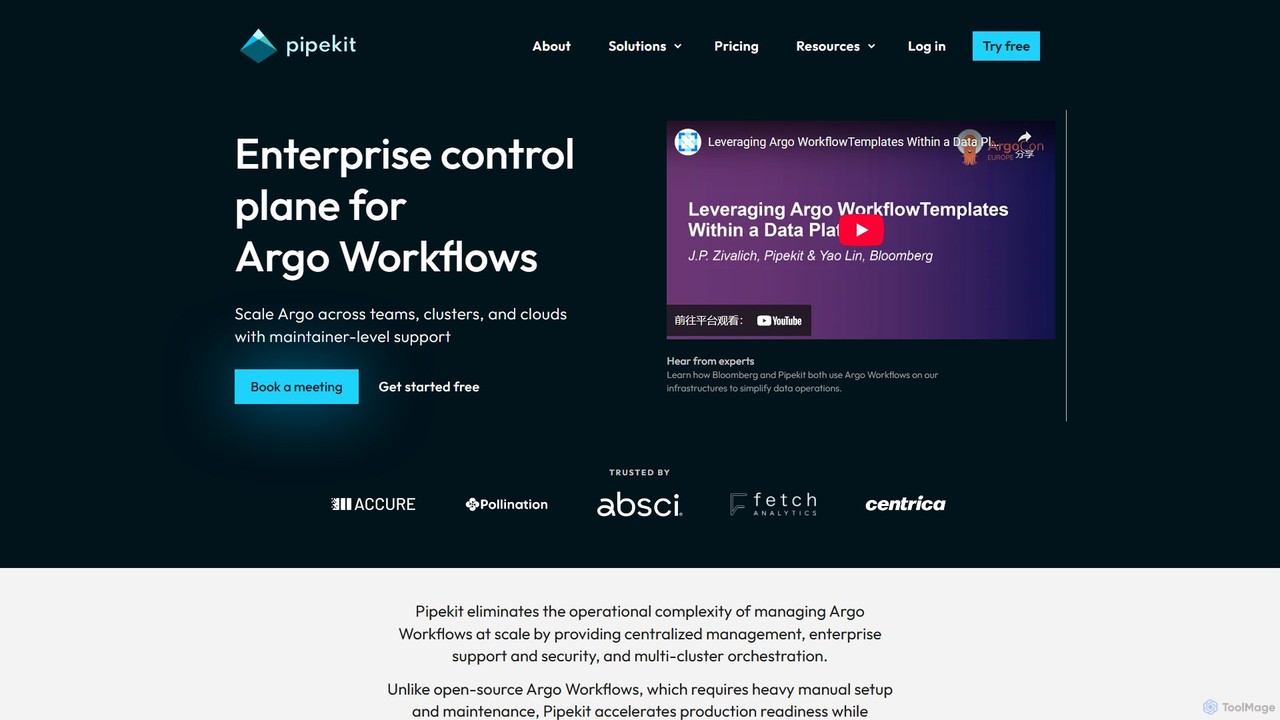
Pipekit Product overview

Pipekit is an enterprise-grade control plane and support service for Argo Workflows. It empowers platform and data teams to run, monitor, and govern large-scale data, MLOps, and CI/CD pipelines on Kubernetes across multiple clusters and clouds.

Preview

Quick facts

Compare product focus, pricing models and audiences. Highlighted rows indicate different listed information; unknown pricing does not mean free.

Botkube VS Pipekit — Quick facts
Quick factsBotkubePipekit
Pricing modelFreePaid
Product typeWebWeb
Primary focusDevopsOrchestration
Audience and rolesNo data availableNo data available
CategoriesDevops · Monitoring · CollaborationOrchestration · Mlops · Devops
AddedAug 8, 2025Aug 15, 2025
UpdatedNov 19, 2026Nov 19, 2026

Features, usage and use cases

Explore the listed product descriptions, features and workflows. Taxonomy labels alone are not feature evaluations.

Botkube

Botkube is a revolutionary open-source AI assistant designed to transform how teams interact with Kubernetes. It acts as a collaborative bridge, integrating powerful Kubernetes monitoring, troubleshooting, and management capabilities directly into your favorite chat platforms, such as Slack, Microsoft Teams, and Discord. By centralizing alerts and providing contextual, AI-driven insights, Botkube democratizes Kubernetes management, making it accessible to developers without requiring deep expertise or direct CLI access. This allows DevOps and SRE teams to focus on core infrastructure tasks while empowering development teams to resolve their own application issues swiftly and efficiently.

The platform is built on the principle of reducing context switching and enhancing productivity. Instead of juggling multiple dashboards and terminals, teams can receive real-time notifications, run diagnostic commands, and collaborate on incident resolution all within a single, familiar chat interface. With its intelligent filtering and automation, Botkube ensures that the right alerts reach the right people at the right time, cutting through the noise and enabling faster response times.

How to use Botkube

Getting started with Botkube is a straightforward process designed to have you monitoring your clusters in minutes:

  1. Install the Botkube App: Begin by adding the Botkube application to your chosen collaboration platform (e.g., Slack, Microsoft Teams). This requires permissions to install apps within your workspace.
  2. Deploy the Botkube Agent: Next, install the Botkube agent into your Kubernetes cluster. This can be done easily using Helm or kubectl. The agent is lightweight and will begin monitoring your cluster resources immediately.
  3. Configure Sources and Sinks: Define what you want to monitor (sources) and where you want to send notifications (sinks). You can configure Botkube to watch specific Kubernetes resources, events, and logs. Powerful filtering allows you to fine-tune alerts to reduce noise.
  4. Interact and Troubleshoot: Once configured, you will start receiving real-time alerts in your designated chat channels. You can interact with the bot directly by issuing commands (e.g., @Botkube get pods -n my-namespace) to check statuses, fetch logs, and execute commands.
  5. Leverage the AI Assistant: For more complex issues, engage the Botkube AI Assistant. It can help diagnose problems, provide recommendations based on best practices, and even leverage your team's custom documentation (via the BYODocs feature) for tailored troubleshooting steps.

Core Features of Botkube

  • Collaborative AI Assistant: Utilizes AI to provide intelligent troubleshooting suggestions, analyze cluster health, and guide users through problem resolution, mimicking how a human expert would approach the task.
  • Chat-based Interface (ChatOps): Integrates seamlessly with Slack, Microsoft Teams, Discord, and Mattermost, bringing Kubernetes operations into your daily communication workflow.
  • Real-time Monitoring and Alerting: Monitors Kubernetes resources, events, and logs in real-time and sends contextual, filtered notifications to prevent alert fatigue.
  • Developer Self-Service: Empowers developers to safely query and manage their applications in Kubernetes without needing kubectl access, increasing their autonomy and reducing the load on DevOps teams.
  • Botkube FUSE: A copilot for platform engineers that unifies various tools into a single CLI, streamlining complex workflows, reducing context switching, and automating tedious tasks.
  • Extensive Integrations: Connects with a wide range of tools in the Kubernetes ecosystem, including Helm for package management and PagerDuty for incident management automation.
  • Bring Your Own Docs (BYODocs): Allows you to integrate your team's internal documentation and runbooks, enabling the AI assistant to provide highly specific and relevant troubleshooting advice.
  • Cluster Health Scans: Perform on-demand or scheduled scans of your cluster to get detailed analysis and actionable recommendations for improving performance, security, and reliability.

Use Cases for Botkube

Botkube is versatile and addresses key challenges for various roles within a tech organization:

  • DevOps and SREs: Use Botkube to gain a centralized view of all cluster activities, automate incident response by creating PagerDuty tickets from alerts, and enforce best practices across all teams. It significantly reduces the time spent on repetitive support tasks.
  • Application Developers: Developers can use Botkube to check the status of their deployments, view logs, and debug critical issues directly from Slack or Teams. This self-service capability accelerates the development lifecycle and reduces dependency on the operations team.
  • Platform Engineers: Leverage Botkube FUSE to build streamlined, automated workflows for managing infrastructure. It helps in consolidating tools and reducing the cognitive load associated with managing complex cloud-native environments.
  • Security Teams: Monitor for security-related events, such as unauthorized access attempts or the creation of pods with excessive privileges, and receive immediate alerts to take action.

Advantages of Botkube

Botkube offers a significant competitive edge for teams managing Kubernetes:

  • Increased Productivity: By minimizing context switching and bringing essential tools into a single interface, teams can work more efficiently.
  • Faster Mean Time to Resolution (MTTR): Real-time, contextual alerts combined with in-chat diagnostic tools dramatically shorten the time it takes to identify and fix issues.
  • Democratized K8s Knowledge: Lowers the barrier to entry for Kubernetes, enabling a wider range of team members to interact with and manage clusters effectively.
  • Enhanced Collaboration: Creates a shared, transparent environment where developers and operations can collaborate on troubleshooting using a common set of tools and information.
  • Open-Source and Community-Driven: As an open-source project, Botkube is transparent, flexible, and benefits from a vibrant community of contributors and users.

Pricing and Plans

Botkube is a free and open-source project. The core functionalities for monitoring, alerting, and troubleshooting Kubernetes within your chat platform are available at no cost. The commercial Botkube Cloud and Enterprise versions have been discontinued, with the team focusing its efforts on the powerful open-source offering. You can self-host and manage Botkube in your own environment, giving you full control over your data and configuration. Contributions to the project are welcome via its GitHub repository.

Pipekit

Pipekit provides a robust solution for enterprises looking to scale their cloud-native operations using Argo Workflows. It offers two primary services: the Pipekit Control Plane and the Pipekit Support Service. Founded by experts who faced the challenges of scaling data pipelines at companies like Docker and Kite, Pipekit is designed to simplify the complexity of managing Argo at scale, without vendor lock-in.

The platform is tailored for platform and data teams that need to manage multi-team or multi-cluster Argo deployments. It provides a centralized, single-pane-of-glass view to unify deployments, enforce governance, and offer developers a modern, intuitive user interface. By doing so, Pipekit helps organizations mitigate risks, reduce cloud expenditure, and accelerate development and debugging cycles.

How to use Pipekit

Using Pipekit involves integrating its control plane with your existing Kubernetes infrastructure, whether on-premise or in the cloud (AWS, Google Cloud, Microsoft Azure). The process typically follows these steps:

  1. Deployment: Choose between a cloud-hosted or self-hosted deployment of the Pipekit Control Plane.
  2. Cluster Connection: Connect your Kubernetes clusters to the Pipekit platform. This allows for multi-cluster workflow orchestration from a single point.
  3. Workflow Management: Use the unified UI or API to run, schedule, and monitor your Argo Workflows. Developers can leverage tools like the Hera Python SDK to define complex workflows without writing extensive YAML.
  4. Governance and Security: Configure Single Sign-On (SSO) and Role-Based Access Control (RBAC) to manage permissions and ensure secure access for different teams.
  5. Monitoring and Debugging: Utilize the built-in observability and workflow tracing features to monitor performance, identify bottlenecks, and debug issues faster.
  6. Engage Support (Optional): For teams using the Pipekit Support Service, engage directly with Argo maintainers for expert advice, scaling strategies, and guaranteed SLAs.

Core Features of Pipekit

  • Multi-Cluster Workflow Management: Run and manage Argo Workflows seamlessly across multiple Kubernetes clusters and cloud providers from a single interface.
  • Centralized Observability: Gain deep insights into workflow performance with integrated monitoring, logging, and tracing capabilities.
  • Enterprise Governance: Enforce security and compliance policies with Single Sign-On (SSO) and fine-grained Role-Based Access Control (RBAC).
  • Unified UI and API: A modern, intuitive user interface and a powerful API for developers and platform engineers to interact with the system.
  • Expert Enterprise Support: Direct access to Argo maintainers, offering enterprise-grade Service Level Agreements (SLAs), roadmap influence, and expert guidance on scaling.
  • Dynamic Scheduling: Intelligently schedule workflows on your own infrastructure to optimize resource utilization and reduce costs.

Use Cases for Pipekit

Pipekit is versatile and supports a wide range of demanding applications:

  • Large-Scale Data Processing: Orchestrating complex big data pipelines using frameworks like Apache Spark and Dask to process petabytes of data efficiently.
  • MLOps and AI Model Training: Building, training, and evaluating large language models (LLMs) and other machine learning models at scale, managing the entire ML lifecycle.
  • Cloud-Native CI/CD: Modernizing and scaling CI/CD pipelines by migrating from traditional systems like Jenkins to a more robust, Kubernetes-native solution with Argo.
  • Automated Incident Remediation: Leveraging Argo Events to create event-driven workflows that automatically detect and remediate system failures in real-time, enhancing system reliability.
  • Scientific Computing & Research: Powering complex computational research, such as in gene therapy, where orchestrating thousands of parallel tasks is critical.

Advantages of Pipekit

  • Scalability: Purpose-built to handle thousands of data and CI/CD pipelines, enabling organizations to grow without hitting orchestration limits.
  • Reduced Operational Overhead: Simplifies the management of Argo, significantly reducing the maintenance burden on platform teams.
  • Cost Optimization: Helps save on cloud spend through efficient resource management, work avoidance, and optimized scheduling.
  • Faster Debugging: The centralized observability and tracing features allow teams to identify and resolve issues much more quickly.
  • Mitigated Risk: Enterprise support from Argo maintainers ensures that critical open-source infrastructure is reliable and secure.
  • No Vendor Lock-In: Empowers teams to leverage the full power of open-source Argo with the safety net of enterprise-grade support and tooling.

Pricing and Plans

Pipekit offers a straightforward pricing model designed to scale with your needs. The primary plan is:

  • Bring your own Kubernetes clusters: Starting at $799 / cluster / month.

This plan allows you to run multi-cluster workflows from a single UI or API, manage custom namespaces, and works with most major cloud providers like AWS, Google Cloud, and Microsoft Azure. For detailed quotes and enterprise needs, they encourage booking a free consultation.

Positioning

Their taxonomy shows where the products overlap and where each one has a more distinct focus. Unknown fields are shown explicitly and are never filled with assumptions.

Categories

Shared
Devops
Only Botkube
MonitoringCollaboration
Only Pipekit
OrchestrationMlops

Tags

Shared
cloud nativedevopskubernetes
Only Botkube
AI assistantchatbotMicrosoft Teamsmonitoringopen sourceSlack integrationsretroubleshooting
Only Pipekit
Argo WorkflowsCI/CDdata pipelineenterprise supportMLOpsmulti-clusterworkflow orchestration

Audience and roles

Shared
No listed items
Only Botkube
No listed items
Only Pipekit
No listed items

Traffic comparison

Traffic is shown on the same scale so differences in market visibility are not visually understated.

How to interpret the traffic data

Both charts share the same months and vertical scale. Each tool identifies its latest reporting month; missing months are left blank, not counted as zero. Regional and source visit counts are estimates calculated from the reported shares.

Botkube monthly traffic:

Latest traffic · 2026-05

Monthly visits
3.8K
Avg. visit duration
0:58
Pages per visit
1.76
Bounce rate
43.94%
Data updated 2026-06-15

Monthly traffic trend

  • 2025-09: 7.9K
  • 2026-01: 6K
  • 2026-02: 3.3K
  • 2026-03: 2.9K
  • 2026-04: 4.7K
  • 2026-05: 3.8K

Top regions

Top 5 countries/regions
Country/regionPercentageEstimated visits
🇮🇳India67.74%2.6K
🇺🇸United States30.2%1.2K
🇰🇷Korea, Republic of2.06%79

Search keywords

botcubebotkubecommand to copy files from kubernetes pod to local locationdiscord server kuberneteskubectl cheat sheet

Pipekit monthly traffic:

Latest traffic · 2026-05

Monthly visits
5.8K
Avg. visit duration
0:13
Pages per visit
1.74
Bounce rate
43.25%
Data updated 2026-06-15

Monthly traffic trend

  • 2025-09: 10.7K
  • 2026-01: 8.1K
  • 2026-02: 5.8K
  • 2026-03: 6.7K
  • 2026-04: 5.9K
  • 2026-05: 5.8K

Top regions

Top 5 countries/regions
Country/regionPercentageEstimated visits
🇺🇸United States56.65%3.3K
🇮🇳India30.03%1.8K
🇬🇧United Kingdom12.97%757
🇨🇦Canada0.35%20

Search keywords

argo workflow helm chartbest backtesting library pythonllm infra toolingoptions backtestingpipekit

Community signals

Ratings, comments, favorites, and likes are community signals—not a substitute for product fit.

Botkube

Rating
No data available
Comments
0
Favorites
184
Likes
170

Pipekit

Rating
No data available
Comments
0
Favorites
210
Likes
202

Botkube vs Pipekit · Comparison FAQ

What do Botkube and Pipekit have in common?
Both tools are listed under Devops. These categories indicate overlapping use cases; compare their detailed descriptions for workflows, capabilities and limitations.
Are Botkube and Pipekit free?
Listed pricing models: Botkube — Free; Pipekit — Paid. Missing pricing is not proof of a free plan, and freemium does not mean every feature is free. Check official sites for current plans, limits and trials.
How should I choose between Botkube and Pipekit?
The primary listed category is Devops for Botkube, and Orchestration for Pipekit. Compare features, steps and use cases, then verify pricing, data permissions and deployment needs. This page does not include hands-on testing and does not declare a winner from traffic or tags.

Sources and comparison methodology

This page is assembled from ToolMage product listings, taxonomy, traffic statistics and on-site user feedback. It is not a hands-on test or an independent review.

  • Feature and plan descriptions reflect information in the listings, not real-time guarantees. Verify pricing, quotas, availability and privacy terms on the official sites.
  • Traffic uses the reporting months shown. Missing statistics do not mean zero visits, and different periods do not establish growth or superiority. Regional and source visit counts are estimates based on shares.
  • Different tags indicate differences in the listings, not proof that the other product lacks a capability. Ratings, favorites and visits are not used to declare a winner.

Related comparisons