ToolMage
Sign in

AI TOOL COMPARISON

Codeamigo vs LabEx

What is the difference, and which fits your workflow? Compare features, usage, pricing models and traffic side by side.

Jump to key differences

Product overview

Codeamigo Product overview

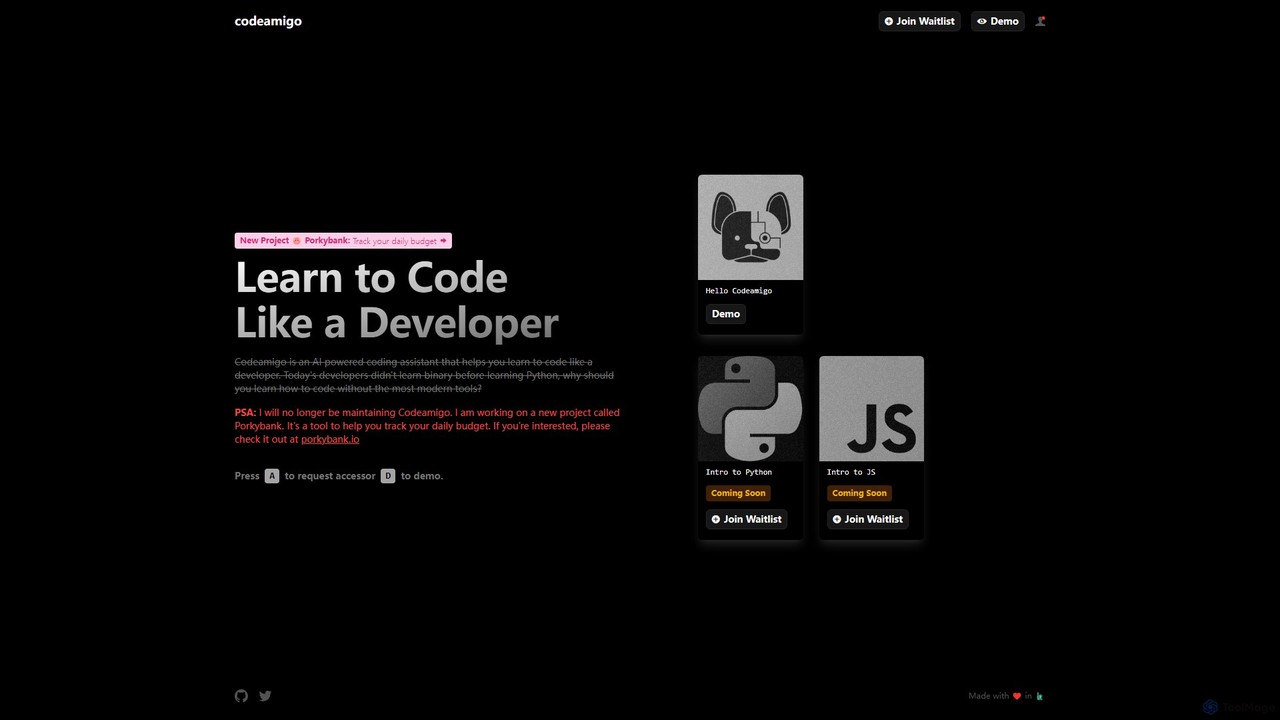
Codeamigo is a discontinued AI-powered coding assistant designed to help beginners learn programming languages like Python and JavaScript through interactive, modern tutorials. It aimed to simulate a real-world development environment.

Preview

LabEx Product overview

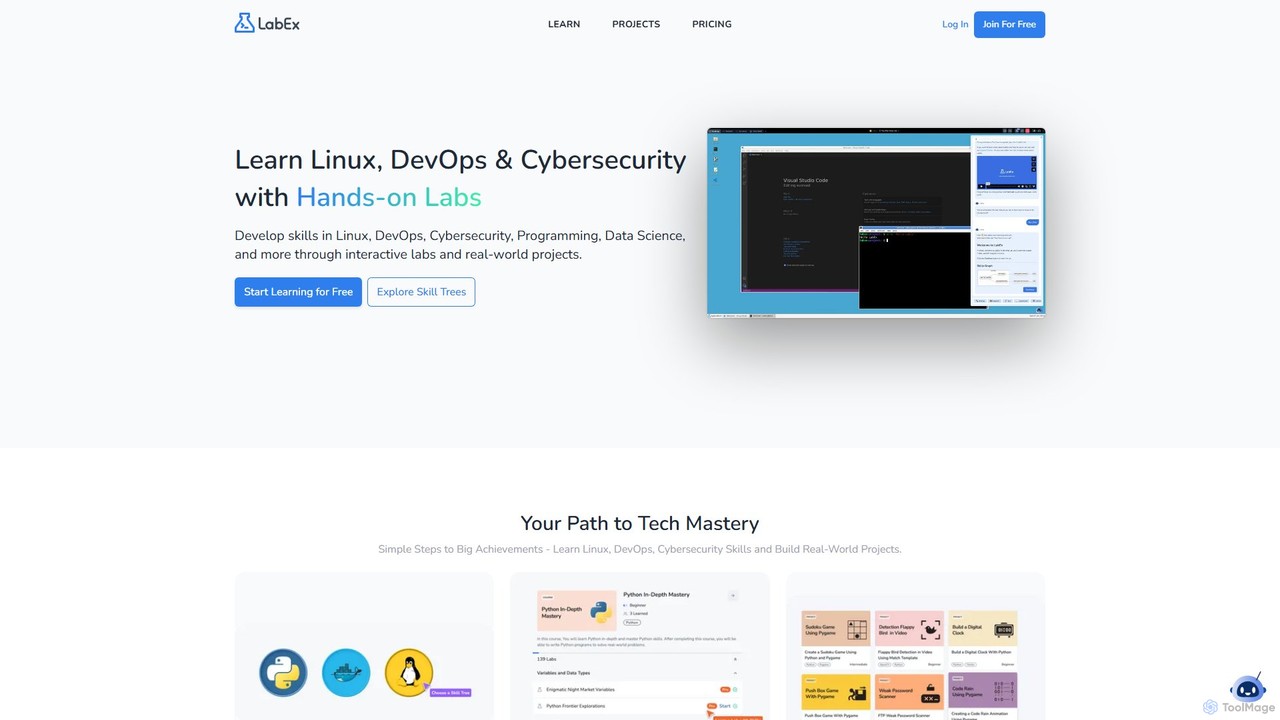
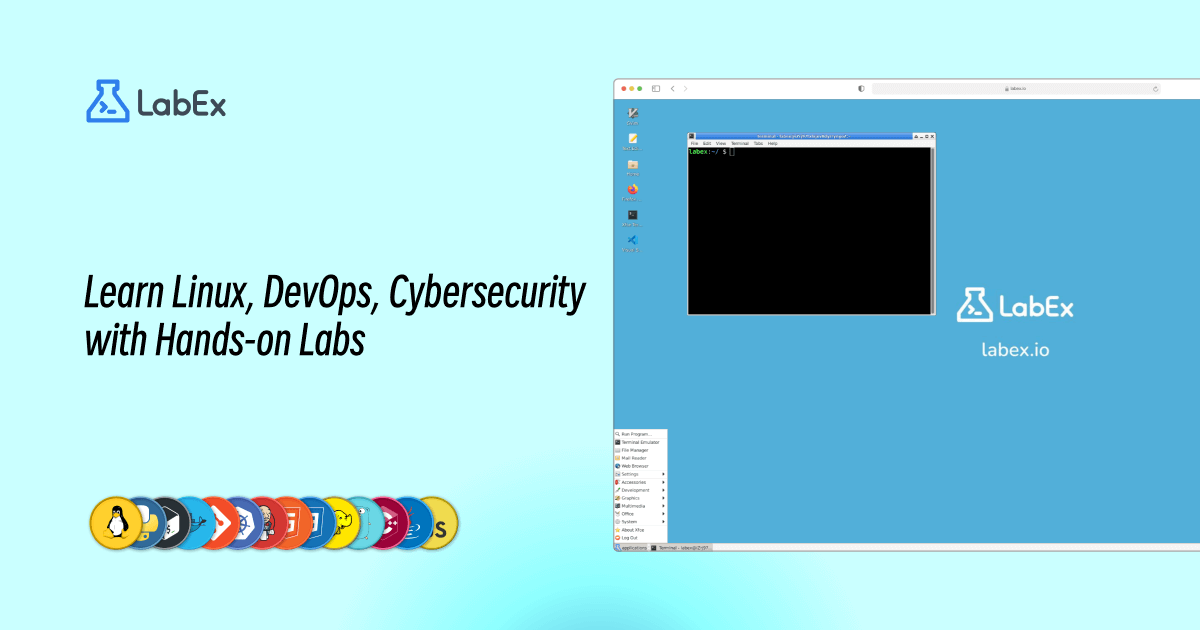
LabEx is an interactive, hands-on learning platform for tech skills like Linux, DevOps, Cybersecurity, and Data Science. It offers over 6,000 labs in real-world environments, eliminating the need for complex local setups. The platform features structured "Skill Trees" for guided learning and an AI assistant, Labby, powered by ChatGPT, to provide real-time help with code debugging and technical questions. Learn by doing, build projects, and master in-demand tech skills effectively.

Preview

Quick facts

Compare product focus, pricing models and audiences. Highlighted rows indicate different listed information; unknown pricing does not mean free.

Codeamigo VS LabEx — Quick facts
Quick factsCodeamigoLabEx
Pricing modelNo data availableFreemium
Product typeWebWeb
Primary focusLearningCloud Computing
Audience and rolesNo data availableNo data available
CategoriesLearning · Programming · TrainingCloud Computing · Programming · Training
AddedAug 3, 2025Aug 8, 2025
UpdatedNov 19, 2026Nov 19, 2026

Features, usage and use cases

Explore the listed product descriptions, features and workflows. Taxonomy labels alone are not feature evaluations.

Codeamigo

Codeamigo was an innovative AI-powered platform designed to revolutionize the way beginners learn to code. It functioned as an intelligent coding assistant, aiming to provide an interactive and modern learning experience similar to how professional developers work. The core philosophy was to move beyond traditional, static tutorials and immerse learners in a hands-on environment from day one. By integrating AI, Codeamigo intended to offer personalized guidance, real-time feedback, and dynamic support for popular languages like Python and JavaScript.

Important Note: As stated on the official website, the Codeamigo project is no longer being maintained. The founder has moved on to a new project. Therefore, the service is not available for new users, and the planned features were not fully launched.

How to use Codeamigo

The intended user flow for Codeamigo was designed to be intuitive and engaging:

  1. Select a Course: Users would start by choosing a programming language to learn, such as the planned 'Intro to Python' or 'Intro to JS' courses.
  2. Interactive Coding Environment: Instead of just watching videos, users would be presented with an in-browser code editor.
  3. Follow AI-Guided Lessons: The platform would provide step-by-step instructions and coding challenges.
  4. Get Real-Time Assistance: As the user wrote code, the AI 'amigo' would offer suggestions, explain complex concepts, identify errors, and provide hints, much like a personal tutor.
  5. Ask Questions: Users could directly ask the AI assistant for clarification on syntax, logic, or programming principles.
  6. Complete Projects: The learning path would likely culminate in small projects to solidify understanding and build a portfolio.

Core Features of Codeamigo

  • AI-Powered Coding Assistant: A chat-like assistant that provides instant help, answers questions, and guides users through coding problems.
  • Interactive Tutorials: Hands-on lessons that require users to actively write code rather than passively consuming content.
  • Real-time Code Analysis and Feedback: The AI was designed to analyze code as it was written, pointing out errors and suggesting improvements on the fly.
  • Code Explanation: The ability to highlight a piece of code and have the AI explain its function and logic in simple terms.
  • Structured Learning Paths: Planned courses for foundational languages like Python and JavaScript, catering to absolute beginners.
  • Modern Learning Philosophy: Focused on teaching coding with the aid of modern tools, preparing learners for a real-world developer workflow.

Use Cases for Codeamigo

Codeamigo was targeted at several key user groups:

  • Aspiring Developers: Individuals with no prior programming experience looking for a friendly and effective way to start their coding journey.
  • Students: Computer science students could use it as a supplementary tool to practice concepts learned in class and get instant help outside of instructor hours.
  • Career Changers: Professionals from non-tech fields aiming to acquire programming skills for a career transition.
  • Hobbyist Coders: Anyone interested in learning to code for personal projects or general interest.

Advantages of Codeamigo

The platform's primary advantages were rooted in its AI-first approach:

  • Personalized Learning: The AI could potentially adapt to each user's learning pace and style, offering customized challenges and explanations.
  • Immediate Support: Unlike traditional courses, it eliminated the waiting time for help, providing 24/7 assistance to overcome roadblocks.
  • Increased Engagement: The interactive, hands-on method is generally more engaging and effective for retention than passive learning.
  • Confidence Building: By providing a safe environment to make mistakes and get instant corrections, it helped build a learner's confidence.

Pricing and Plans

Codeamigo was in a pre-launch or beta phase before it was discontinued. The website featured a waitlist for its upcoming courses. There was no formal pricing information released. Therefore, the service was likely intended to be free during its initial phase or operate on a freemium model, but this was never finalized.

LabEx

LabEx is a revolutionary online learning platform designed for the modern tech professional and enthusiast. It champions a "learn by doing" philosophy, moving away from passive video tutorials to a fully interactive, hands-on experience. The platform provides over 6,000 labs and 400 real-world projects across a vast spectrum of technology domains, including Linux, DevOps, Cybersecurity, Programming, Data Science, and Cloud Computing. With a community of over 400,000 learners, LabEx offers a dynamic and practical way to acquire and hone critical tech skills.

The core of the LabEx experience is its browser-based virtual environments. Users get instant access to pre-configured terminals, IDEs, and even full desktop environments for technologies like Ubuntu, Docker, Kubernetes, and Kali Linux. This completely removes the friction of local setup and configuration, allowing learners to focus entirely on the material. A key differentiator for LabEx is its AI-powered assistant, Labby. Integrated directly into the learning environment and powered by ChatGPT, Labby acts as a personal tutor, ready 24/7 to help debug code, explain complex concepts, and answer any technical questions, making the learning process smoother and more efficient.

How to use LabEx

Getting started with LabEx is a straightforward and structured process designed for optimal learning:

  1. Choose a Skill Tree: Begin by exploring the wide range of "Skill Trees." These are structured learning paths that guide you from foundational concepts to advanced topics in a specific domain, such as "Linux System Administration," "Docker for Beginners," or "Python for Data Science."
  2. Engage in Hands-on Labs: Each skill in the tree is taught through one or more interactive labs. When you start a lab, LabEx instantly provisions a real, private virtual environment (like a Linux terminal or a code editor) in your browser. You'll follow step-by-step instructions, run real commands, write code, and see the immediate results of your actions.
  3. Leverage the AI Assistant: If you get stuck, encounter an error, or have a question, simply open the Labby AI chatbot. You can paste your code for debugging, ask for a conceptual explanation, or request a hint. Labby provides instant, context-aware assistance to keep you moving forward.
  4. Build Real-World Projects: After acquiring a set of skills, apply them by building a project. These projects are designed to simulate real-world challenges, such as deploying a web application with Docker or analyzing a dataset with Python, helping you solidify your knowledge and build a professional portfolio.

Core Features of LabEx

  • Extensive Lab Library: Access to over 6,000 hands-on labs covering hundreds of skills in Linux, DevOps, Cybersecurity, Databases (MySQL, Redis, etc.), Programming (Python, Go, Java), and more.
  • AI-Powered Assistant (Labby): A ChatGPT-based chatbot that provides on-demand help with debugging, explanations, and guidance, acting as a personal tutor.
  • Structured Skill Trees: Expertly designed learning paths that provide a clear roadmap for mastering a technology from the ground up.
  • Real-World Environments: Instant, browser-based access to terminals, IDEs, and virtual desktops, eliminating the need for any local installation or configuration.
  • Portfolio-Building Projects: Over 400 real-world projects that allow learners to apply their skills and create tangible proof of their expertise.
  • Certificates of Completion: Earn certificates upon completing skill trees and projects to showcase your achievements.

Use Cases for LabEx

LabEx is a versatile tool for a wide range of users:

  • Students & Beginners: Computer science students and individuals new to tech can use LabEx to gain the practical, hands-on experience that textbooks and lectures often lack.
  • Aspiring DevOps Engineers: Learn and master essential tools like Docker, Kubernetes, Git, and Ansible in a real, sandboxed environment.
  • Cybersecurity Professionals: Practice ethical hacking, network analysis, and vulnerability scanning with tools like Kali Linux, Nmap, and Wireshark.
  • Software Developers: Quickly learn a new programming language, framework (like React), or database system without the hassle of setting up a local development environment.
  • Data Scientists: Dive into data analysis and machine learning with pre-configured environments featuring Python, Pandas, NumPy, and scikit-learn.

Advantages of LabEx

LabEx stands out from other learning platforms due to several key advantages:

  • Active Learning: The "learn by doing" approach ensures higher engagement and better knowledge retention compared to passive learning methods.
  • Zero Setup: The browser-based environments are instantly available, removing a significant barrier to entry and allowing learners to start practicing immediately.
  • Personalized AI Guidance: Labby provides instant, tailored support, which is like having a personal tutor available 24/7, accelerating the learning curve.
  • Comprehensive Curriculum: The vast and growing library of labs and skill trees covers the most in-demand skills in the tech industry.
  • Practical Application: The focus on real-world projects ensures that learners not only understand concepts but can also apply them to solve practical problems.

Pricing and Plans

LabEx offers a flexible pricing model to suit different needs:

  • Free Plan: This plan is completely free and provides access to a selection of hands-on labs with a daily limit of 3 virtual machines. It's an excellent way to get started and experience the platform.
  • Pro Plan ($99.9/year): The Pro plan unlocks the full power of LabEx. It includes unlimited virtual machines, full access to all 6000+ labs and 2000+ challenge solutions, over 400 real-world projects, certificates of completion, and unlimited access to the Labby AI Assistant.
  • Pro 2 Years Plan ($149 one-time): This plan offers all the benefits of the Pro plan for a two-year period at a significant discount, providing the best long-term value.

Positioning

Their taxonomy shows where the products overlap and where each one has a more distinct focus. Unknown fields are shown explicitly and are never filled with assumptions.

Categories

Shared
ProgrammingTraining
Only Codeamigo
Learning
Only LabEx
Cloud Computing

Tags

Shared
No listed items
Only Codeamigo
AI tutorcode assistantdeveloper educationdiscontinuedinteractive learningjavascriptlearn to codeprogramming tutorialpython
Only LabEx
AI assistantcodingcybersecuritydata sciencedevopsdockereducationhands-on learningkuberneteslinuxonline ideprogramming

Audience and roles

Shared
No listed items
Only Codeamigo
No listed items
Only LabEx
No listed items

Traffic comparison

Traffic is shown on the same scale so differences in market visibility are not visually understated.

How to interpret the traffic data

Both charts share the same months and vertical scale. Each tool identifies its latest reporting month; missing months are left blank, not counted as zero. Regional and source visit counts are estimates calculated from the reported shares.

Codeamigo monthly traffic:

Latest traffic · 2026-05

Monthly visits
481
Avg. visit duration
1:11
Pages per visit
2.95
Bounce rate
30.27%
Data updated 2026-06-15

Monthly traffic trend

  • 2025-09: 1.2K
  • 2026-01: 377
  • 2026-02: 0
  • 2026-03: 374
  • 2026-04: 389
  • 2026-05: 481

Top regions

Top 5 countries/regions
Country/regionPercentageEstimated visits
🇮🇳India100%481

LabEx monthly traffic:

Latest traffic · 2026-05

Monthly visits
1.1M
Avg. visit duration
3:30
Pages per visit
4.21
Bounce rate
43.58%
Data updated 2026-06-15

Monthly traffic trend

  • 2025-09: 1.1M
  • 2026-01: 1.4M
  • 2026-02: 1.2M
  • 2026-03: 1.1M
  • 2026-04: 1M
  • 2026-05: 1.1M

Top regions

Top 5 countries/regions
Country/regionPercentageEstimated visits
🇺🇸United States35.94%407.2K
🇮🇳India34.15%386.9K
🇷🇺Russia11.81%133.8K
🇹🇭Thailand9.31%105.5K
🇫🇷France8.79%99.6K

Traffic sources

Source typePercentageEstimated visits
Direct83.59%947K
Referral10.94%123.9K
Email5.47%62K

Search keywords

labexlinux commands cheat sheetlinux journeylinuxjourney.comonline linux terminal

Community signals

Ratings, comments, favorites, and likes are community signals—not a substitute for product fit.

Codeamigo

Rating
No data available
Comments
0
Favorites
198
Likes
191

LabEx

Rating
No data available
Comments
0
Favorites
179
Likes
183

Codeamigo vs LabEx · Comparison FAQ

What do Codeamigo and LabEx have in common?
Both tools are listed under Programming、Training. These categories indicate overlapping use cases; compare their detailed descriptions for workflows, capabilities and limitations.
Are Codeamigo and LabEx free?
Listed pricing models: Codeamigo — No data available; LabEx — Freemium. Missing pricing is not proof of a free plan, and freemium does not mean every feature is free. Check official sites for current plans, limits and trials.
How should I choose between Codeamigo and LabEx?
The primary listed category is Learning for Codeamigo, and Cloud Computing for LabEx. Compare features, steps and use cases, then verify pricing, data permissions and deployment needs. This page does not include hands-on testing and does not declare a winner from traffic or tags.

Sources and comparison methodology

This page is assembled from ToolMage product listings, taxonomy, traffic statistics and on-site user feedback. It is not a hands-on test or an independent review.
  • Feature and plan descriptions reflect information in the listings, not real-time guarantees. Verify pricing, quotas, availability and privacy terms on the official sites.
  • Traffic uses the reporting months shown. Missing statistics do not mean zero visits, and different periods do not establish growth or superiority. Regional and source visit counts are estimates based on shares.
  • Different tags indicate differences in the listings, not proof that the other product lacks a capability. Ratings, favorites and visits are not used to declare a winner.

Related comparisons