ToolMage
Sign in

AI TOOL COMPARISON

Conversion vs Conversion

What is the difference, and which fits your workflow? Compare features, usage, pricing models and traffic side by side.

Jump to key differences

Product overview

Conversion Product overview

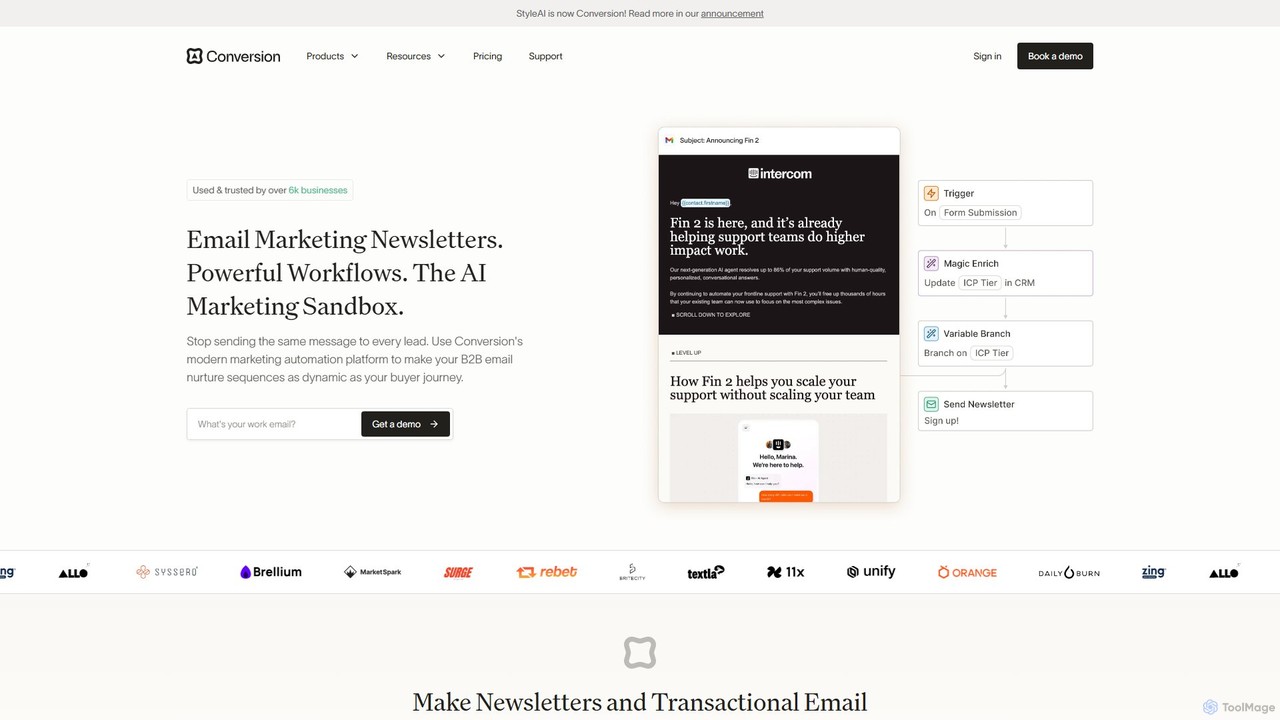
Conversion is an AI-powered B2B marketing automation platform designed to create dynamic, personalized customer journeys. It integrates email marketing, SEO, and ad management to turn data into tangible growth and conversions, moving beyond static lists to behavior-driven engagement.

Preview

Conversion Product overview

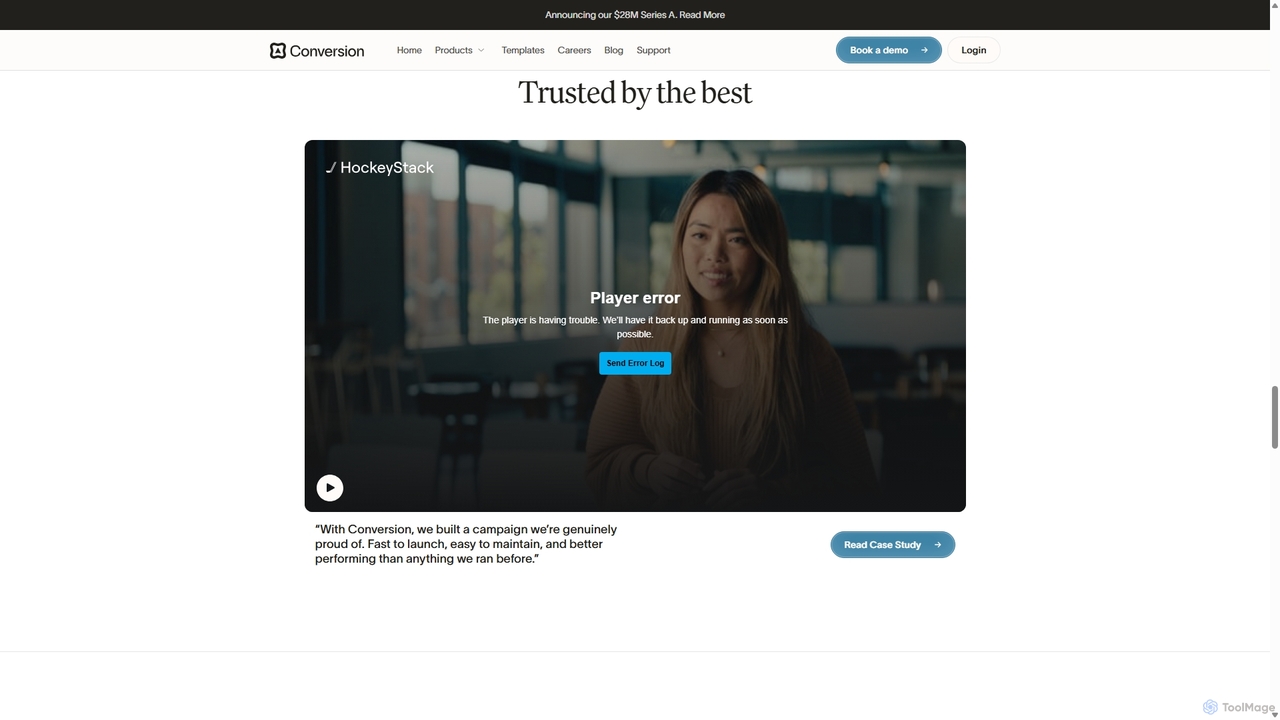
Conversion is an AI-native B2B marketing automation platform designed for high-growth companies. It enables teams to activate customer data, build dynamic workflows, design personalized emails with a drag-and-drop editor, and track campaign performance in real-time. It seamlessly integrates with CRM and other tools to unify the entire marketing stack.

Preview

Quick facts

Compare product focus, pricing models and audiences. Highlighted rows indicate different listed information; unknown pricing does not mean free.

Conversion VS Conversion — Quick facts
Quick factsConversionConversion
Pricing modelPaidPaid
Product typeWebWeb
Primary focusEmail MarketingEmail Marketing
Audience and rolesNo data availableContent Creator · Demand Generation Manager · Founder · Growth Hacker · Marketing Manager · Product Manager · RevOps Specialist · Sales Representative
CategoriesEmail Marketing · Marketing Automation · Content CreationEmail Marketing · Marketing Automation · Workflow Automation · Lead Generation
AddedAug 16, 2025Sep 24, 2025
UpdatedNov 19, 2026Nov 19, 2026

Features, usage and use cases

Explore the listed product descriptions, features and workflows. Taxonomy labels alone are not feature evaluations.

Conversion

Conversion (formerly StyleAI) is a next-generation B2B marketing automation platform engineered for modern businesses. It positions itself as a sophisticated alternative to legacy systems like Pardot or Marketo, focusing on turning data-driven insights into measurable growth. The platform is built on a central intelligent data hub called 'Atlas,' which unifies all business data to power its suite of tools, including email marketing, SEO (Seona), and ad management (Adwin). By aggregating data from your website, customers, and market, Conversion enables businesses to deliver highly personal, relevant, and perfectly timed marketing messages at any scale.

The core philosophy of Conversion is to move away from static, list-based marketing towards dynamic, behavior-driven automation. It empowers marketers to create nurture sequences that adapt in real-time to a lead's actions, such as browsing specific pages, filling out a form, or engaging with content. This ensures that every communication feels like a one-to-one conversation, dramatically increasing the potential for conversion.

How to use Conversion

Using Conversion involves a strategic, integrated approach to marketing automation. The typical workflow is as follows:

  1. Integrate Your Data Sources: Begin by connecting Conversion to your existing tech stack. This includes your CRM, website (e.g., WordPress), Google Search Console, Semrush, and other analytics or lead attribution tools. This populates the 'Business Hub' (Atlas) with the data needed for intelligent automation.
  2. Define Your Brand Voice: Utilize the 'Voice' feature within the Business Hub to establish your unique brand tone and style. The AI will use this to ensure all generated content, from emails to blog posts, is consistent with your brand identity.
  3. Build Dynamic Workflows: Instead of creating rigid email campaigns, you design flexible workflows. These are triggered by real-time user behavior. For example, you can set up a workflow that sends a specific follow-up email when a lead visits your pricing page after downloading a whitepaper.
  4. Craft Personalized Emails: Use the intuitive, code-free Email Builder to design visually stunning and high-performing emails. Incorporate 'Magic Blocks'—dynamic content sections that automatically personalize the message for each recipient based on their behavior, interests, and stage in the buyer journey.
  5. Amplify with SEO and Content: Leverage the integrated Seona tool to enhance your inbound strategy. The platform provides blog credits for creating custom, SEO-optimized content, along with advanced keyword research and technical SEO features to improve your search engine ranking and drive organic traffic.
  6. Analyze and Optimize: Continuously monitor the performance of your campaigns through the unified dashboard. The platform provides actionable insights to help you understand what's working, identify opportunities for improvement, and make data-driven decisions to boost conversion rates.

Core Features of Conversion

  • AI-Powered Marketing Workflows: Automate personalized email sequences and actions based on real-time behavioral triggers, not static lists.
  • Dynamic Email Builder & Magic Blocks: A user-friendly, no-code editor to create beautiful, on-brand emails with dynamic content blocks that adapt to each lead.
  • The Business Hub (Atlas): An intelligent data platform that centralizes and analyzes data from all your business sources to provide actionable insights on knowledge, context, and brand voice.
  • Integrated SEO Suite (Seona): Includes AI-powered blog content generation, advanced keyword research, topical authority cluster analysis, and technical SEO optimization for up to 1,000 pages.
  • Powerful Integrations: One-click setup to connect with essential tools like WordPress, Google Search Console, Semrush, and various CRMs and analytics platforms.
  • AI Marketing Sandbox: A space to experiment with and refine AI-driven marketing strategies before full-scale implementation.

Use Cases for Conversion

Conversion is ideal for B2B companies looking to scale their inbound marketing efforts intelligently.

  • Advanced Lead Nurturing: Develop complex, multi-path nurture sequences that guide leads through the sales funnel with content that is perfectly aligned with their interests and engagement level.
  • Hyper-Personalized Email Campaigns: Send newsletters and promotional emails where every section is tailored to the individual, from recommended blog posts to specific product call-to-actions.
  • Full-Funnel Inbound Marketing: Unify your SEO, content creation, and email follow-up. Attract organic traffic with AI-optimized content and seamlessly convert visitors into leads with personalized, automated communication.
  • Account-Based Marketing (ABM): Target high-value accounts with bespoke campaigns, using behavioral data to trigger highly relevant messages and actions to key decision-makers.
  • Customer Reactivation: Create automated workflows to re-engage dormant leads or past customers with timely, relevant offers based on their previous interactions with your brand.

Advantages of Conversion

Conversion stands out by offering a truly unified and intelligent marketing solution.

  • Modern, Unified Platform: It combines previously siloed marketing functions (email, SEO, ads) into a single, cohesive ecosystem powered by a shared data layer.
  • Deep, Real-Time Personalization: Goes far beyond simple name tokenization to deliver content that is dynamically relevant to each user's journey, at scale.
  • Strategic AI Implementation: The AI is positioned as a 'teammate' that enhances a marketer's expertise with data-driven insights, rather than a black-box replacement.
  • Focus on Measurable ROI: The entire platform is oriented around the goal of 'conversion,' helping businesses attribute real revenue to their marketing activities.
  • Enterprise-Grade Support: Plans include a dedicated customer success specialist to assist with strategy, onboarding, and optimization, ensuring users maximize the platform's value.

Pricing and Plans

Conversion's pricing is designed for enterprise clients and growing businesses, focusing on performance and value rather than fixed software tiers. The pricing model is quote-based, and interested parties need to contact the sales team or book a demo for a custom plan.

The enterprise package typically includes:

  • Unlimited email workflows for a single brand.
  • Real-time personalization based on lead behavior.
  • A dedicated customer success specialist.
  • Unlimited integrations with your tech stack (CRM, analytics, etc.).
  • A monthly allowance of 30 blog credits for SEO content.
  • Full access to the centralized Atlas data hub.
  • Advanced keyword research and technical SEO for up to 1,000 pages.

This structure indicates a premium, paid service tailored to the specific needs of each business.

Conversion

Conversion (formerly StyleAI) is a modern, AI-native Marketing Automation Platform (MAP) built specifically for high-growth B2B businesses. It aims to replace outdated, clunky marketing tools with a fast, flexible, and unified growth engine. The platform empowers marketing teams to move faster, personalize at scale, and drive tangible results by connecting product data, CRM insights, and customer behavior into cohesive, automated campaigns.

How to use Conversion

Using Conversion involves a streamlined process to orchestrate your entire marketing strategy:

  1. Integrate Your Data: Start by connecting Conversion to your existing tools. It offers seamless, real-time sync with your CRM, data warehouse, CDP, product event trackers, and enrichment tools. This creates a unified view of your customer.
  2. Build Dynamic Workflows: Utilize the no-code visual workflow builder to map out customer journeys. You can trigger actions like sending emails, updating CRM records, or assigning leads based on user behavior, product usage, firmographic data, and more.
  3. Design Beautiful Emails: Create responsive, on-brand emails in minutes with the intuitive drag-and-drop editor. Use 'Magic Blocks' to dynamically personalize content for different user segments based on their data, ensuring every message feels unique.
  4. Segment Your Audience: Create dynamic audience segments that automatically update as customer data changes. This allows for precise targeting without manual list management.
  5. Launch and Analyze: Deploy your campaigns and monitor their performance in real-time with native reporting. Track key metrics by segment, channel, and touchpoint to understand what's working and optimize your strategy.

Core Features of Conversion

  • No-Code Workflow Builder: Orchestrate complex, multi-step customer journeys with an intuitive visual interface. Automate lead scoring, nurturing sequences, and CRM updates without writing any code.
  • AI-Powered Email Designer: A drag-and-drop editor with 'Magic Blocks' for hyper-personalization, reusable components, and locked-in brand guidelines to ensure consistency.
  • Real-time Data Sync: Deep, bi-directional integrations with CRMs and other data sources ensure your marketing efforts are always based on the most up-to-date information.
  • AI Lead Enrichment: Automatically enrich partial lead data using AI and real-time web scraping to complete contact and company profiles, enabling better segmentation and scoring.
  • Advanced Reporting: Get real-time insights into campaign performance, tracking how leads move through workflows and identifying opportunities for optimization.
  • Unified Platform: Combines email marketing, segmentation, lead scoring, workflows, and reporting into a single, cohesive platform.
  • AI Review & Listing Management: The Business Tier offers tools to manage online reviews with AI-generated replies and keep business listings (like Google Business Profile) updated and optimized.

Use Cases for Conversion

Conversion is versatile and can be applied across the entire B2B marketing lifecycle:

  • Lead Scoring and Routing: Automatically score leads based on intent signals and route high-priority accounts to the sales team instantly.
  • Persona-Based Nurturing: Create tailored email nurture sequences that adapt to a lead's persona, industry, and engagement level.
  • Customer Onboarding: Guide new users through your product with a series of automated, educational emails triggered by their in-app actions.
  • CRM Data Hygiene: Use workflows to automatically clean, deduplicate, and update records in your CRM, ensuring data accuracy.
  • Transactional Emails: Power critical one-to-one communications like password resets, order confirmations, and usage alerts with reliable, real-time delivery.
  • Competitor Analysis: Analyze competitor strategies, including backlink profiles and top keywords, to inform and automate your own content and SEO strategy.

Advantages of Conversion

Modern B2B teams choose Conversion over legacy platforms for several key reasons:

  • Speed to Launch: Build and ship sophisticated campaigns in hours, not weeks, thanks to modern tools and flexible workflows.
  • Hyper-Personalization with AI: Go beyond basic name-merging. Automatically tailor entire content blocks based on deep customer data.
  • Design-First Approach: Create beautiful, responsive, and consistently on-brand emails without needing a developer.
  • Pay-for-Use Pricing: A transparent pricing model where you only pay for the contacts you actively market to, without hidden limits.
  • All-in-One Solution: Unify your marketing stack, eliminating the need for multiple point solutions and reducing complexity.

Pricing and Plans

Conversion offers a usage-based pricing model, focusing on the number of contacts you actively market to. While specific tiers are not detailed on the main pages, they offer a 'Business Tier' which includes advanced SEO and reputation management features. This plan starts at $349 per month when billed annually. For detailed pricing and custom enterprise plans, it is recommended to book a demo or contact their sales team directly through the official website.

Positioning

Their taxonomy shows where the products overlap and where each one has a more distinct focus. Unknown fields are shown explicitly and are never filled with assumptions.

Categories

Shared
Email MarketingMarketing Automation
Only Conversion
Content Creation
Only Conversion
Workflow AutomationLead Generation

Tags

Shared
AI marketingb2b marketingCRM integrationemail marketinglead nurturingmarketing automationpersonalization
Only Conversion
conversion optimizationSEO
Only Conversion
customer journeylead scoring

Audience and roles

Shared
No listed items
Only Conversion
No listed items
Only Conversion
Content CreatorDemand Generation ManagerFounderGrowth HackerMarketing ManagerProduct ManagerRevOps SpecialistSales Representative

Traffic comparison

Traffic is shown on the same scale so differences in market visibility are not visually understated.

How to interpret the traffic data

Both charts share the same months and vertical scale. Each tool identifies its latest reporting month; missing months are left blank, not counted as zero. Regional and source visit counts are estimates calculated from the reported shares.

Conversion monthly traffic:

Latest traffic · 2026-05

Monthly visits
32.3K
Avg. visit duration
0:59
Pages per visit
1.78
Bounce rate
44.53%
Data updated 2026-06-15

Monthly traffic trend

  • 2025-09: 28.4K
  • 2026-01: 26.5K
  • 2026-02: 15.1K
  • 2026-03: 32.2K
  • 2026-04: 36.8K
  • 2026-05: 32.3K

Top regions

Top 5 countries/regions
Country/regionPercentageEstimated visits
🇺🇸United States72.59%23.5K
🇮🇳India10.35%3.3K
🇻🇳Vietnam6.62%2.1K
🇦🇺Australia6.06%2K
🇬🇧United Kingdom4.38%1.4K

Traffic sources

Source typePercentageEstimated visits
Direct86.86%28.1K
Referral13.14%4.2K

Search keywords

conversion aiconversion ai loginconversion marketing automationhow to contact seona ai customer servicemarketo

Conversion monthly traffic:

Latest traffic · 2026-05

Monthly visits
2.4K
Avg. visit duration
0:00
Pages per visit
1.02
Bounce rate
61.98%
Data updated 2026-06-15

Monthly traffic trend

  • 2025-09: 988
  • 2026-01: 1.7K
  • 2026-02: 600
  • 2026-03: 5.4K
  • 2026-04: 3.3K
  • 2026-05: 2.4K

Top regions

Top 5 countries/regions
Country/regionPercentageEstimated visits
🇮🇳India100%2.4K

Search keywords

usestyle.ai

Community signals

Ratings, comments, favorites, and likes are community signals—not a substitute for product fit.

Conversion

Rating
No data available
Comments
0
Favorites
178
Likes
172

Conversion

Rating
No data available
Comments
0
Favorites
195
Likes
213

Conversion vs Conversion · Comparison FAQ

What do Conversion and Conversion have in common?
Both tools are listed under Email Marketing、Marketing Automation. These categories indicate overlapping use cases; compare their detailed descriptions for workflows, capabilities and limitations.
Are Conversion and Conversion free?
Listed pricing models: Conversion — Paid; Conversion — Paid. Missing pricing is not proof of a free plan, and freemium does not mean every feature is free. Check official sites for current plans, limits and trials.
How should I choose between Conversion and Conversion?
The primary listed category is Email Marketing for Conversion, and Email Marketing for Conversion. Compare features, steps and use cases, then verify pricing, data permissions and deployment needs. This page does not include hands-on testing and does not declare a winner from traffic or tags.

Sources and comparison methodology

This page is assembled from ToolMage product listings, taxonomy, traffic statistics and on-site user feedback. It is not a hands-on test or an independent review.

  • Feature and plan descriptions reflect information in the listings, not real-time guarantees. Verify pricing, quotas, availability and privacy terms on the official sites.
  • Traffic uses the reporting months shown. Missing statistics do not mean zero visits, and different periods do not establish growth or superiority. Regional and source visit counts are estimates based on shares.
  • Different tags indicate differences in the listings, not proof that the other product lacks a capability. Ratings, favorites and visits are not used to declare a winner.

Related comparisons