ToolMage
Sign in

AI TOOL COMPARISON

Jet Admin vs ToolJet

What is the difference, and which fits your workflow? Compare features, usage, pricing models and traffic side by side.

Jump to key differences

Product overview

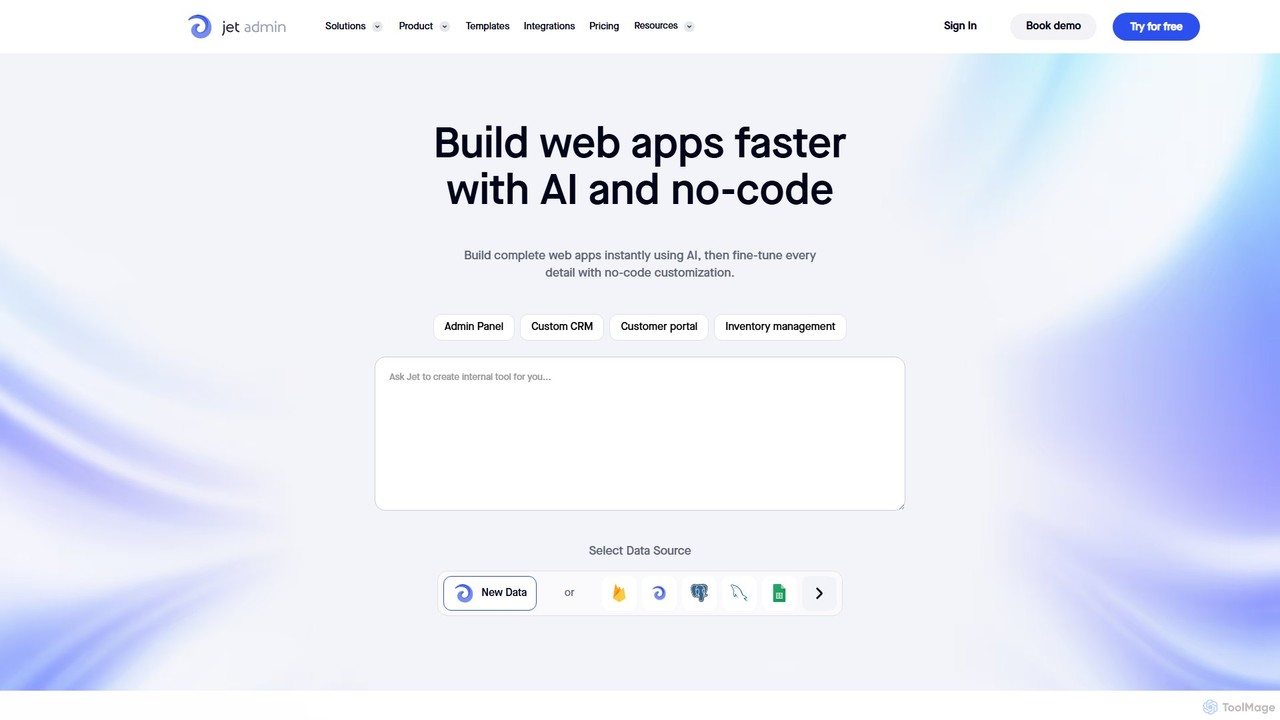
Jet Admin Product overview

Jet Admin is an AI-powered no-code/low-code platform for building custom business applications like admin panels, CRMs, and customer portals. It enables users to connect to any data source, automate complex workflows, and design pixel-perfect user interfaces without extensive coding, significantly accelerating internal tool development.

Preview

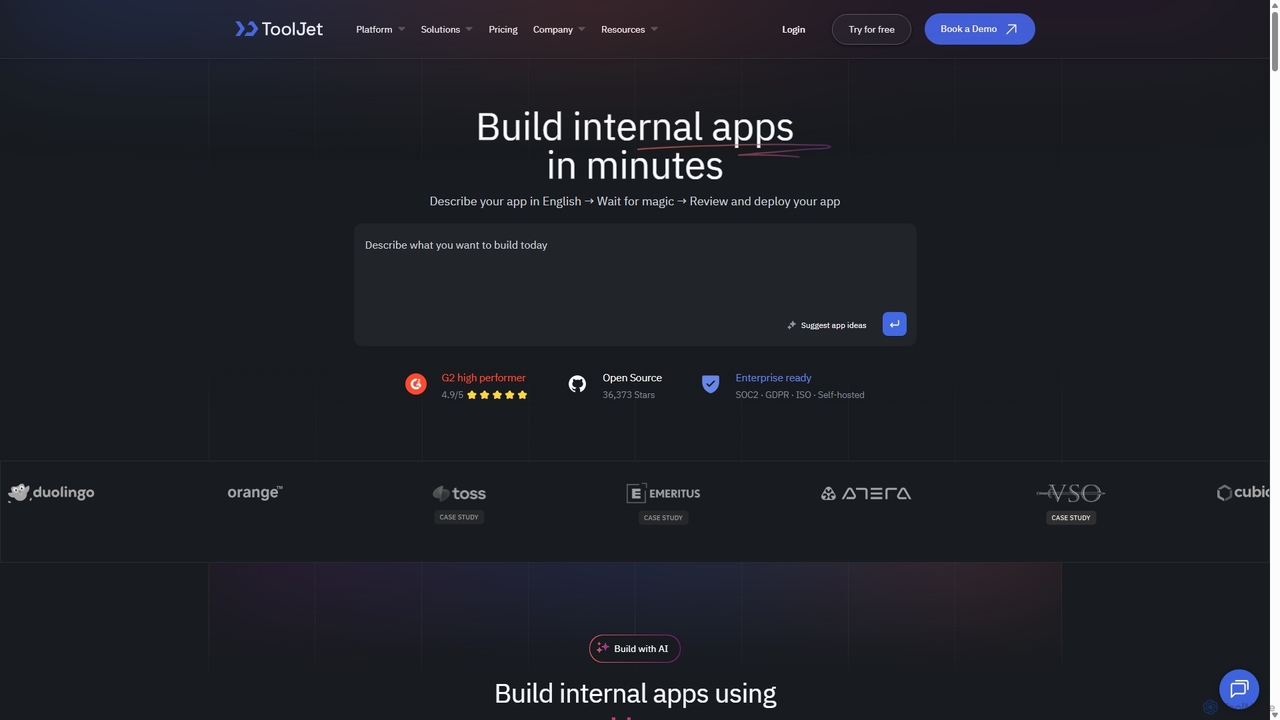
ToolJet Product overview

ToolJet is an AI-native, open-source low-code platform for developers to build and deploy internal tools rapidly. It integrates with numerous datasources, APIs, and AI models, allowing users to create complex applications using natural language prompts, a visual builder, and custom code.

Preview

Quick facts

Compare product focus, pricing models and audiences. Highlighted rows indicate different listed information; unknown pricing does not mean free.

Jet Admin VS ToolJet — Quick facts
Quick factsJet AdminToolJet
Pricing modelFreemiumFreemium
Product typeWebWeb
Primary focusInternal ToolsInternal Tools
Audience and rolesNo data availableBusiness Analyst · Data Analyst · DevOps Engineer · Engineering Manager · IT Manager · Product Manager · Software Developer
CategoriesInternal Tools · No Code · Workflow AutomationInternal Tools · Low Code No Code · Workflow Automation
AddedAug 12, 2025Sep 24, 2025
UpdatedNov 19, 2026Nov 19, 2026

Features, usage and use cases

Explore the listed product descriptions, features and workflows. Taxonomy labels alone are not feature evaluations.

Jet Admin

Jet Admin is a powerful and flexible application builder designed to empower business teams and developers to create custom internal tools and business applications with remarkable speed. Leveraging the capabilities of AI and a sophisticated no-code/low-code environment, Jet Admin transforms the complex process of app development into an intuitive and efficient experience. It allows you to build everything from comprehensive admin panels and bespoke CRMs to customer-facing portals and inventory management systems, all without writing extensive code.

The platform's core philosophy is to provide complete control and flexibility. It starts with data. Jet Admin can connect to a vast array of data sources, including SQL databases (PostgreSQL, MySQL), NoSQL databases (Firebase), business applications (Airtable, Stripe, Zendesk), and any REST or GraphQL API. This allows you to consolidate and manage data from all your disparate systems in one centralized interface. With its AI-powered builder, you can even generate a complete, functional web app instantly, which you can then fine-tune to your exact specifications.

How to use Jet Admin

Using Jet Admin is a streamlined, multi-step process designed for both technical and non-technical users:

  1. Connect Your Data: Begin by selecting your data source. Jet Admin offers native integrations for popular databases and SaaS tools, as well as a universal connector for any REST or GraphQL API. This establishes the foundation of your application.
  2. Build the UI with AI or Drag-and-Drop: You have two powerful options. You can describe the app you need, and Jet Admin's AI will generate a complete application for you. Alternatively, you can use the intuitive drag-and-drop Component Designer. Add tables, forms, charts, buttons, and other UI elements to construct your interface.
  3. Manage and Manipulate Data: Use the spreadsheet-like Data Editor to perform CRUD (Create, Read, Update, Delete) operations on your connected data. You can also create 'Computed Columns' to perform real-time calculations, format data, or combine fields without altering the source database.
  4. Automate Workflows: Define business logic using the workflow builder. Trigger automations based on user actions (like a button click), on a schedule (e.g., daily reports), or via webhooks from external services. These workflows can include branching logic, API requests, and SQL queries for maximum power.
  5. Configure Security and Permissions: Set up secure user authentication using email/password, Google login, or a secure magic link. Define user roles and access groups to control what data and features different users can see or interact with, ensuring data security and compliance.
  6. Customize and Extend: For advanced requirements, you can extend your app's functionality with custom JavaScript code. Fine-tune the look and feel with global styles, custom fonts, and colors to match your brand's design system perfectly.
  7. Publish and Deploy: Once your application is ready, publish it with a single click. The app is instantly live and accessible on any device—desktop, tablet, or smartphone. You can also choose to self-host Jet Admin on your own infrastructure (AWS, Google Cloud, Azure) for complete data control.

Core Features of Jet Admin

  • AI Application Generator: Instantly build complete web apps from a text description.
  • No-Code/Low-Code Interface: An intuitive drag-and-drop builder complemented by low-code options for advanced customization.
  • Pixel-Perfect Component Designer: Craft beautiful and highly functional user interfaces that match your design system.
  • Broad Data Source Integration: Natively connect to SQL/NoSQL databases, SaaS apps like Airtable and Stripe, and any REST or GraphQL API.
  • Powerful Workflow Automation: Create complex, multi-step automations triggered by user actions, schedules, or webhooks.
  • Enterprise-Grade Security: Features include role-based access control, conditional filtering, SAML SSO, 2FA, and detailed audit logs.
  • Self-Hosting and Cloud Deployment: Deploy on Jet Admin's cloud or on your own private infrastructure (AWS, GCP, Azure) in minutes.
  • Version Control and Releases: Manage application updates safely with draft releases, instant publishing, and the ability to revert to previous versions.
  • Extensible with Code: Use JavaScript to add custom business logic, data transformations, and dynamic interactions.
  • Public API Builder: Create and expose REST and GraphQL APIs from your data sources for developers.

Use Cases for Jet Admin

Jet Admin is versatile enough to support a wide range of business operations:

  • Custom Admin Panels: Build a centralized back-office to manage users, application data, settings, and content across multiple systems.
  • Internal CRM Systems: Create a bespoke Customer Relationship Management tool that integrates perfectly with your sales, marketing, and support stacks.
  • Customer Portals: Offer a secure, branded portal for customers to access their account information, track orders, view invoices, or submit support requests.
  • Inventory Management: Develop a system to track stock levels, manage purchase orders, and automate reordering processes by connecting to warehouse databases and supplier APIs.
  • Approval Workflows: Streamline internal processes like expense reporting, vacation requests, and content publishing with automated, multi-stage approval applications.
  • 360-Degree Data Views: Aggregate data from various sources (e.g., Stripe, Zendesk, PostgreSQL) into a single dashboard to get a complete view of a customer or project.

Advantages of Jet Admin

Jet Admin offers significant advantages over traditional development or other platforms:

  • Development Speed: Reduce the time to build and deploy internal tools from months to just hours, freeing up valuable engineering resources.
  • Ultimate Flexibility: Avoid vendor lock-in by connecting to any data source and building applications tailored precisely to your workflows.
  • Team Empowerment: Enable non-technical users, such as operations or marketing managers, to build and maintain the tools they need.
  • Uncompromised Security & Compliance: Built with enterprise needs in mind, offering robust security features and self-hosting for full data sovereignty.
  • Scalability: The platform is designed to grow with your business, supporting everything from simple one-page tools to complex, mission-critical applications.

Pricing and Plans

Jet Admin offers a tiered pricing structure to suit different needs, from individual developers to large enterprises. The plans typically include:

  • Free Plan: Ideal for individuals and small projects, offering core features for a limited number of users and applications.
  • Starter Plan: Designed for small teams, this plan increases user limits, allows for more data source connections, and adds more advanced components.
  • Pro Plan: Suited for growing businesses, the Pro plan includes features like custom branding, advanced workflow automation, and priority support.
  • Enterprise Plan: The most comprehensive offering for large organizations, featuring self-hosting options, SAML SSO, audit logs, dedicated support, and custom SLAs.

For detailed and up-to-date pricing, it is recommended to visit the official Jet Admin website.

ToolJet

ToolJet is a revolutionary AI-native, open-source platform designed to accelerate the development of internal tools for enterprises. It empowers developers to build and deploy custom applications, such as admin panels, dashboards, and customer support tools, at a fraction of the time and effort traditionally required. By combining the power of natural language processing with a flexible low-code framework, ToolJet allows teams to transform ideas into functional applications in minutes, bridging the gap between speed and control.

The platform is built with developers in mind, offering a robust environment that supports both visual, drag-and-drop component building and the ability to write custom JavaScript or Python code for complex logic. This hybrid approach ensures that while simple tasks are automated and streamlined, developers never hit a wall and can always extend functionality to meet specific, complex requirements. With its open-core model, ToolJet provides transparency, community support, and the flexibility of self-hosting for maximum data control and security.

How to use ToolJet

Using ToolJet involves a straightforward, multi-step process designed for efficiency:

  1. Connect to Data Sources: Start by securely connecting to your data. ToolJet offers over 60 pre-built connectors for databases (like PostgreSQL, MongoDB), data warehouses (like Snowflake), APIs (REST, GraphQL), cloud storage, and various SaaS applications.
  2. Build the UI with AI or Visually: Use the AI-powered app builder to describe the interface you want in natural language, and ToolJet will generate the components. Alternatively, use the intuitive drag-and-drop editor to arrange pre-built widgets like tables, charts, forms, and buttons to create a responsive user interface.
  3. Write Queries and Logic: Interact with your data by writing queries directly within the platform. You can run queries across different datasources and use JavaScript or Python to transform data, handle events, and implement custom business logic.
  4. Create AI Agents: Automate complex business processes by building AI agents. These agents can integrate business logic, run queries, and make your teams more productive by handling routine tasks.
  5. Deploy and Secure: Deploy your applications with a single click. ToolJet offers robust, enterprise-grade security features, including role-based access control (RBAC), audit logs, and the option for air-gapped deployments in isolated environments for maximum security.

Core Features of ToolJet

  • AI-Native App Builder: Build applications using natural language prompts, significantly reducing development time.
  • Visual Drag-and-Drop Editor: A rich library of pre-built UI components to design interfaces quickly.
  • Extensive Integrations: Connect to over 60 datasources, including databases, APIs, and AI models like OpenAI, Anthropic, and Gemini.
  • Custom Code Support: Write custom JavaScript and Python code anywhere in the application to handle complex logic. Supports importing React components.
  • ToolJet Database: A built-in, no-code database built on PostgreSQL for easy data management.
  • AI Agent Builder: Create intelligent agents to automate workflows and business processes.
  • Enterprise-Grade Security: Features like SOC2, GDPR, and ISO compliance, encrypted credential management, audit logs, and air-gapped deployment options.
  • Open-Source and Self-Hostable: Provides flexibility, transparency, and full control over your data and infrastructure.
  • Version Control: Git-powered backups for reliable versioning and restoration of applications.

Use Cases for ToolJet

ToolJet is versatile and can be used by various teams for numerous purposes:

  • Engineering Teams: Building internal dashboards for monitoring system health, admin panels for database management, and CI/CD control panels.
  • Product Managers: Creating tools for user feedback management, feature flag controls, and A/B testing dashboards.
  • IT & Operations: Developing asset management trackers, user provisioning forms, and IT support ticket systems.
  • Sales and Marketing: Building custom CRMs, lead management dashboards, and marketing campaign performance trackers.
  • Customer Support: Creating unified customer data views, refund processing tools, and ticket management interfaces.

Advantages of ToolJet

ToolJet offers a competitive edge by focusing on developer experience and enterprise needs. Its key advantages include radical performance improvements, allowing teams to build at 10x speed. The platform's flexibility ensures developers are not limited by typical low-code constraints. Its AI-native capabilities streamline the entire development lifecycle. Furthermore, being open-source with an enterprise-ready feature set provides a cost-effective, secure, and scalable solution that grows with your business. The pricing model, based on the number of builders rather than end-users, makes it highly economical for large teams.

Pricing and Plans

ToolJet operates on a freemium model, making it accessible for individuals and teams of all sizes.

  • Open-Source Edition (Free): A self-hosted, free-forever plan that includes core features, perfect for individuals and small teams getting started.
  • Business Edition: A paid plan designed for growing teams and enterprises, offering advanced features. Pricing is per builder, not per end-user. The typical cost is around $249 per builder/month when billed monthly, with a discount for annual billing (e.g., $199 per builder/month). This plan includes premium features, dedicated support, and enhanced security options.
  • Enterprise Edition: A custom plan for large organizations with specific needs for security, compliance, and support, including options for air-gapped deployments and professional services. Contact sales for custom pricing.

Positioning

Their taxonomy shows where the products overlap and where each one has a more distinct focus. Unknown fields are shown explicitly and are never filled with assumptions.

Categories

Shared
Internal ToolsWorkflow Automation
Only Jet Admin
No Code
Only ToolJet
Low Code No Code

Tags

Shared
app builderdatabase managementinternal toolslow-codeno-codeworkflow automation
Only Jet Admin
admin panelAPI integrationbusiness intelligenceCRM
Only ToolJet
AI-poweredcustom applicationsdeveloper toolsenterprise softwareopen source

Audience and roles

Shared
No listed items
Only Jet Admin
No listed items
Only ToolJet
Business AnalystData AnalystDevOps EngineerEngineering ManagerIT ManagerProduct ManagerSoftware Developer

Traffic comparison

Traffic is shown on the same scale so differences in market visibility are not visually understated.

How to interpret the traffic data

Both charts share the same months and vertical scale. Each tool identifies its latest reporting month; missing months are left blank, not counted as zero. Regional and source visit counts are estimates calculated from the reported shares.

Jet Admin monthly traffic:

Latest traffic · 2026-05

Monthly visits
44K
Avg. visit duration
1:39
Pages per visit
7.62
Bounce rate
36.93%
Data updated 2026-06-15

Monthly traffic trend

  • 2025-09: 56.9K
  • 2026-01: 58.4K
  • 2026-02: 49.8K
  • 2026-03: 50.4K
  • 2026-04: 42.6K
  • 2026-05: 44K

Top regions

Top 5 countries/regions
Country/regionPercentageEstimated visits
🇺🇸United States53.52%23.5K
🇸🇳Senegal18.65%8.2K
🇳🇱Netherlands13.06%5.7K
🇳🇬Nigeria7.76%3.4K
🇮🇳India7.01%3.1K

Traffic sources

Source typePercentageEstimated visits
Direct98.16%43.1K
Email1.17%514
Referral0.67%294

Search keywords

admin paneladmin panel simulatorjet adminjetadminskywork ai

ToolJet monthly traffic:

Latest traffic · 2026-05

Monthly visits
2.4K
Avg. visit duration
0:56
Pages per visit
1.86
Bounce rate
37.85%
Data updated 2026-06-15

Monthly traffic trend

  • 2025-09: 117.4K
  • 2026-01: 22.3K
  • 2026-02: 9.9K
  • 2026-03: 4.4K
  • 2026-04: 2.3K
  • 2026-05: 2.4K

Top regions

Top 5 countries/regions
Country/regionPercentageEstimated visits
🇺🇸United States61.06%1.5K
🇮🇳India38.94%933

Search keywords

tooljettooljet ai

Community signals

Ratings, comments, favorites, and likes are community signals—not a substitute for product fit.

Jet Admin

Rating
No data available
Comments
0
Favorites
175
Likes
176

ToolJet

Rating
No data available
Comments
0
Favorites
165
Likes
160

Jet Admin vs ToolJet · Comparison FAQ

What do Jet Admin and ToolJet have in common?
Both tools are listed under Internal Tools、Workflow Automation. These categories indicate overlapping use cases; compare their detailed descriptions for workflows, capabilities and limitations.
Are Jet Admin and ToolJet free?
Listed pricing models: Jet Admin — Freemium; ToolJet — Freemium. Missing pricing is not proof of a free plan, and freemium does not mean every feature is free. Check official sites for current plans, limits and trials.
How should I choose between Jet Admin and ToolJet?
The primary listed category is Internal Tools for Jet Admin, and Internal Tools for ToolJet. Compare features, steps and use cases, then verify pricing, data permissions and deployment needs. This page does not include hands-on testing and does not declare a winner from traffic or tags.

Sources and comparison methodology

This page is assembled from ToolMage product listings, taxonomy, traffic statistics and on-site user feedback. It is not a hands-on test or an independent review.

  • Feature and plan descriptions reflect information in the listings, not real-time guarantees. Verify pricing, quotas, availability and privacy terms on the official sites.
  • Traffic uses the reporting months shown. Missing statistics do not mean zero visits, and different periods do not establish growth or superiority. Regional and source visit counts are estimates based on shares.
  • Different tags indicate differences in the listings, not proof that the other product lacks a capability. Ratings, favorites and visits are not used to declare a winner.

Related comparisons