K8sGPT
Devops
AI TOOL COMPARISON
What is the difference, and which fits your workflow? Compare features, usage, pricing models and traffic side by side.
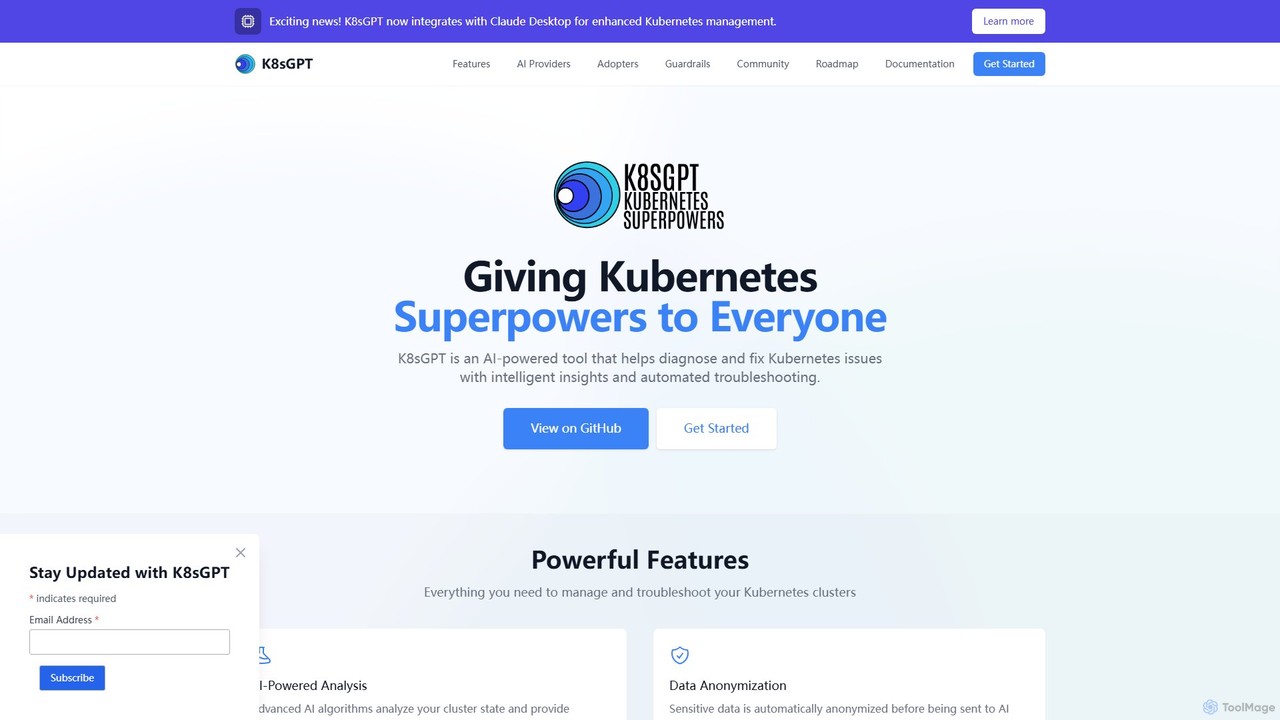
K8sGPT is an AI-powered tool designed to supercharge Kubernetes (K8s) troubleshooting. It scans your clusters, diagnoses issues, and provides intelligent, context-aware insights and solutions. By integrating with various AI providers, including local models, it helps SREs, DevOps engineers, and developers to quickly identify and resolve complex problems, significantly reducing downtime and manual effort.
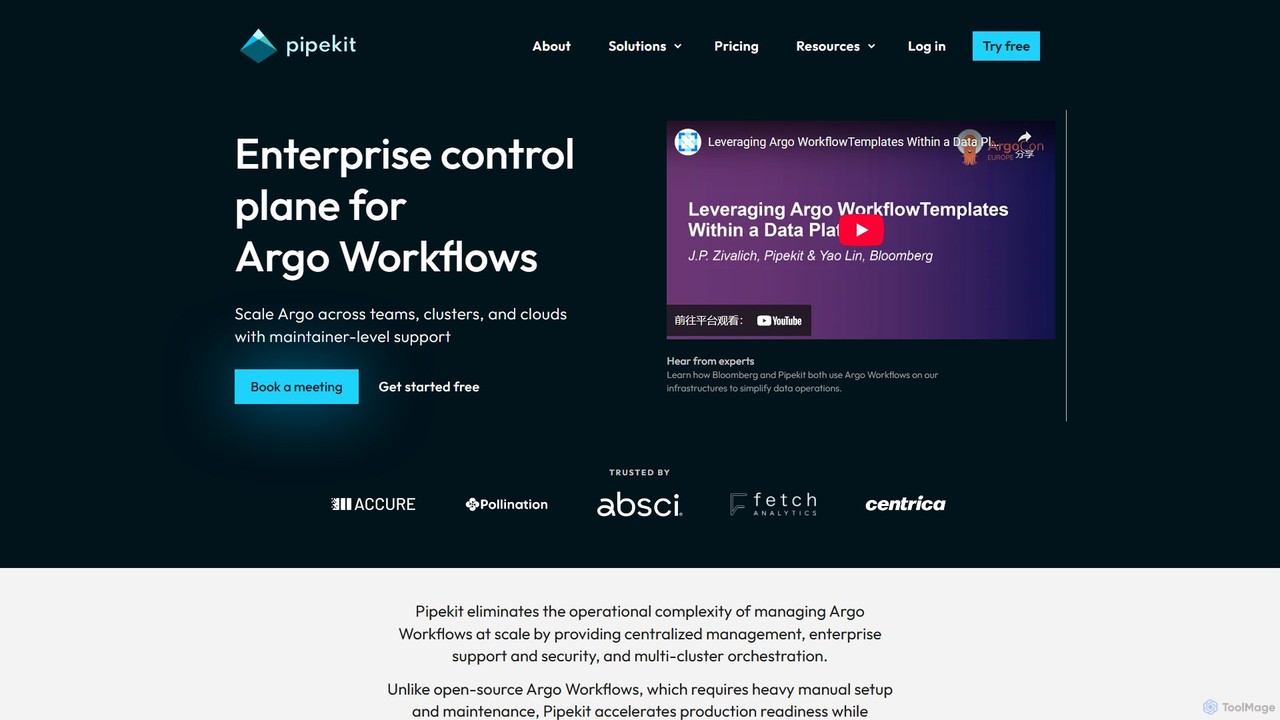
Pipekit is an enterprise-grade control plane and support service for Argo Workflows. It empowers platform and data teams to run, monitor, and govern large-scale data, MLOps, and CI/CD pipelines on Kubernetes across multiple clusters and clouds.
Compare product focus, pricing models and audiences. Highlighted rows indicate different listed information; unknown pricing does not mean free.
| Quick facts | K8sGPT | Pipekit |
|---|---|---|
| Pricing model | Free | Paid |
| Product type | Web | Web |
| Primary focus | Devops | Orchestration |
| Audience and roles | No data available | No data available |
| Categories | Devops · Cloud Computing · System Administration | Orchestration · Mlops · Devops |
| Added | Aug 9, 2025 | Aug 15, 2025 |
| Updated | Nov 19, 2026 | Nov 19, 2026 |
Explore the listed product descriptions, features and workflows. Taxonomy labels alone are not feature evaluations.
K8sGPT is a powerful, open-source tool that brings the capabilities of artificial intelligence to Kubernetes management, effectively giving SRE superpowers to everyone. It is designed to simplify the complex task of troubleshooting and managing Kubernetes clusters. By analyzing cluster resources, configurations, and events, K8sGPT can pinpoint issues, explain the root causes in natural language, and suggest actionable fixes. This streamlines the diagnostic process, making it accessible even to those who are not deep Kubernetes experts.
The tool operates with a focus on security and flexibility. It features built-in data anonymization, ensuring that sensitive information like pod names or labels are masked before being sent to an external AI backend. For maximum security, K8sGPT supports local AI models like Ollama and LocalAI, allowing all data to remain within your private environment. It supports a wide array of AI providers, including OpenAI, Azure OpenAI, Google Vertex AI, and Amazon Bedrock, giving users the freedom to choose the backend that best fits their needs and policies.
Getting started with K8sGPT is straightforward. It can be used as a command-line interface (CLI) tool or deployed as an in-cluster operator for continuous analysis.
k8sgpt analyze. This command scans your cluster for common issues across various resources like Pods, Deployments, Services, and more. You can use filters to narrow the scope, for example: k8sgpt analyze --filter=Pod,Service --namespace=my-app.--explain flag to review the proposed fix and the --remediate flag to apply it automatically, reducing manual intervention.K8sGPT is valuable for a wide range of Kubernetes-related tasks:
The primary advantage of K8sGPT is its ability to democratize Kubernetes expertise. It significantly lowers the barrier to entry for effective troubleshooting. Key benefits include increased operational efficiency, reduced Mean Time to Resolution (MTTR) for incidents, enhanced security through data protection and local model support, and high flexibility through its extensive configuration options and AI provider support. As an open-source project with a vibrant community, it is continuously evolving with new features and integrations, as shown by its public roadmap.
K8sGPT is a fully open-source project, available under a permissive license. It is completely free to use. The project is maintained by a dedicated community of contributors and backed by industry leaders. Users are encouraged to contribute to the project by reporting issues, suggesting features, or submitting pull requests on its GitHub repository.
Pipekit provides a robust solution for enterprises looking to scale their cloud-native operations using Argo Workflows. It offers two primary services: the Pipekit Control Plane and the Pipekit Support Service. Founded by experts who faced the challenges of scaling data pipelines at companies like Docker and Kite, Pipekit is designed to simplify the complexity of managing Argo at scale, without vendor lock-in.
The platform is tailored for platform and data teams that need to manage multi-team or multi-cluster Argo deployments. It provides a centralized, single-pane-of-glass view to unify deployments, enforce governance, and offer developers a modern, intuitive user interface. By doing so, Pipekit helps organizations mitigate risks, reduce cloud expenditure, and accelerate development and debugging cycles.
Using Pipekit involves integrating its control plane with your existing Kubernetes infrastructure, whether on-premise or in the cloud (AWS, Google Cloud, Microsoft Azure). The process typically follows these steps:
Pipekit is versatile and supports a wide range of demanding applications:
Pipekit offers a straightforward pricing model designed to scale with your needs. The primary plan is:
This plan allows you to run multi-cluster workflows from a single UI or API, manage custom namespaces, and works with most major cloud providers like AWS, Google Cloud, and Microsoft Azure. For detailed quotes and enterprise needs, they encourage booking a free consultation.
Their taxonomy shows where the products overlap and where each one has a more distinct focus. Unknown fields are shown explicitly and are never filled with assumptions.
Traffic is shown on the same scale so differences in market visibility are not visually understated.
Both charts share the same months and vertical scale. Each tool identifies its latest reporting month; missing months are left blank, not counted as zero. Regional and source visit counts are estimates calculated from the reported shares.
| Country/region | Percentage | Estimated visits |
|---|---|---|
| 🇮🇳India | 28.39% | 2.5K |
| 🇩🇪Germany | 28.27% | 2.5K |
| 🇺🇸United States | 21.04% | 1.8K |
| 🇫🇷France | 15.11% | 1.3K |
| 🇧🇷Brazil | 7.19% | 628 |
| Source type | Percentage | Estimated visits |
|---|---|---|
| Direct | 72.39% | 6.3K |
| Referral | 27.61% | 2.4K |
| Country/region | Percentage | Estimated visits |
|---|---|---|
| 🇺🇸United States | 56.65% | 3.3K |
| 🇮🇳India | 30.03% | 1.8K |
| 🇬🇧United Kingdom | 12.97% | 757 |
| 🇨🇦Canada | 0.35% | 20 |
Ratings, comments, favorites, and likes are community signals—not a substitute for product fit.
This page is assembled from ToolMage product listings, taxonomy, traffic statistics and on-site user feedback. It is not a hands-on test or an independent review.