ToolMage
Sign in

AI TOOL COMPARISON

Rebolt vs Warestack

What is the difference, and which fits your workflow? Compare features, usage, pricing models and traffic side by side.

Jump to key differences

Product overview

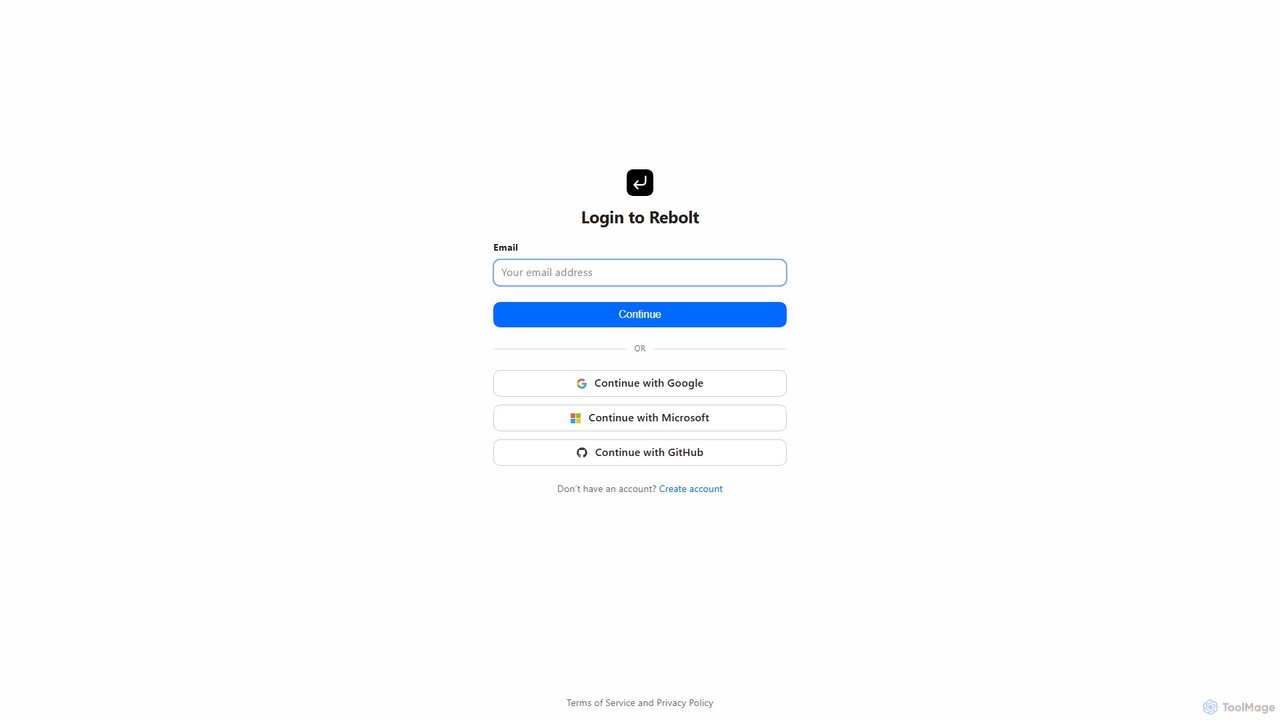
Rebolt Product overview

Rebolt is an AI-powered platform designed to automate the entire software development lifecycle. It helps developer and DevOps teams build, test, and deploy applications faster and more reliably by leveraging AI for CI/CD pipeline optimization, code generation, and intelligent monitoring.

Preview

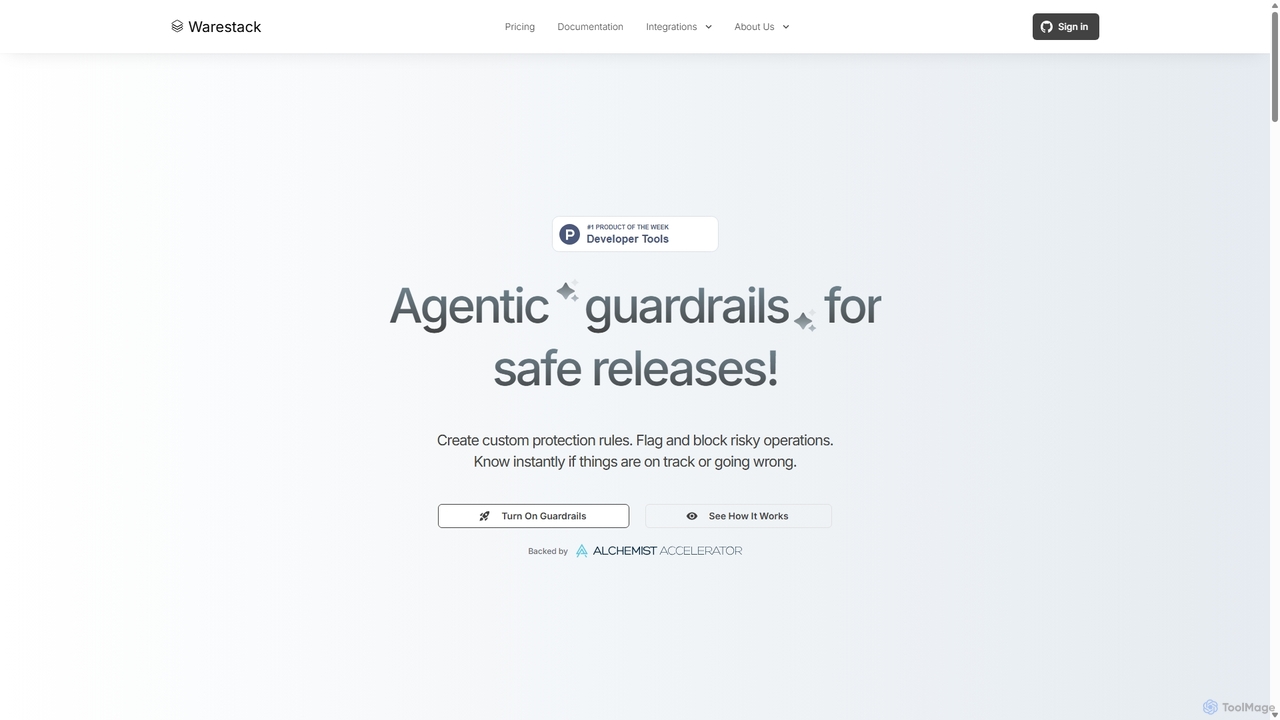
Warestack Product overview

Warestack provides agentic guardrails for software development teams, enabling safe and compliant releases. It uses context-aware, natural language rules to monitor DevOps workflows, flag risky operations, and automate protection, integrating with tools like Slack and Linear to prevent production incidents.

Preview

Quick facts

Compare product focus, pricing models and audiences. Highlighted rows indicate different listed information; unknown pricing does not mean free.

Rebolt VS Warestack — Quick facts
Quick factsReboltWarestack
Pricing modelFreemiumNo data available
Product typeWebWeb
Primary focusCode AssistantCode Quality
Audience and rolesData Scientist · DevOps Engineer · Engineering Manager · Product Manager · Software Developer · System Administrator · Tech LeadCompliance Officer · DevOps Engineer · Engineering Manager · Product Manager · Security Engineer · Site Reliability Engineer · Software Developer · Tech Lead
CategoriesCode Assistant · Devops · Infrastructure · AutomationCode Quality · Devops · Workflow Automation · Compliance
AddedSep 12, 2025Sep 11, 2025
UpdatedNov 19, 2026Nov 19, 2026

Features, usage and use cases

Explore the listed product descriptions, features and workflows. Taxonomy labels alone are not feature evaluations.

Rebolt

Rebolt is a cutting-edge AI-powered platform engineered to revolutionize the software development lifecycle (SDLC). It serves as an intelligent co-pilot for developers and DevOps teams, automating complex and repetitive tasks to significantly boost productivity and accelerate time-to-market. By integrating seamlessly with existing development environments, Rebolt streamlines everything from code creation to production deployment.

The platform's core is its ability to understand development workflows and provide context-aware assistance. It can automatically generate boilerplate code, create unit tests, and even suggest optimizations for existing codebases. This allows developers to focus on solving complex business problems rather than getting bogged down in routine tasks. For DevOps professionals, Rebolt simplifies the creation and management of CI/CD pipelines, making deployments more consistent and error-free.

How to use Rebolt

Getting started with Rebolt is straightforward. First, users create an account using their email, or by linking their Google, Microsoft, or GitHub accounts for seamless integration. Once logged in, you connect your code repositories (like GitHub, GitLab, or Bitbucket). Rebolt will then analyze your project structure and language. You can then use natural language prompts to instruct the AI to perform tasks, such as 'Create a CI/CD pipeline for this Node.js app to deploy to AWS' or 'Write unit tests for the user authentication module'. The AI generates the necessary scripts and configuration files, which you can review and commit directly to your repository. For ongoing monitoring, you can configure Rebolt to watch your production environment, where it will provide real-time alerts and AI-driven insights into performance and errors.

Core Features of Rebolt

  • AI-Powered CI/CD: Automatically generate and optimize continuous integration and continuous deployment pipelines tailored to your specific project needs.
  • Intelligent Code Generation: Create boilerplate code, functions, classes, and unit tests in multiple programming languages using simple natural language prompts.
  • Automated Code Review: The AI assistant can review pull requests, identifying potential bugs, security vulnerabilities, and deviations from coding standards before they are merged.
  • Proactive Monitoring & Incident Response: Rebolt monitors application performance in real-time, using AI to detect anomalies, predict potential failures, and provide actionable insights for quick resolution.
  • Natural Language Interface: Interact with your development and deployment workflows using plain English, lowering the barrier for complex DevOps tasks.
  • Seamless Integrations: Natively integrates with popular tools like GitHub, GitLab, Jira, Slack, Docker, Kubernetes, and major cloud providers (AWS, Azure, GCP).

Use Cases for Rebolt

Rebolt is versatile and can be applied in various scenarios. For startups, it enables small teams to establish robust DevOps practices without needing a dedicated specialist. For large enterprises, it standardizes development workflows across multiple teams, ensuring consistency and quality. Software developers use it daily to accelerate their coding and debugging tasks, while DevOps engineers leverage it to automate infrastructure management and complex deployment strategies. Product managers can also gain insights from Rebolt's monitoring dashboards to understand application performance and user impact.

Advantages of Rebolt

The primary advantage of Rebolt is its ability to dramatically increase development velocity. By automating manual tasks, it frees up valuable engineering time. Its AI-driven insights help improve code quality and application reliability, reducing the number of bugs that reach production. Furthermore, its intuitive, natural language interface makes powerful DevOps capabilities accessible to all developers, regardless of their experience level. This democratization of development tools fosters a more efficient and collaborative engineering culture.

Pricing and Plans

Rebolt operates on a freemium model, offering a range of plans to suit different needs:

  • Free Plan: Ideal for individual developers and hobby projects. Includes a limited number of builds per month, core code generation features, and community support.
  • Pro Plan: Designed for professional developers and small teams. Offers more build minutes, advanced AI features like automated code reviews, priority support, and integration with private repositories.
  • Enterprise Plan: A custom solution for large organizations. Includes unlimited builds, enhanced security features (SSO, audit logs), dedicated support, and on-premise deployment options.

Warestack

Warestack is an advanced platform designed to revolutionize software release management by implementing 'agentic guardrails'. It moves beyond traditional, rigid binary checks (true/false) to a more intelligent, context-aware system. This allows development teams to create highly specific, nuanced protection rules using plain English, eliminating the need for complex YAML or scripts. The core mission of Warestack is to ensure every release is safe, compliant, and efficient, allowing developers to focus on coding while the platform handles the complexities of release safety.

By monitoring the entire DevOps lifecycle from commit to deployment, Warestack provides complete visibility and flags any operations that violate the custom-defined 'rulebook'. This proactive approach helps prevent production incidents, enforce compliance standards like SOC-2, and streamline team collaboration. It's built for modern development teams that require both speed and stability in their CI/CD pipelines.

How to use Warestack

Getting started with Warestack is a straightforward process designed for rapid integration and immediate impact:

  1. Connect Your Tools: Begin by integrating your existing development and communication stack. Warestack seamlessly connects with essential tools like GitHub, Slack, Linear, Google Calendar, and more to create a unified workflow.
  2. Define Rules in English: Create your custom 'rulebook'. Instead of writing code, you describe the rules in natural language. For example, "Require 2 approvals in main, unless it's a hotfix by a senior engineer on call" or "Block all PR merges on Fridays after 5 PM".
  3. Monitor in Real-Time: Once set up, Warestack actively monitors all your team's operations. A centralized dashboard provides a real-time view of all DevOps events, tracking pull requests, merges, workflow runs, and deployments.
  4. Automate Protection: The system automatically enforces your rules. It can flag risky patterns, block non-compliant actions (like a merge or deployment), and send targeted alerts to the right people via Slack or other channels, ensuring zero noise.
  5. Generate Reports: Utilize the powerful Text-to-SQL feature to ask questions about your team's activity in plain English. For instance, "Extract merged PRs that violated SOC-2 policies in the past month" to generate instant audit reports.

Core Features of Warestack

  • Context-Aware Rules: Go beyond simple binary logic. Create rules that consider context, such as the type of change (e.g., hotfix), the engineer's role, or the time of day.
  • Natural Language Rule Creation: Define complex protection policies using plain English. This makes rule management accessible to more team members and reduces the learning curve.
  • Real-Time DevOps Monitoring: Gain full visibility into your entire release pipeline, from code commit to production deployment, eliminating blind spots.
  • Automated Flagging & Blocking: Proactively identify and prevent risky operations before they can cause incidents.
  • Seamless Tool Integration: Connects with your favorite tools like Slack, Linear, and Google Calendar to automate workflows and send alerts where your team already works.
  • Text-to-SQL Reporting: Generate powerful audit and activity reports by simply asking questions in natural language.
  • Team-Based Policy Management: Assign specific teams to repositories and enforce rules that are relevant to them, reducing alert fatigue and improving focus.
  • Open-Source Rule Engine: Powered by Watchflow, its open-source engine, offering transparency and community collaboration.

Use Cases for Warestack

Warestack is versatile and can be applied to various scenarios within a development team:

  • Enforcing Compliance: Automatically enforce SOC-2 or other regulatory policies by creating rules that check for required documentation, approvals, or ticket associations.
  • Preventing Risky Deployments: Set up guardrails to block deployments during off-hours, on weekends, or if critical tests have been skipped.
  • Improving Code Quality: Mandate that pull requests require a certain number of reviews from senior engineers before being merged into the main branch.
  • Streamlining Team Collaboration: Automate reminders by pinging a Slack channel for overdue PR reviews or automatically commenting on a Linear ticket when a related workflow fails.

Advantages of Warestack

Warestack offers significant advantages over traditional CI/CD checks:

  • Personalized Protection: Create a rulebook that perfectly matches your team's unique workflow and risk tolerance.
  • Faster, Safer Releases: By automating manual checks and providing intelligent guardrails, teams can release code more frequently and with greater confidence.
  • Reduced Operational Noise: Alerts are intelligent and targeted, ensuring the right people are notified at the right time without overwhelming channels.
  • Actionable, Real-Time Insights: The dashboard and reporting features provide a clear understanding of team activities and potential risk patterns.

Pricing and Plans

Warestack's pricing information is not publicly listed on the website. To get details on pricing and plans, prospective users are encouraged to schedule a demo and speak directly with the founders. This approach suggests a focus on custom enterprise plans tailored to the specific needs and scale of each team.

Positioning

Their taxonomy shows where the products overlap and where each one has a more distinct focus. Unknown fields are shown explicitly and are never filled with assumptions.

Categories

Shared
Devops
Only Rebolt
Code AssistantInfrastructureAutomation
Only Warestack
Code QualityWorkflow AutomationCompliance

Tags

Shared
CI/CDdevopsgithubsoftware development
Only Rebolt
AI developer toolautomationcode assistantcode generationcontinuous integrationdeploymenttesting
Only Warestack
agentic AIcode qualitycomplianceguardrailsrelease managementsecuritySOC 2sreworkflow automation

Audience and roles

Shared
DevOps EngineerEngineering ManagerProduct ManagerSoftware DeveloperTech Lead
Only Rebolt
Data ScientistSystem Administrator
Only Warestack
Compliance OfficerSecurity EngineerSite Reliability Engineer

Traffic comparison

Traffic is shown on the same scale so differences in market visibility are not visually understated.

How to interpret the traffic data

Both charts share the same months and vertical scale. Each tool identifies its latest reporting month; missing months are left blank, not counted as zero. Regional and source visit counts are estimates calculated from the reported shares.

Rebolt monthly traffic:

Latest traffic · 2026-05

Monthly visits
145
Avg. visit duration
0:04
Pages per visit
2
Bounce rate
0%
Data updated 2026-06-15

Monthly traffic trend

  • 2025-08: No data available
  • 2025-09: 1.4K
  • 2026-01: 2K
  • 2026-02: 2.4K
  • 2026-03: 434
  • 2026-04: 0
  • 2026-05: 145

Top regions

Top 5 countries/regions
Country/regionPercentageEstimated visits
🇪🇸Spain100%145

Warestack monthly traffic:

Latest traffic · 2026-05

Monthly visits
420
Avg. visit duration
0:00
Pages per visit
1.01
Bounce rate
62.95%
Data updated 2026-06-15

Monthly traffic trend

  • 2025-08: 338
  • 2025-09: 811
  • 2026-01: No data available
  • 2026-02: 0
  • 2026-03: 0
  • 2026-04: 141
  • 2026-05: 420

Top regions

Top 5 countries/regions
Country/regionPercentageEstimated visits
🇮🇳India100%420

Search keywords

1devtoolstack.com

Community signals

Ratings, comments, favorites, and likes are community signals—not a substitute for product fit.

Rebolt

Rating
No data available
Comments
0
Favorites
189
Likes
164

Warestack

Rating
No data available
Comments
0
Favorites
199
Likes
207

Rebolt vs Warestack · Comparison FAQ

What do Rebolt and Warestack have in common?
Both tools are listed under Devops. These categories indicate overlapping use cases; compare their detailed descriptions for workflows, capabilities and limitations.
Are Rebolt and Warestack free?
Listed pricing models: Rebolt — Freemium; Warestack — No data available. Missing pricing is not proof of a free plan, and freemium does not mean every feature is free. Check official sites for current plans, limits and trials.
How should I choose between Rebolt and Warestack?
The primary listed category is Code Assistant for Rebolt, and Code Quality for Warestack. Compare features, steps and use cases, then verify pricing, data permissions and deployment needs. This page does not include hands-on testing and does not declare a winner from traffic or tags.

Sources and comparison methodology

This page is assembled from ToolMage product listings, taxonomy, traffic statistics and on-site user feedback. It is not a hands-on test or an independent review.

  • Feature and plan descriptions reflect information in the listings, not real-time guarantees. Verify pricing, quotas, availability and privacy terms on the official sites.
  • Traffic uses the reporting months shown. Missing statistics do not mean zero visits, and different periods do not establish growth or superiority. Regional and source visit counts are estimates based on shares.
  • Different tags indicate differences in the listings, not proof that the other product lacks a capability. Ratings, favorites and visits are not used to declare a winner.

Related comparisons