Best of the Year 1 results 3D & Ar & Vr AI Tools

Popular AI tools in the 3D & Ar & Vr field include Vrain, etc., helping you quickly improve efficiency.

Vrain

Vrain

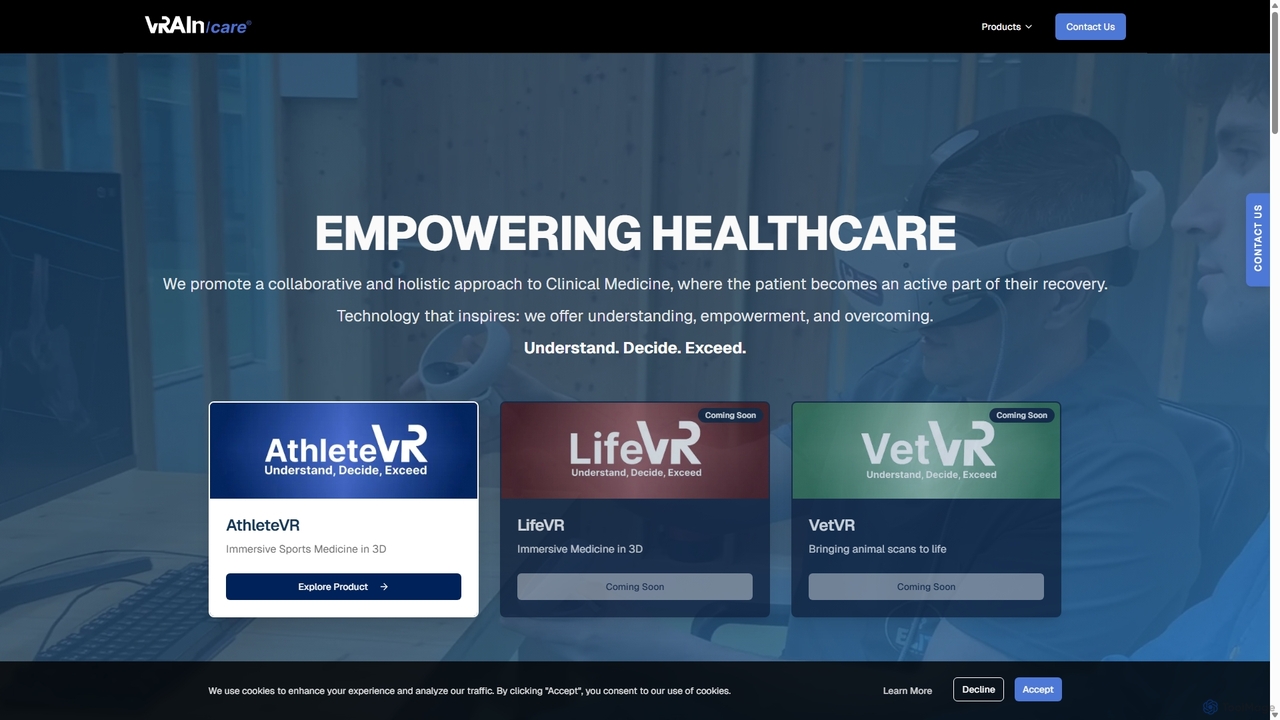
Vrain is an AI-powered bioimaging platform that uses VR, AR, and XR to transform 2D medical scans into …

2.4K

About 3D & Ar & Vr

3D & Ar & Vr are AI-powered tools that leverage artificial intelligence to create, manipulate, and interact with three-dimensional models, augmented reality (AR) experiences, and virtual reality (VR) environments. These tools utilize advanced algorithms, including generative AI and computer vision, to automate complex design processes, enhance realism, and enable dynamic spatial computing. They empower creators, developers, and businesses to build immersive digital content and interactive experiences with unprecedented speed and efficiency.

Core Features

  • AI-Powered 3D Generation: Automatically creates complex 3D models, textures, and scenes from text prompts, 2D images, or simple sketches.
  • Augmented Reality Content Creation: Facilitates the design and deployment of interactive AR experiences, including object recognition, spatial anchoring, and real-time overlays.
  • Virtual Reality Environment Design: Enables the rapid construction of immersive VR worlds, complete with dynamic assets, interactive elements, and realistic simulations.
  • Intelligent Animation & Rigging: Automates character rigging, motion capture processing, and animation sequences, reducing manual effort.
  • Spatial Computing & Interaction: Enhances user interaction within 3D, AR, and VR spaces through AI-driven gesture recognition, voice commands, and adaptive environments.

Use Cases

These tools are indispensable for game developers seeking to accelerate asset creation, architectural firms visualizing complex designs, and marketing teams crafting immersive product showcases. They also serve educational institutions for interactive learning modules and industrial sectors for virtual training simulations, transforming how digital content is produced and consumed across various industries.

How to Choose

When selecting 3D & AR & VR AI tools, consider the quality and fidelity of the generated output, compatibility with your existing design software and platforms (e.g., Unity, Unreal Engine), and the ease of use for your team's skill level. Evaluate the specific features offered, such as real-time rendering capabilities, asset library size, and the flexibility of customization options, to ensure it aligns with your project requirements and budget.

3D & Ar & VrUse Cases

1

Rapid Prototyping in Product Design

Industrial designers can leverage 3D AI tools to generate multiple product variations from simple sketches or text descriptions. By inputting core design parameters, the AI quickly produces diverse 3D models, allowing designers to iterate on concepts, visualize different aesthetics, and test functionalities in a virtual environment, significantly accelerating the prototyping phase and reducing physical material waste.

2

Immersive Training Simulations for Enterprises

Companies can create highly realistic VR training modules for employees, simulating complex machinery operation, emergency response procedures, or intricate surgical techniques. AI tools assist in generating dynamic environments, intelligent virtual instructors, and adaptive scenarios that respond to trainee actions, providing a safe, cost-effective, and highly engaging learning experience that improves skill retention and reduces risks in real-world operations.

3

AR-Powered Retail Experiences for Customers

Retail brands can develop AR applications that allow customers to virtually try on clothing, place furniture in their homes, or preview product customizations before purchase. AI-driven object recognition and spatial mapping ensure accurate placement and realistic rendering, enhancing the online shopping experience, reducing return rates, and boosting customer confidence by bridging the gap between digital browsing and physical interaction.

4

Automated Game Asset Generation for Developers

Game developers can utilize AI 3D tools to rapidly generate a vast array of game assets, including environmental props, character models, textures, and animations. By providing simple prompts or reference images, AI can create high-quality, game-ready assets, significantly reducing the manual labor and time traditionally required for 3D modeling and texturing, allowing development teams to focus on gameplay and narrative.

5

Architectural Visualization & Interactive Walkthroughs

Architects and real estate professionals can use AI-powered 3D and VR tools to transform blueprints and 2D designs into fully interactive 3D models and virtual walkthroughs. AI assists in generating realistic textures, lighting, and environmental details, allowing clients to experience unbuilt properties in an immersive VR environment, explore different design options, and provide feedback, leading to faster approvals and more informed decisions.

6

Virtual Event & Metaverse Content Creation

Event organizers and metaverse developers can leverage 3D & AR & VR AI tools to design and populate dynamic virtual spaces for online conferences, concerts, or social gatherings. AI assists in generating custom 3D environments, interactive objects, and even virtual avatars, enabling the rapid creation of engaging and scalable metaverse experiences that offer new avenues for connection and entertainment beyond physical limitations.

3D & Ar & VrFrequently Asked Questions