nak3d
nak3d is an AI-powered digital fashion factory that transforms the industry by creating high-quality virtual styles. It offers …
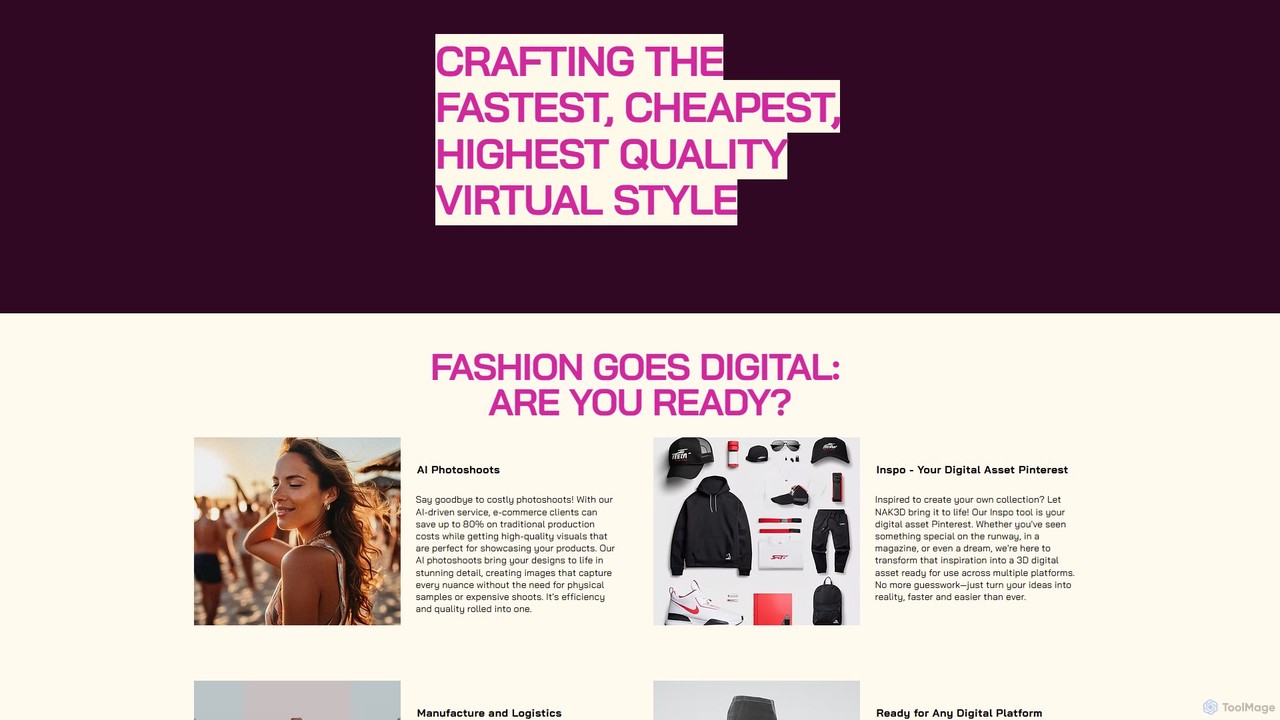
nak3d is an AI-powered digital fashion factory that transforms the industry by creating high-quality virtual styles. It offers AI photoshoots that save up to 80% on costs, turns inspiration into 3D assets, and provides end-to-end manufacturing and logistics solutions. Its digital garments are compatible with any platform, from e-commerce to gaming and the metaverse.
About Fashion
AI Fashion tools are a specialized category of software that leverages artificial intelligence to design, visualize, and personalize apparel in 3D. These tools often use generative models and computer vision to create realistic 3D garment simulations, enable virtual try-on experiences, and automate pattern creation. They empower designers and brands to accelerate prototyping, reduce material waste, and offer highly engaging e-commerce experiences. By bridging the gap between digital concepts and physical products, these platforms are transforming the fashion design and retail workflow.
Core Features
- Virtual Try-On (VTO): Allows users to see how digital garments fit on their own photo or a 3D avatar.
- AI Design Generation: Creates novel clothing designs from text prompts, images, or sketches.
- 3D Fabric Simulation: Realistically simulates the drape, texture, and movement of different textiles on a digital model.
- Automated Pattern Making: Converts 3D clothing models into 2D patterns ready for manufacturing.
- AI Model Generation: Produces diverse, photorealistic virtual models to showcase fashion collections.
Use Cases
These tools are primarily used by fashion designers, e-commerce retailers, apparel brands, and marketing agencies. They are applied in workflows for rapid collection prototyping, creating immersive online shopping experiences, generating marketing content without physical photoshoots, and developing sustainable design practices by minimizing physical samples.
How to Choose
When selecting an AI Fashion tool, consider the accuracy of its fit and sizing for virtual try-on. Evaluate the realism of the 3D rendering and fabric simulation. Check for integration capabilities with e-commerce platforms like Shopify or Magento. Finally, assess the tool's ease of use and whether it aligns with your team's technical skills.
FashionUse Cases
E-commerce Virtual Try-On Implementation
An online apparel retailer aims to reduce high return rates caused by poor fit. They integrate an AI Virtual Try-On tool into their product pages. Customers upload a photo or use their device's camera to create a personal avatar. The tool then accurately drapes the selected 3D garment onto the avatar, showing how it would look and fit in reality. This allows shoppers to make more confident purchasing decisions, leading to a significant decrease in returns and an increase in conversion rates.
Rapid Prototyping for Fashion Collections
A fashion designer needs to develop concepts for a new seasonal collection under a tight deadline. Instead of manual sketching, they use an AI design generation tool. By inputting text prompts like "asymmetrical silk blouse with floral patterns" and uploading mood board images, the AI generates dozens of unique 3D design variations in minutes. The designer can then quickly iterate on these concepts, select the most promising ones, and move to pattern making, shortening the design cycle from weeks to days.
Creating Digital-Only Fashion Campaigns
A luxury brand wants to launch a cutting-edge marketing campaign without the logistical costs of a physical photoshoot. They use AI Fashion tools to create a complete digital runway show. The process involves generating a diverse cast of AI models, designing a virtual collection of 3D garments, and simulating their movement in a rendered environment. The final campaign is distributed across social media and virtual reality platforms, creating significant buzz and reinforcing the brand's innovative image.
On-Demand Custom Apparel Manufacturing
A direct-to-consumer brand specializes in custom-fit clothing. Their website features an AI tool where customers input their measurements and style preferences. The AI generates a unique 3D model of the garment tailored to the customer's body. Once the customer approves the virtual look, the system automatically generates the corresponding 2D manufacturing pattern. This pattern is sent directly to the cutting machine, enabling a highly efficient on-demand production workflow that eliminates inventory waste.
Sustainable Material Visualization
A textile company develops a new, eco-friendly fabric and needs to showcase its properties to potential clients without shipping physical samples. They use an AI 3D simulation tool to digitize the fabric's physical characteristics, including weight, stiffness, and texture. Fashion brands can then apply this digital material to their own 3D garment models to see exactly how it drapes and behaves. This process accelerates the material selection process and significantly reduces the carbon footprint associated with sample production and shipping.
Automated E-commerce Model Photoshoots
An online fast-fashion retailer needs to list hundreds of new items weekly, each requiring multiple product photos. Traditional photoshoots are slow and expensive. They adopt an AI tool that takes a single flat image of a garment and renders it onto a variety of AI-generated models with different body types and poses. This generates a complete set of high-quality, on-model e-commerce images in hours, not days, drastically cutting photography costs and speeding up time-to-market for new products.