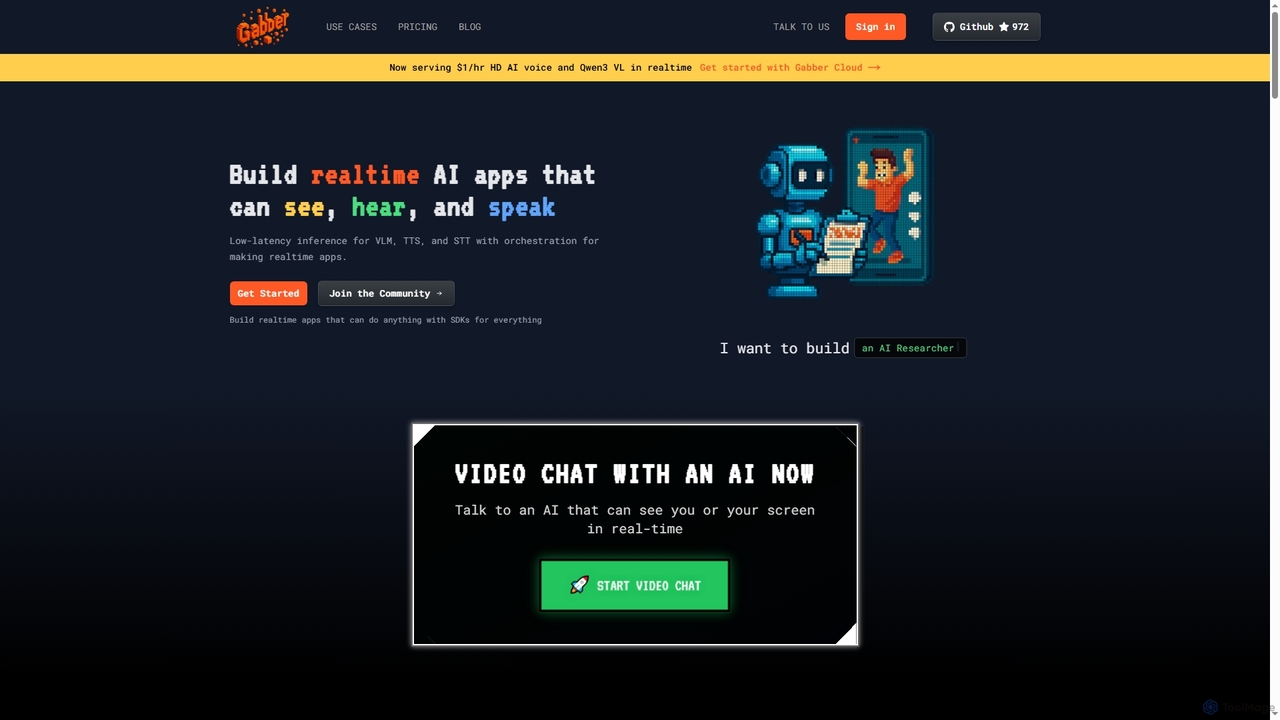
Conversational AI refers to AI-powered tools designed to simulate human-like conversations through text or voice. These systems leverage advanced Natural Language Processing (NLP), Natural Language Understanding (NLU), and Machine Learning to comprehend user intent, process complex queries, and generate coherent, contextually relevant responses. As a specialized branch of AI Agents, Conversational AI tools excel at automating interactions, providing instant support, and personalizing user experiences across various digital touchpoints.
Core Features
- Natural Language Understanding (NLU): Interprets user input, identifies intent, and extracts key entities from free-form text or speech.
- Contextual Awareness: Maintains conversation history and user preferences to provide relevant and personalized interactions over time.
- Multi-channel Deployment: Enables seamless integration and operation across websites, mobile apps, messaging platforms, and voice assistants.
- Automated Task Execution: Can perform actions like booking appointments, processing orders, or retrieving information based on conversational commands.
- Sentiment Analysis: Detects the emotional tone of user messages to tailor responses and escalate critical issues appropriately.
Use Cases
Conversational AI is widely adopted in customer service, sales, and internal operations. Businesses use these tools to provide 24/7 support, answer frequently asked questions, guide users through processes, and automate lead qualification, significantly reducing operational costs and improving response times.
How to Choose
When selecting a Conversational AI tool, consider its NLU capabilities, ease of integration with existing systems (CRM, ERP), scalability to handle varying user loads, and customization options for branding and specific use cases. Evaluate the platform's ability to learn and adapt, as well as its support for multiple languages and deployment channels.