Ai Coding Best in category 1 results Code Generation AI Tool

Popular AI tools in the Code Generation field of Ai Coding include PromptKit, etc., helping you quickly improve efficiency.

PromptKit

PromptKit

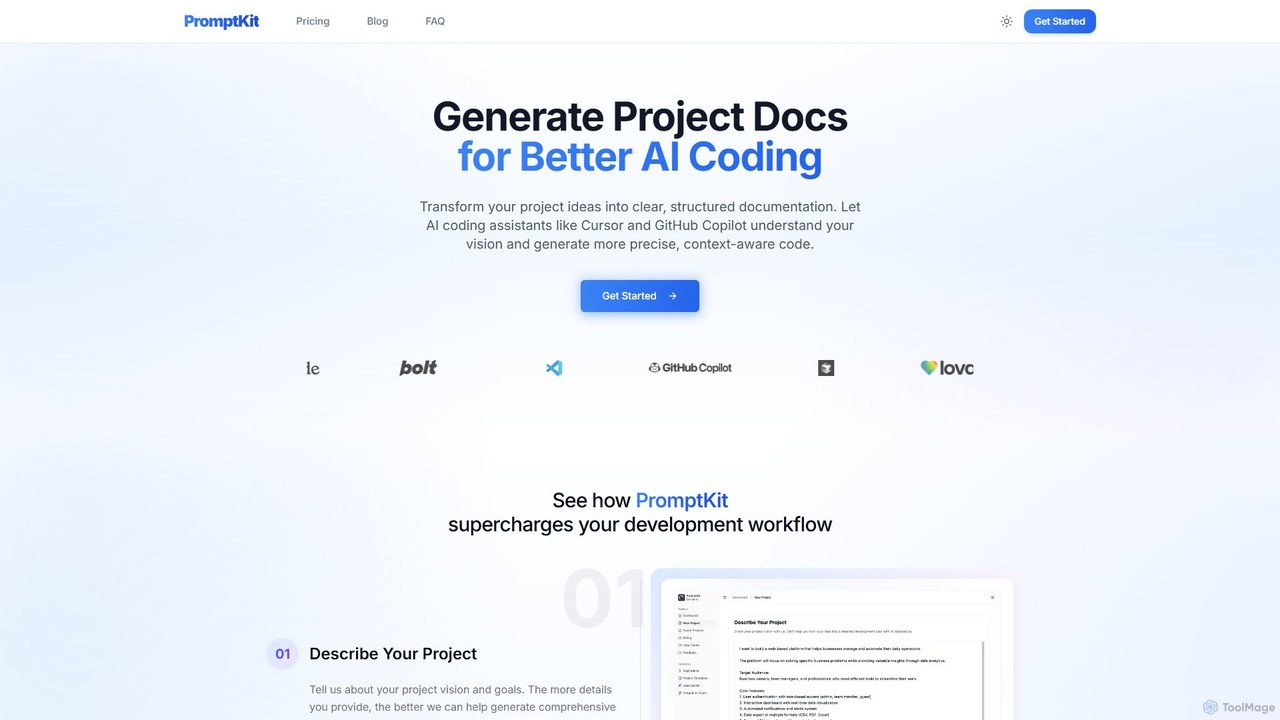
PromptKit is an AI-powered tool that transforms your project ideas into clear, structured documentation. It's designed to enhance …

2.5K

About Code Generation

AI Code Generation tools are a specialized category of AI coding assistants that automatically write functional code snippets, functions, or even entire applications from natural language prompts. These tools leverage large language models (LLMs) trained on vast codebases to understand intent and produce syntactically correct, contextually relevant code in various programming languages. This capability significantly accelerates development cycles, helps developers overcome creative blocks, and lowers the barrier to entry for complex programming tasks. Unlike simple code completion, these tools can generate complex logic and multi-line structures from a single instruction.

Core Features

  • Natural Language to Code: Converts plain text descriptions and requirements into executable code.
  • Boilerplate & Scaffolding: Generates the initial file structure and setup code for new projects or components.
  • Code Translation: Translates code from one programming language to another, aiding in migrations.
  • Unit Test Generation: Automatically creates test cases to validate the functionality of existing code.
  • Algorithm & Logic Implementation: Generates complex algorithms or business logic based on a high-level description.

Use Cases

These tools are widely used by software developers for rapid prototyping, data scientists for generating data analysis scripts, and students for learning new programming languages. They are particularly effective for building API integrations, creating complex database queries from natural language, and scaffolding front-end components, drastically reducing manual coding time.

How to Choose

When selecting a Code Generation tool, consider the supported programming languages and frameworks. Evaluate its integration with your existing IDE (e.g., VS Code, JetBrains). Assess the quality and security of the generated code, and check the model's ability to understand the context of your existing project. Finally, review the pricing model, especially regarding API usage limits and privacy policies for your codebase.

Code GenerationUse Cases

1

Rapid Prototyping of a Web Application Backend

A backend developer needs to build a new REST API. Instead of writing all the boilerplate code for routes, models, and controllers from scratch, they use an AI Code Generation tool. By providing prompts like 'Create a Node.js Express API endpoint for user registration with email and password fields,' the tool generates the necessary files and code structure. This allows the developer to build a functional prototype in hours instead of days, enabling faster iteration and feedback from the product team.

2

Generating Complex SQL Queries from Plain English

A business analyst without deep SQL expertise needs to extract specific data from a large database. They use a Code Generation tool to describe their request in natural language, such as 'Show me the total sales for each product category in the last quarter, sorted from highest to lowest.' The AI translates this into an optimized SQL query, joining multiple tables and applying the correct filters. This empowers non-technical users to perform complex data analysis independently and reduces reliance on the engineering team.

3

Translating Legacy Code to a Modern Language

A software company is migrating an old application written in a legacy language like COBOL to Python to improve maintainability. A developer uses an AI Code Generation tool specializing in code translation. They feed snippets of the legacy code into the tool, which then generates the equivalent logic and syntax in Python. While manual review and testing are still crucial, this process automates a significant portion of the tedious and error-prone translation work, saving weeks of development time.

4

Creating Unit Tests for Existing Functions

A quality assurance engineer is tasked with increasing test coverage for a critical software module. They select a function and use an AI Code Generation tool to automatically create a suite of unit tests. The tool analyzes the function's logic, inputs, and outputs to generate relevant test cases, including edge cases and error handling scenarios. This accelerates the testing process, improves code reliability, and helps the team adhere to Test-Driven Development (TDD) practices more efficiently.

5

Scaffolding a New Front-End Component

A front-end developer is building a new feature using React. They need to create a complex data table component with sorting, filtering, and pagination. They provide a prompt to the AI Code Generation tool: 'Generate a React component for a data table using a UI library with columns for ID, Name, and Status, including sorting and pagination logic.' The tool produces the complete component file with JSX structure, state management hooks, and event handlers, providing a solid foundation to build upon and saving significant setup time.

6

Automating Script Generation for Data Science

A data scientist is exploring a new dataset. They need to perform common tasks like data cleaning, normalization, and visualization. Using an AI Code Generation tool within their Jupyter Notebook, they can write comments like 'Plot a histogram of the age column' or 'Calculate the correlation matrix for all numerical features.' The tool instantly generates the corresponding Python code using libraries like Pandas and Matplotlib, allowing the scientist to focus on analysis and interpretation rather than on recalling specific syntax.

Code GenerationFrequently Asked Questions