ToolMage
Sign in

Best 1 Ai Rewriter AI tools for Ai Content

Popular Ai Rewriter AI tools in Ai Content include Huxli, helping you work more efficiently.

Huxli
Freemium

Huxli

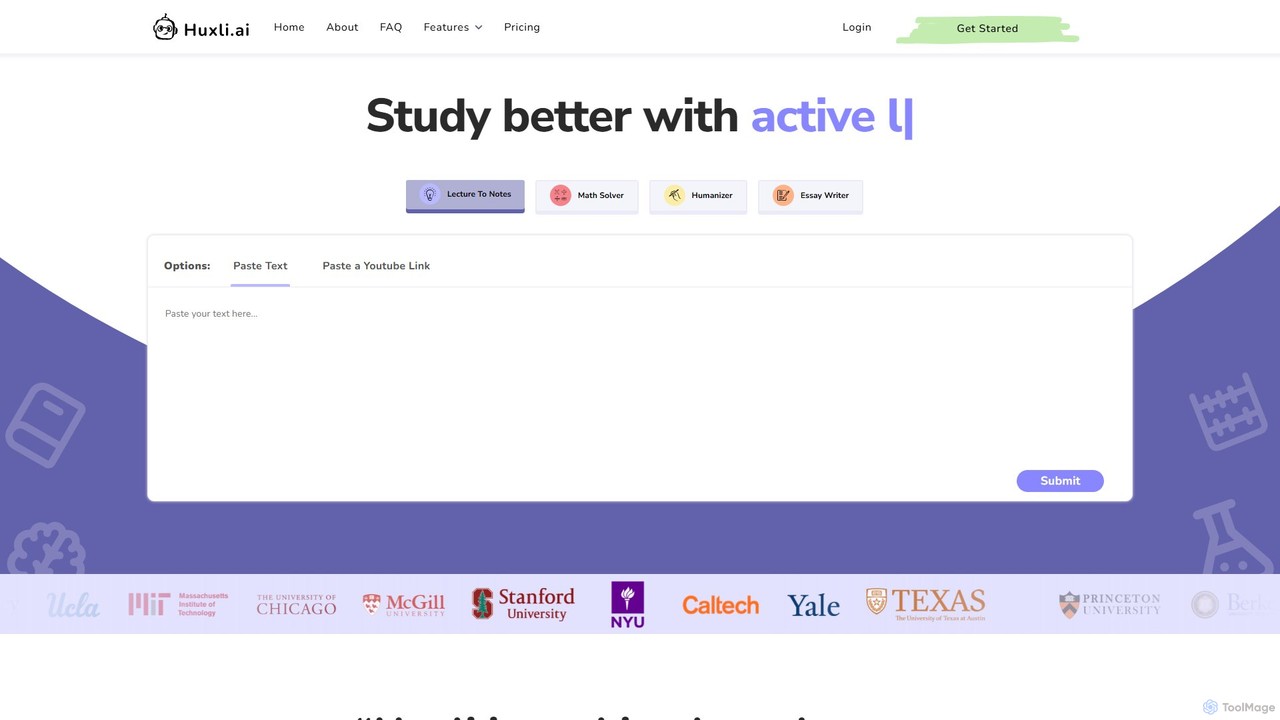
Huxli is an all-in-one AI-powered study platform for students. It offers a suite of tools including an advanced AI Humanizer to bypass detection, an accurate Math Solver, an Essay Writer, and a Lecture-to-Notes converter. Huxli aims to improve grades, save time, and deepen academic understanding.

Ai Rewriter
Visits 12.8KFavorites 129Likes 135

About Ai Rewriter

AI Rewriters are specialized tools that paraphrase, rephrase, and restructure existing text while preserving its core meaning. Leveraging advanced Natural Language Processing (NLP), these tools analyze sentence structure and semantics to generate alternative versions with different tones, styles, or complexity. Their primary value lies in creating unique content variations, enhancing clarity, and overcoming writer's block efficiently. Unlike general AI content generators that create text from scratch, AI Rewriters focus specifically on transforming and refining pre-existing material.

Core Features

  • Contextual Paraphrasing: Generates multiple unique versions of a sentence or paragraph that maintain the original context.
  • Tone and Style Adjustment: Modifies text to be more formal, casual, professional, academic, or creative to match different audiences.
  • Clarity Enhancement: Simplifies complex sentences, clarifies ambiguous phrasing, and replaces jargon for better readability.
  • Vocabulary Enrichment: Intelligently suggests context-aware synonyms and alternative phrasing to improve word choice.
  • Sentence Restructuring: Alters the composition and order of sentences to improve flow and avoid repetitive patterns.

Use Cases

AI Rewriters are widely used by content marketers for repurposing blog posts into social media updates, by students and academics for ethically paraphrasing sources, and by SEO specialists for creating unique product descriptions at scale. They also assist business professionals and non-native speakers in refining emails, reports, and presentations to ensure clarity and professionalism.

How to Choose

When selecting an AI Rewriter, evaluate the quality and naturalness of the output—it should not sound robotic. Consider the degree of control offered, such as modes for fluency, formality, or creativity. Look for features like built-in plagiarism checkers, support for multiple languages, and integrations with platforms like Google Docs or WordPress. Finally, assess the pricing model based on character or word limits to ensure it aligns with your usage volume.

Ai Rewriter use cases

1

Repurposing Blog Content for Social Media

A content marketer needs to promote a new in-depth blog post across multiple platforms like Twitter, LinkedIn, and Facebook. Instead of manually writing unique captions for each, they use an AI Rewriter. They paste key paragraphs from the blog post into the tool and generate several variations. They select a concise, punchy version for Twitter, a professional and detailed summary for LinkedIn, and an engaging, question-based post for Facebook. This process saves hours of work and ensures the core message is consistently adapted for each platform's audience, maximizing reach and engagement.

2

Ethical Academic Paraphrasing

A university student is writing a research paper and needs to incorporate findings from several academic journals. To avoid plagiarism and demonstrate understanding, they use an AI Rewriter as a learning aid. After reading and understanding a source, they write their own summary and then use the rewriter to explore alternative phrasings and sentence structures. This helps them integrate the information smoothly into their own writing style while ensuring the final text is original. The tool acts as a sophisticated thesaurus and style guide, helping them articulate complex ideas clearly and properly credit the original sources.

3

Creating Unique E-commerce Product Descriptions

An e-commerce manager oversees a store with hundreds of similar products, often supplied with generic descriptions from the manufacturer. To improve SEO and stand out, they need unique descriptions for each item. Using an AI Rewriter, they input the manufacturer's base description and generate five distinct versions. They then quickly edit these outputs, adding specific keywords and brand voice. This allows them to populate their entire catalog with original, SEO-friendly content in a fraction of the time it would take to write each one from scratch, leading to better search engine rankings and a more engaging customer experience.

4

Improving Clarity in Business Communication

A project manager drafts an important email to stakeholders, but the initial version is dense with technical jargon and complex sentences. Before sending, they use an AI Rewriter's 'Simplify' or 'Improve Clarity' mode. The tool rephrases the technical terms into plain language and breaks down long, convoluted sentences into shorter, more digestible ones. The manager reviews the suggestions, accepts the ones that best fit, and sends a clear, concise message that is easily understood by both technical and non-technical stakeholders, preventing miscommunication and ensuring project alignment.

5

Overcoming Writer's Block with New Perspectives

A novelist is stuck on a particular chapter, repeatedly writing the same awkward-sounding paragraph. To break the creative logjam, they input the paragraph into an AI Rewriter and set it to a 'Creative' mode. The tool generates several versions, one using more evocative metaphors, another restructuring the sentences for dramatic effect, and a third simplifying the core idea. While none may be a perfect replacement, seeing these different angles on their own words sparks new ideas. The author combines elements from a few suggestions with their original intent, creating a fresh, well-written paragraph that moves the story forward.

6

Refining Translations for Natural Fluency

A marketing team uses an automated translation service to localize a campaign for a new region. The initial translation is grammatically correct but sounds stiff and unnatural to native speakers. A localization specialist then uses an AI Rewriter on the translated text. The tool helps rephrase idioms, adjust sentence flow to match local conventions, and select more culturally appropriate vocabulary. This final polishing step transforms a literal translation into fluent, persuasive marketing copy that resonates with the target audience, significantly improving the campaign's effectiveness.

Ai Rewriter FAQ

What is an AI Rewriter?

An AI Rewriter is a software tool that uses artificial intelligence, specifically natural language processing (NLP), to paraphrase and restructure existing text. Its main purpose is to generate a new version of the text that preserves the original meaning but uses different wording, sentence structure, or tone. Unlike tools that generate content from scratch, a rewriter's primary function is to transform existing content to improve its clarity, avoid plagiarism, or adapt it for a different audience.

How is an AI Rewriter different from an AI Writer?

The key difference lies in their input and primary function. An AI Rewriter takes existing text as input and transforms it. Its goal is to rephrase, simplify, or change the style of content that is already written. In contrast, an AI Writer (or AI Content Generator) takes a prompt or a set of keywords as input and generates entirely new, original content from scratch. Think of it this way: a rewriter is for editing and refining, while a writer is for creating and authoring.

How do I choose the best AI Rewriter for my needs?

To choose the right AI Rewriter, consider the following factors:

  • Output Quality: Test the tool to see if the rewritten text is coherent, grammatically correct, and sounds natural. The best tools maintain the original meaning without sounding robotic.
  • Customization and Control: Look for options to control the output, such as setting the tone (e.g., formal, casual), style (e.g., creative, simple), or the extent of changes.
  • Features: Does it offer a built-in plagiarism checker? Does it support multiple languages? Does it integrate with your existing workflow (e.g., browser extensions, API access)?
  • Usage Limits and Pricing: Evaluate the cost based on your needs. Some tools offer free tiers with limitations, while others have subscription plans based on word count or features.
Can using an AI Rewriter be considered plagiarism?

It depends on how the tool is used. Simply running text through a rewriter and presenting it as your own original work without proper citation can be considered plagiarism, as the core ideas are not yours. However, when used ethically, an AI rewriter is a powerful tool. Ethical use involves using it to better understand and rephrase concepts in your own words, improve the clarity of your own writing, or explore different ways to express an idea. Always credit the original source of information and ideas, regardless of the tool used to phrase them.

Who are the primary users of AI Rewriter tools?

AI Rewriters serve a diverse range of users. Key groups include:

  • Content Creators and Marketers: To repurpose content for different platforms, create variations for A/B testing, and refresh old articles for SEO.
  • Students and Academics: As a learning aid to paraphrase sources ethically and improve the clarity of their research papers.
  • SEO Specialists: To generate unique product descriptions, meta descriptions, and other web content at scale to avoid duplicate content issues.
  • Business Professionals: To refine emails, reports, and presentations, ensuring they are clear, concise, and professional.
  • Non-Native Speakers: To improve the fluency and naturalness of their writing in a foreign language.