ToolMage
Sign in

Best 1 Ai Content AI tools

Popular Ai Content AI tools include Huxli, helping you work more efficiently.

Huxli
Freemium

Huxli

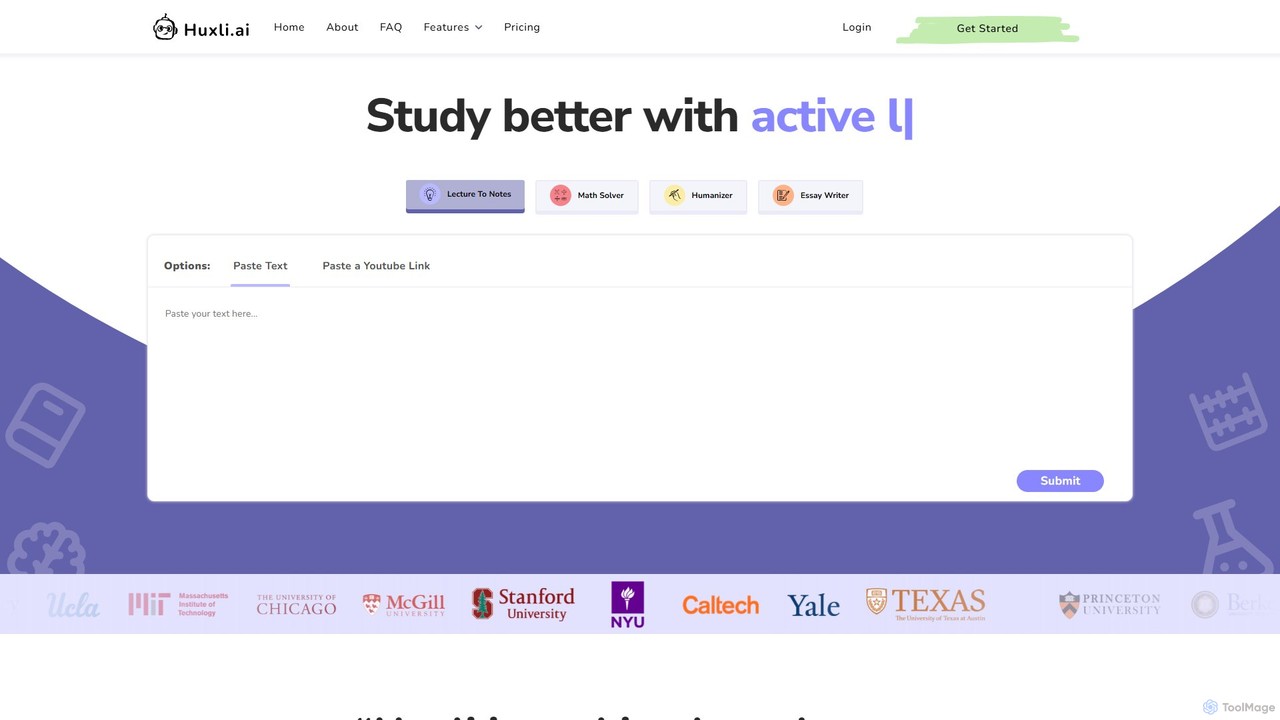
Huxli is an all-in-one AI-powered study platform for students. It offers a suite of tools including an advanced AI Humanizer to bypass detection, an accurate Math Solver, an Essay Writer, and a Lecture-to-Notes converter. Huxli aims to improve grades, save time, and deepen academic understanding.

Ai Rewriter
Visits 11KFavorites 109Likes 115

About Ai Content

Ai Content tools are AI-powered applications that automate and enhance the creation, optimization, and management of various forms of digital content. Leveraging advanced technologies like natural language processing (NLP) and generative AI, these tools can produce text, images, video, and audio from simple prompts. They empower individuals and businesses to scale content production, boost creativity, and maintain consistency across platforms, significantly streamlining workflows for marketing, education, and entertainment.

Core Features

  • Text Generation: Automatically produces articles, marketing copy, scripts, and code snippets based on user input.
  • Image & Video Creation: Generates unique visuals, illustrations, and short video clips from textual descriptions or existing assets.
  • Content Optimization: Analyzes content for SEO, readability, and engagement, suggesting improvements for better performance.
  • Multilingual Support: Translates and localizes content, adapting it for diverse global audiences while preserving context and tone.
  • Idea & Outline Generation: Assists in brainstorming topics, creating content outlines, and overcoming creative blocks.

Applicable Scenarios

Ai Content tools are indispensable for content marketers needing to generate high volumes of ad copy and social media posts, and for bloggers and journalists seeking to accelerate article drafting. E-commerce businesses utilize them for crafting unique product descriptions at scale, while educators can create engaging learning materials. Developers also leverage these tools for generating code documentation or initial code structures.

How to Choose

When selecting an Ai Content tool, consider the primary content type you need to create (text, image, video). Evaluate the quality and customization options for generated output, ensuring it aligns with your brand voice. Assess its integration capabilities with your existing platforms and workflows, and compare pricing models based on usage volume and advanced features. Finally, consider the ease of use and the learning curve for your team.

Featured tool rankings

Ai Content use cases

1

Generating Diverse Marketing Copy

Marketing specialists leverage Ai Content tools to rapidly produce a multitude of ad copy variations, social media posts, and email newsletters for campaigns. By inputting product features, target audience demographics, and desired tone, the AI generates compelling headlines and body text. This significantly reduces the time spent on copywriting, enabling quicker A/B testing and optimization of marketing messages for higher engagement and conversion rates.

2

Automating Blog Post Drafts and Outlines

Content creators and bloggers utilize Ai Content tools to accelerate the drafting process for articles and blog posts. Users provide a topic, relevant keywords, and a desired structure, and the AI generates comprehensive outlines and initial drafts. This helps overcome writer's block, ensures consistent content flow, and allows creators to focus more on refining ideas and adding unique human insights, boosting overall content production efficiency.

3

Crafting Unique E-commerce Product Descriptions

E-commerce managers and online store owners employ Ai Content tools to generate unique, SEO-friendly product descriptions at scale. By feeding the AI product names, key features, and target customer benefits, it produces engaging and informative descriptions for hundreds or thousands of items. This not only saves immense manual writing effort but also improves product visibility in search results and enhances the customer's shopping experience.

4

Developing Video Scripts and Storyboard Concepts

Video producers and marketers use Ai Content tools to streamline the pre-production phase of video creation. By describing the video's concept, target message, and desired length, the AI can suggest script outlines, dialogue, and even scene descriptions. This capability helps in exploring various creative angles, ensuring narrative coherence, and significantly reducing the time required to develop a compelling video story, from promotional clips to educational content.

5

Localizing Content for Global Market Expansion

International businesses and global marketing teams rely on Ai Content tools to efficiently adapt their marketing materials, website content, and product documentation for diverse linguistic and cultural contexts. These tools can translate content while adjusting tone, idioms, and cultural nuances. This ensures that messages resonate effectively with local audiences, facilitating seamless market entry and fostering stronger connections with customers worldwide.

6

Generating Engaging Social Media Post Ideas and Captions

Social media managers frequently use Ai Content tools to maintain a consistent and engaging online presence across various platforms. By inputting a topic, desired platform (e.g., Instagram, Twitter), and target audience, the AI generates a range of post ideas, relevant hashtags, and captivating captions. This helps in overcoming creative fatigue, ensures a steady stream of fresh content, and boosts audience interaction and brand visibility.

Ai Content FAQ

What are Ai Content tools?

Ai Content tools are software applications that leverage artificial intelligence, primarily generative AI and natural language processing, to assist in or fully automate the creation, optimization, and management of digital content. They can generate text, images, video, and audio from simple prompts, helping users to scale content production, enhance creativity, and streamline workflows across various industries.

How do Ai Content tools work?

Ai Content tools operate by using complex machine learning models, often trained on vast datasets of existing content. For text, they employ natural language processing (NLP) to understand prompts and generate human-like prose. For visuals, generative adversarial networks (GANs) or diffusion models create images and videos. Users provide input (text prompts, keywords, parameters), and the AI processes this to produce new, relevant content based on its training.

What types of content can AI tools create?

Ai Content tools are highly versatile and can create a wide array of content types. This includes written content like blog posts, articles, marketing copy, product descriptions, emails, and scripts. They can also generate visual content such as images, illustrations, logos, and even short video clips. Some advanced tools can produce audio content like voiceovers or music, and even assist in generating code snippets or data summaries.

How can I choose the best Ai Content tool for my needs?

To select the best Ai Content tool, first identify your primary content creation needs—whether it's text, images, video, or a combination. Evaluate the quality and customization options of the output, ensuring it aligns with your brand's voice and standards. Consider the tool's ease of use, integration capabilities with your existing software, and its pricing model. Reading reviews and trying free trials can also help assess performance and user experience.

Are AI-generated content original and SEO-friendly?

AI-generated content can be original in the sense that it's not directly copied from existing sources, but it's derived from patterns in its training data. For SEO-friendliness, AI tools can be prompted to include keywords and follow best practices, but human review is crucial to ensure accuracy, relevance, and unique insights that truly resonate with an audience and meet search engine quality guidelines. Over-reliance without human oversight can lead to generic or less authoritative content.