ToolMage
Sign in

Best 1 Training AI tools for Ai Course

Popular Training AI tools in Ai Course include AccioJob, helping you work more efficiently.

AccioJob
Paid

AccioJob

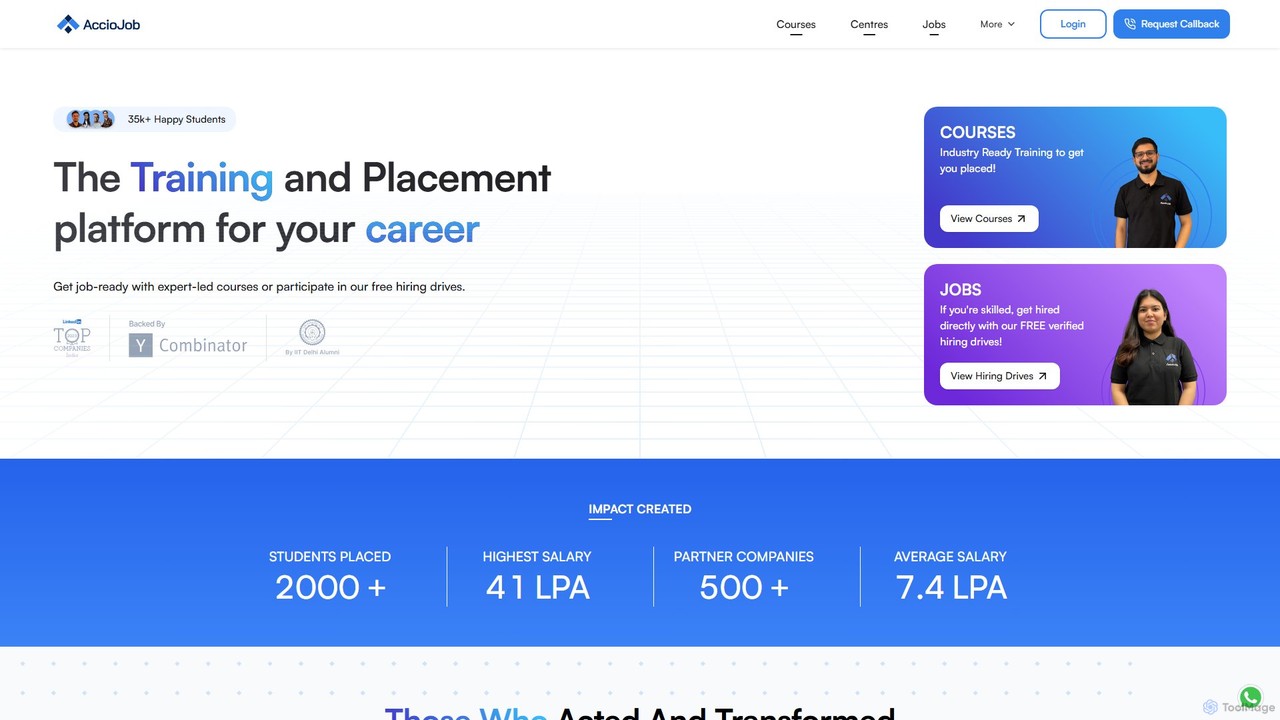
AccioJob is an EdTech platform offering expert-led courses in Full Stack Development, Data Science, and AI. It provides comprehensive training with flexible learning modes (online, offline, self-paced) and robust placement support to help students launch their careers in top tech companies.

Training
Visits 786.7KFavorites 122Likes 126

About Training

AI Training tools are platforms that leverage artificial intelligence to deliver personalized, adaptive, and efficient learning experiences. These tools utilize advanced algorithms to understand individual learning styles, progress, and knowledge gaps. They are designed to enhance skill development, corporate upskilling, and academic support by providing dynamic and interactive content. Within the broader category of AI courses, AI training tools offer practical, hands-on, and data-driven approaches to mastering new skills.

Core Features

  • Adaptive Learning Paths: Dynamically adjusts content and pace based on individual learner performance and preferences.
  • Personalized Feedback: Provides real-time, constructive feedback on assignments, quizzes, and simulations.
  • Intelligent Content Curation: Recommends relevant learning materials, articles, and exercises tailored to specific needs.
  • Skill Gap Analysis: Identifies areas where learners need improvement and suggests targeted training modules.
  • Interactive Simulations: Offers realistic, hands-on practice environments for applying learned concepts.

Applicable Scenarios

AI training tools are invaluable for organizations seeking to upskill their workforce, individuals aiming for career advancement, and educational institutions looking to provide personalized student support. They are widely adopted in corporate learning and development, professional certification programs, and personalized academic tutoring.

How to Choose

When selecting an AI training tool, consider its customization capabilities for content and learning paths, the quality and breadth of its learning materials, and its integration options with existing Learning Management Systems (LMS). Evaluate its analytics and reporting features for tracking progress, user experience, and the pricing model to ensure it aligns with your budget and organizational needs.

Featured tool rankings

Training use cases

1

Personalized Corporate Upskilling

Corporate learning and development teams utilize AI training tools to identify individual skill gaps within their workforce. By analyzing performance data and career aspirations, the AI creates customized learning paths for each employee, recommending relevant courses, modules, and certifications. This ensures targeted skill development, reduces training time, and maximizes the return on investment for employee education, leading to a more competent and adaptable workforce.

2

Adaptive Academic Tutoring for Students

Students struggling with specific subjects or preparing for exams can leverage AI training tools for adaptive academic tutoring. The AI assesses their current understanding, identifies weak areas, and then delivers personalized explanations, practice problems, and quizzes. This tailored approach ensures that students receive support exactly where they need it, improving comprehension and test scores more effectively than one-size-fits-all methods.

3

Automated Onboarding for New Employees

Companies can streamline the onboarding process for new hires using AI training tools. These platforms deliver interactive modules covering company policies, product knowledge, and role-specific skills, adapting to the new employee's background and learning pace. AI-driven assessments track progress and ensure comprehension, significantly reducing the time and resources traditionally spent on manual onboarding, while ensuring new team members are quickly productive and integrated.

4

Ensuring Compliance Training Adherence

For industries with strict regulatory requirements, AI training tools can automate and personalize compliance training. The AI ensures all employees complete mandatory modules, tracks their progress, and provides targeted refreshers on critical policies. It can also simulate real-world compliance scenarios for practice, reducing the risk of human error and ensuring the organization meets all legal and ethical standards efficiently and consistently across the entire workforce.

5

AI-Powered Language Learning Acceleration

Individuals seeking to learn a new language can significantly accelerate their progress with AI training tools. These platforms offer adaptive exercises, real-time pronunciation feedback, and conversational AI partners that simulate natural dialogue. The AI identifies specific areas of difficulty, such as grammar or vocabulary, and provides targeted practice, making the learning process highly efficient, engaging, and tailored to the learner's pace and needs, far beyond traditional language apps.

6

Advanced Technical Skill Development

Professionals in tech fields can utilize AI training tools to master complex technical skills like coding, data science, or cybersecurity. These tools offer interactive coding environments, simulated labs, and real-time feedback on problem-solving approaches. The AI adapts challenges based on user performance, ensuring continuous growth and proficiency in highly specialized areas, making it an ideal solution for continuous professional development and certification preparation.

Training FAQ

What are AI Training tools?

AI Training tools are software platforms that leverage artificial intelligence to create and deliver highly personalized and adaptive learning experiences. They typically feature intelligent content curation, skill gap analysis, and real-time feedback mechanisms. These tools are designed to optimize skill development for individuals and organizations by tailoring educational content to specific needs and learning paces, making the learning process more efficient and engaging.

How to choose the right AI training platform?

When selecting an AI training platform, prioritize tools that offer robust customization options for learning paths and content, ensuring it aligns with your specific goals. Evaluate the quality and breadth of its learning materials, as well as its integration capabilities with existing Learning Management Systems (LMS). Strong analytics and reporting features are crucial for tracking progress, alongside an intuitive user experience and a transparent pricing model that fits your budget.

What benefits do AI training tools offer?

AI training tools offer several key benefits, including enhanced personalization, which tailors content to individual needs for better engagement and retention. They provide adaptive learning paths that adjust difficulty based on performance, leading to more efficient skill acquisition. Real-time feedback and analytics help learners understand their progress and areas for improvement. For organizations, these tools can significantly reduce training costs, automate administrative tasks, and ensure consistent, high-quality education across the workforce, ultimately boosting productivity and competency.

How do AI training tools differ from traditional online courses?

AI training tools primarily differ from traditional online courses through their adaptive and personalized nature. While traditional courses offer static content and a fixed pace, AI tools dynamically adjust learning paths, content difficulty, and feedback based on individual learner performance and preferences. This allows for a more interactive and tailored experience, identifying and addressing specific knowledge gaps in real-time, which is often not possible with conventional, one-size-fits-all online learning modules.

Who benefits most from using AI training tools?

AI training tools benefit a wide range of users, particularly those seeking personalized and efficient skill development. This includes corporate employees needing upskilling or reskilling, students requiring adaptive academic support, and individuals pursuing professional certifications or language acquisition. Organizations benefit from reduced training costs and improved workforce competency. Essentially, anyone looking for a more engaging, data-driven, and tailored learning experience will find significant value in AI training tools.