Best of the Year 1 results Ai Course AI Tools

Popular AI tools in the Ai Course field include AccioJob, etc., helping you quickly improve efficiency.

AccioJob

AccioJob

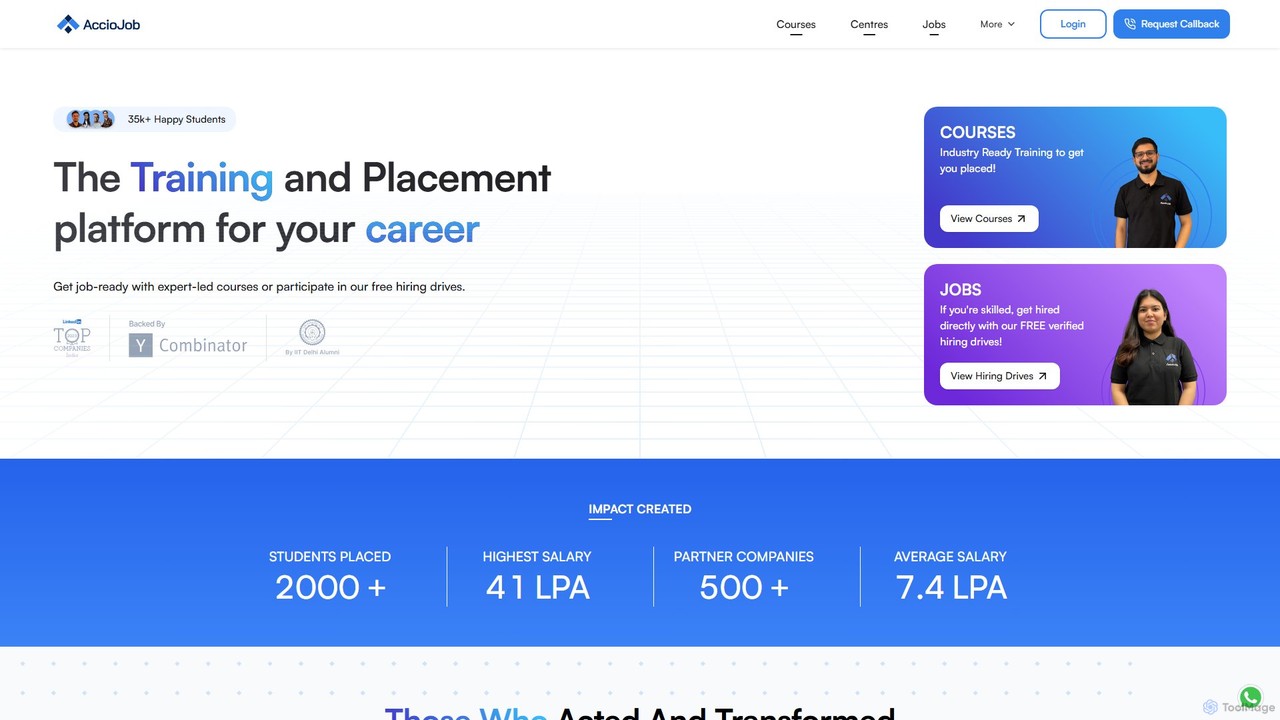
AccioJob is an EdTech platform offering expert-led courses in Full Stack Development, Data Science, and AI. It provides …

1.1M

About Ai Course

AI Courses are structured educational programs designed to provide comprehensive knowledge and practical skills in artificial intelligence. They typically use a combination of video lectures, interactive exercises, and real-world projects to teach core concepts, from machine learning algorithms to neural network architectures. These courses enable learners to understand, build, and deploy AI solutions, making complex technology accessible to students, developers, and business professionals alike. Many programs offer specialization tracks in areas like computer vision, natural language processing, or data science.

Core Features

  • Structured Curriculum: Offers a logical learning path from fundamental principles to advanced, specialized topics.
  • Hands-on Projects: Provides practical experience by having students build and train AI models using real datasets.
  • Expert Instruction: Delivers content created and taught by leading academics and industry professionals.
  • Interactive Learning Platforms: Includes online code editors, quizzes, and peer-review assignments to reinforce concepts.
  • Certification of Completion: Awards a verifiable credential to demonstrate acquired skills to potential employers.

Applicable Scenarios

AI Courses are suitable for a wide range of individuals. Software developers use them to transition into specialized roles like Machine Learning Engineer. Business analysts and managers take them to understand AI's strategic implications. Students and researchers enroll to build a strong theoretical foundation for academic or R&D careers.

How to Choose

When selecting an AI Course, first define your learning objective, whether it's a career change, skill enhancement, or general knowledge. Assess the prerequisites, especially for programming (e.g., Python) and mathematics. Compare the course format (self-paced vs. instructor-led), the depth of the curriculum, and the emphasis on practical, portfolio-building projects. Finally, consider the reputation of the institution or instructor.

Ai CourseUse Cases

1

Transitioning to a Career in Machine Learning

A software developer with a background in Python aims to become a Machine Learning Engineer. They enroll in a comprehensive AI course that covers fundamental theories, popular frameworks like TensorFlow and PyTorch, and practical model deployment. Through hands-on projects, such as building a recommendation engine or an image classifier, they develop a strong portfolio. This structured learning path provides the specific skills and verifiable credentials needed to successfully apply for and secure a position in the AI field.

2

Upskilling for AI Project Management

A project manager in a tech company needs to lead a new AI initiative. They enroll in an 'AI for Business Leaders' course, which focuses on strategy rather than deep technical implementation. The curriculum covers the AI project lifecycle, data strategy, ethical considerations, and how to measure ROI for AI projects. This knowledge equips the manager to communicate effectively with the technical team, set realistic goals, manage stakeholder expectations, and steer the project to a successful outcome without needing to write code themselves.

3

Gaining Foundational AI Literacy

A marketing professional wants to understand how AI can optimize campaigns but lacks a technical background. They choose a beginner-friendly, conceptual AI course. The course explains key concepts like machine learning, natural language processing (NLP), and predictive analytics in simple terms, using relatable examples from marketing and e-commerce. After completion, the professional can better evaluate AI-powered marketing tools, contribute to data-driven strategy discussions, and collaborate more effectively with data analysts on their team.

4

Specializing in Deep Learning for Research

A graduate student in computer science needs advanced skills for their research in medical imaging. They enroll in a specialized deep learning course focusing on computer vision. The curriculum delves into advanced topics like Convolutional Neural Networks (CNNs), Generative Adversarial Networks (GANs), and Transformers. The course projects involve implementing and training these models on medical image datasets. This specialized knowledge directly contributes to their thesis work and prepares them for a research career in a cutting-edge AI field.

5

Learning AI for Advanced Data Analysis

A data analyst proficient in SQL and traditional statistics wants to enhance their predictive modeling capabilities. They take an AI course focused on data science applications. The course teaches them how to apply machine learning models for classification, regression, and clustering tasks using Python libraries like Scikit-learn and Pandas. By working on case studies with business datasets, they learn to extract more sophisticated insights, build predictive models for customer churn, and present their findings more effectively, elevating their role within the organization.

6

Preparing for AI Certification Exams

An IT professional aims to earn a certification from a major cloud provider, such as AWS Certified Machine Learning or Google Cloud Professional Machine Learning Engineer. They use a dedicated AI course designed as a certification prep path. The course structure mirrors the exam syllabus, covering key services and concepts in depth. It includes numerous practice quizzes, hands-on labs within the cloud platform, and full-length mock exams. This targeted preparation significantly increases their confidence and chances of passing the exam on the first attempt.

Ai CourseFrequently Asked Questions