Ai Directory Best in category 1 results Voice Technology AI Tool

Popular AI tools in the Voice Technology field of Ai Directory include Voice AI Space, etc., helping you quickly improve efficiency.

Free
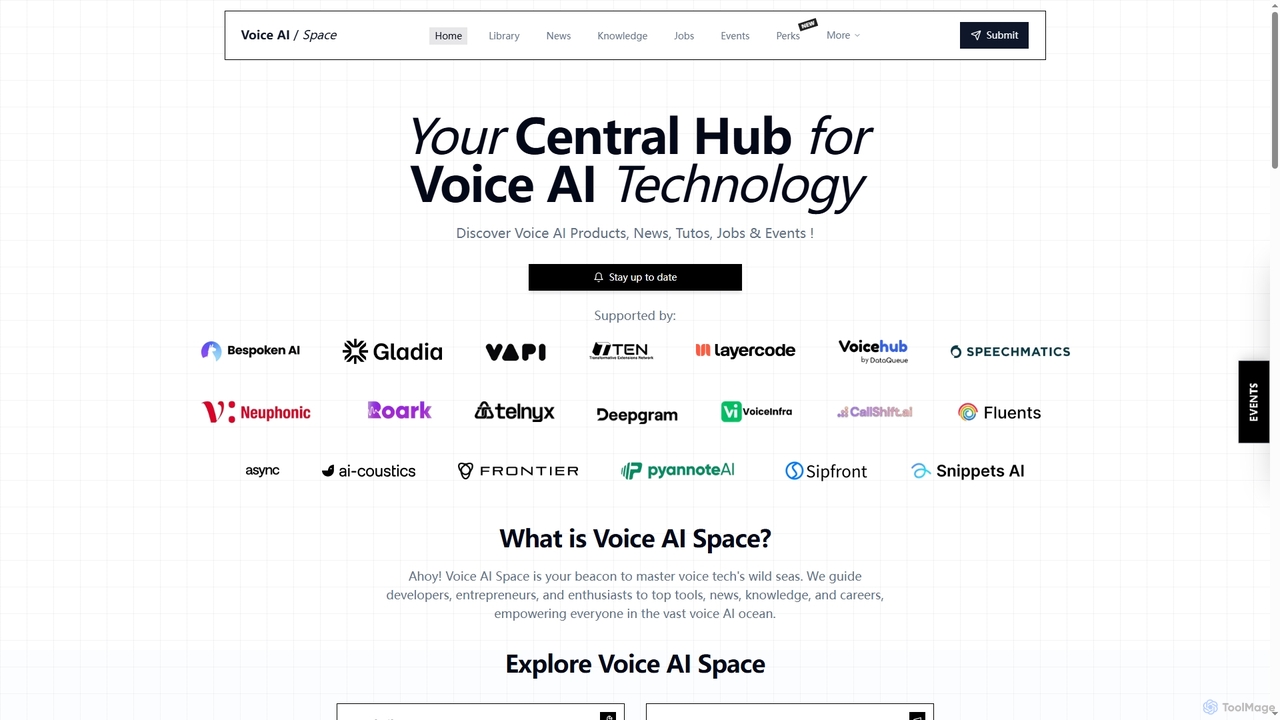
Voice AI Space

Voice AI Space

Voice AI Space is a comprehensive online hub dedicated to voice AI technology, offering a curated directory of …

199.4K

About Voice Technology

Voice Technology refers to AI-powered tools that enable computers to understand, process, and generate human speech. These advanced solutions leverage sophisticated algorithms for speech recognition, natural language processing, and voice synthesis. They transform spoken language into text, convert text into natural-sounding speech, and interpret vocal commands, significantly enhancing human-computer interaction across various applications.

Core Features

  • Speech-to-Text (STT): Converts spoken audio into written text, enabling transcription, voice search, and command recognition.
  • Text-to-Speech (TTS): Synthesizes written text into natural-sounding human speech, used for audio content, virtual assistants, and accessibility.
  • Voice Biometrics: Identifies or verifies individuals based on their unique voice characteristics, enhancing security and personalization.
  • Natural Language Understanding (NLU): Interprets the meaning and intent behind spoken commands or queries, crucial for conversational AI and virtual assistants.

Use Cases

Voice Technology tools are widely adopted in customer service, content creation, and accessibility. They empower businesses to automate call center operations, allow creators to generate audio versions of articles, and provide assistive technologies for individuals with visual or reading impairments.

How to Choose

When selecting Voice Technology tools, consider accuracy in speech recognition and synthesis, the range of supported languages, integration capabilities with existing systems, and customization options for voice profiles. Evaluate the scalability for your specific usage volume and the pricing model, which often varies by usage.

Voice TechnologyUse Cases

1

Automating Customer Service Interactions

Customer service departments utilize voice technology to power AI-driven virtual agents and interactive voice response (IVR) systems. These tools can understand customer queries, provide instant answers, route calls efficiently, and even complete basic transactions, significantly reducing agent workload and improving response times. This allows human agents to focus on more complex issues, enhancing overall customer satisfaction.

2

Generating Audio Content for Publishers

Content creators and publishers leverage text-to-speech (TTS) technology to convert written articles, blog posts, and e-books into high-quality audio versions. This expands content accessibility to a wider audience, including those with visual impairments or who prefer listening on the go. It enables rapid production of podcasts or audio summaries without the need for professional voice actors, saving time and production costs.

3

Enhancing Accessibility for Diverse Users

Voice technology plays a crucial role in making digital content and devices accessible. Speech-to-text allows individuals with motor impairments to control computers and dictate text, while text-to-speech provides auditory feedback for visually impaired users or those with reading difficulties. These tools foster inclusivity by enabling broader interaction with technology and information for a diverse user base.

4

Streamlining Meeting Transcription and Summarization

Professionals use voice technology to automatically transcribe meetings, interviews, and lectures in real-time or from recordings. These tools not only convert spoken words into accurate text but can also identify speakers and summarize key discussion points. This eliminates manual note-taking, ensures comprehensive records, and allows teams to quickly review important decisions and action items, boosting productivity.

5

Developing Voice-Controlled Smart Devices

Manufacturers and developers integrate voice technology into smart home devices, wearables, and automotive systems. Users can control lights, play music, set reminders, or navigate hands-free using natural voice commands. This creates intuitive and convenient user experiences, making technology more accessible and seamlessly integrated into daily life, from smart speakers to in-car infotainment.

6

Securing User Authentication with Voice Biometrics

Financial institutions and high-security applications employ voice biometrics for secure user authentication. Instead of passwords or PINs, users can verify their identity simply by speaking a phrase. This technology analyzes unique vocal characteristics, offering a convenient yet robust layer of security against fraud and unauthorized access, streamlining login processes while maintaining high security standards.

Voice TechnologyFrequently Asked Questions