ToolMage
Sign in

Best 1 Personalized Learning AI tools for Ai Enhanced Learning

Popular Personalized Learning AI tools in Ai Enhanced Learning include Revision.ai, helping you work more efficiently.

Revision.ai
Freemium

Revision.ai

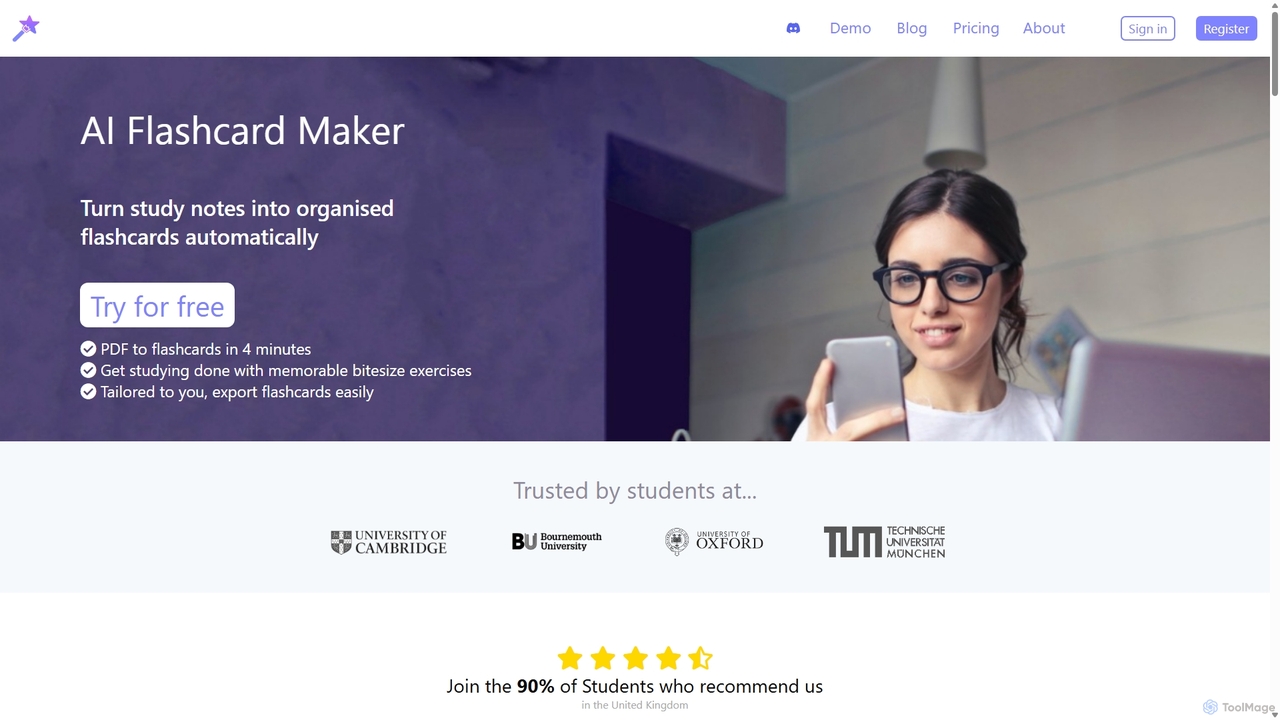
Revision.ai is an AI-powered study tool that transforms learning materials like PDFs, lecture slides, and videos into interactive flashcards and quizzes. It uses cognitive science principles, such as spaced repetition and active recall, to create personalized study plans. The platform's 'Third Brain' system adapts to your performance, identifies knowledge gaps and misconceptions, and helps you study more efficiently to achieve better grades.

Personalized Learning
Visits 6.8KFavorites 173Likes 173

About Personalized Learning

Personalized Learning tools are AI-driven platforms that tailor educational content and learning paths to each individual's unique needs, pace, and style. These systems utilize machine learning algorithms to analyze a learner's performance, interactions, and knowledge gaps in real-time. This allows them to dynamically adjust curriculum, recommend relevant resources, and provide targeted feedback, moving beyond the traditional one-size-fits-all educational model. The primary value is creating a more efficient, engaging, and effective learning experience that maximizes knowledge retention and skill acquisition.

Core Features

  • Adaptive Learning Paths: Automatically adjusts the sequence and difficulty of topics based on the learner's real-time performance and mastery.
  • Real-time Feedback and Assessment: Provides immediate, specific feedback on answers and activities to correct misunderstandings instantly.
  • Content Recommendation Engine: Suggests relevant articles, videos, and exercises from a vast library to address identified knowledge gaps or interests.
  • Performance Analytics Dashboard: Offers detailed insights for both learners and instructors to track progress, identify strengths, and pinpoint areas needing improvement.
  • Skill Gap Analysis: Identifies the specific competencies a user lacks to achieve a learning objective or career goal.

Use Cases

Personalized Learning tools are widely used in corporate training for employee upskilling, onboarding, and compliance. In academia, they support K-12 and higher education by providing supplemental instruction and customized exam preparation. They are also the core technology behind many popular language learning applications and professional certification programs, enabling self-paced, effective study for individuals.

How to Choose

When selecting a Personalized Learning tool, first evaluate the depth and quality of its subject matter content. Assess the sophistication of its adaptation algorithm—does it consider multiple factors like pace, style, and prior knowledge? Consider its integration capabilities with existing Learning Management Systems (LMS). Finally, examine the analytics and reporting features to ensure they provide actionable insights for your educational or training goals.

Personalized Learning use cases

1

Corporate Employee Upskilling

A marketing manager needs to train their team on the latest digital analytics tools. Instead of a generic workshop, they use a personalized learning platform. The platform first assesses each team member's existing knowledge. Based on the results, it creates unique learning paths: junior members start with basic concepts, while senior members jump directly to advanced strategies and case studies. The AI provides interactive simulations and quizzes, ensuring an 85% average proficiency score within two weeks, a significant improvement over traditional training methods.

2

K-12 Math Remediation

A middle school student is struggling with algebra. Their teacher enrolls them in an AI-powered personalized learning app. The app identifies specific weaknesses, such as factoring polynomials. It then provides a series of micro-lessons, including short videos and interactive exercises, focused solely on that skill. The difficulty adjusts in real-time; as the student masters a concept, the problems become more challenging. This targeted approach helps the student catch up with their peers in just one month, improving their test scores by an average of 20%.

3

Personalized Language Learning Journey

An adult learner wants to achieve business fluency in Spanish. They use an AI language app that adapts to their progress. Initially, it focuses on basic vocabulary and grammar. As they improve, the AI introduces business-specific terminology and role-playing scenarios, like negotiating a contract. The app's speech recognition provides instant feedback on pronunciation. It also curates news articles and podcasts in Spanish based on the user's professional field, making learning relevant and engaging. This method accelerates their path to fluency, achieving conversational proficiency in 6 months.

4

Customized University Exam Preparation

A university student is preparing for a final exam in biology. They use a personalized study tool that contains all the course materials. The student takes a diagnostic test, and the AI generates a study plan prioritizing their weakest areas, like cellular respiration. It creates custom flashcards and practice quizzes that focus on these topics. The platform tracks their mastery level for each concept and re-introduces topics they struggle with until they achieve proficiency. This focused revision strategy helps reduce study time by 30% while improving final grades.

5

Developer Skill Gap Analysis and Training

A software company wants to transition its development team to a new programming language. An AI learning platform is used to manage the process. Each developer's current coding skills are analyzed through a practical test. The platform then highlights the specific skill gaps for each individual relative to the new language's requirements. It generates a personalized curriculum of coding challenges, tutorials, and real-world projects for each developer. This targeted approach ensures the entire team becomes proficient in the new language 40% faster than with a standard group training course.

6

Adaptive Onboarding for New Hires

A large corporation needs to onboard 100 new employees from diverse backgrounds. Using a personalized learning system, each new hire completes a pre-assessment of their knowledge about company policies, tools, and culture. The system then assigns a custom onboarding plan. An experienced hire might skip the basic industry modules and focus on company-specific software, while a recent graduate receives more foundational content. This adaptive process reduces the average onboarding time from four weeks to two and a half weeks, increasing new hire productivity sooner.

Personalized Learning FAQ

What are AI Personalized Learning tools?

AI Personalized Learning tools are educational software platforms that use artificial intelligence to adapt the learning experience to each individual user. Unlike static online courses, they analyze a learner's performance in real-time to identify strengths and weaknesses. Based on this data, the AI dynamically adjusts the content, difficulty, and learning path to optimize for comprehension and retention. The core goal is to move away from a one-size-fits-all approach and provide a tailored educational journey that is more efficient and engaging for every learner.

How to choose the right Personalized Learning platform?

Choosing the right platform involves evaluating several key factors. First, assess the content quality and coverage for your specific subject matter. Second, examine the sophistication of the AI algorithm; it should adapt based on more than just right/wrong answers, considering factors like confidence and time spent. Third, check for integration capabilities with your existing systems, such as a Learning Management System (LMS). Finally, review the analytics and reporting tools. A good platform provides actionable insights for both learners and educators to track progress and identify areas for improvement.

What's the difference between Personalized Learning and a standard online course (LMS)?

The key difference lies in dynamism versus static content. A standard online course, often delivered via a Learning Management System (LMS), presents a fixed, linear path for all learners. Everyone sees the same videos, reads the same text, and takes the same quizzes in the same order. In contrast, a Personalized Learning platform is dynamic. It actively adapts the learning journey for each user. If a user struggles with a concept, the platform provides extra resources; if they master it quickly, it moves them ahead. It's a learner-centric approach, whereas a standard LMS is content-centric.

What are the main benefits of using AI for personalized learning?

The main benefits are increased efficiency, engagement, and knowledge retention. Key advantages include:

  • Efficiency: Learners focus their time on knowledge gaps instead of reviewing material they already know, accelerating the learning process.
  • Engagement: Content tailored to individual pace and style keeps learners motivated and reduces frustration.
  • Retention: By reinforcing concepts where a learner is weak and providing instant feedback, knowledge is retained more effectively.
  • Scalability: Educators and trainers can provide individualized instruction to a large number of learners simultaneously, which is impossible with traditional methods.

Who can benefit from Personalized Learning tools?

A wide range of users can benefit from these tools. In education, K-12 and university students use them for supplemental learning, homework help, and exam prep. In the corporate world, employees at all levels use them for onboarding, compliance training, and professional development (upskilling/reskilling). Additionally, individual lifelong learners use them to acquire new skills, learn languages, or prepare for professional certifications. Essentially, anyone looking for a more efficient and tailored way to learn, regardless of age or profession, can find value in personalized learning platforms.