ToolMage
Sign in

Best 1 Ai Enhanced Learning AI tools

Popular Ai Enhanced Learning AI tools include Revision.ai, helping you work more efficiently.

Revision.ai
Freemium

Revision.ai

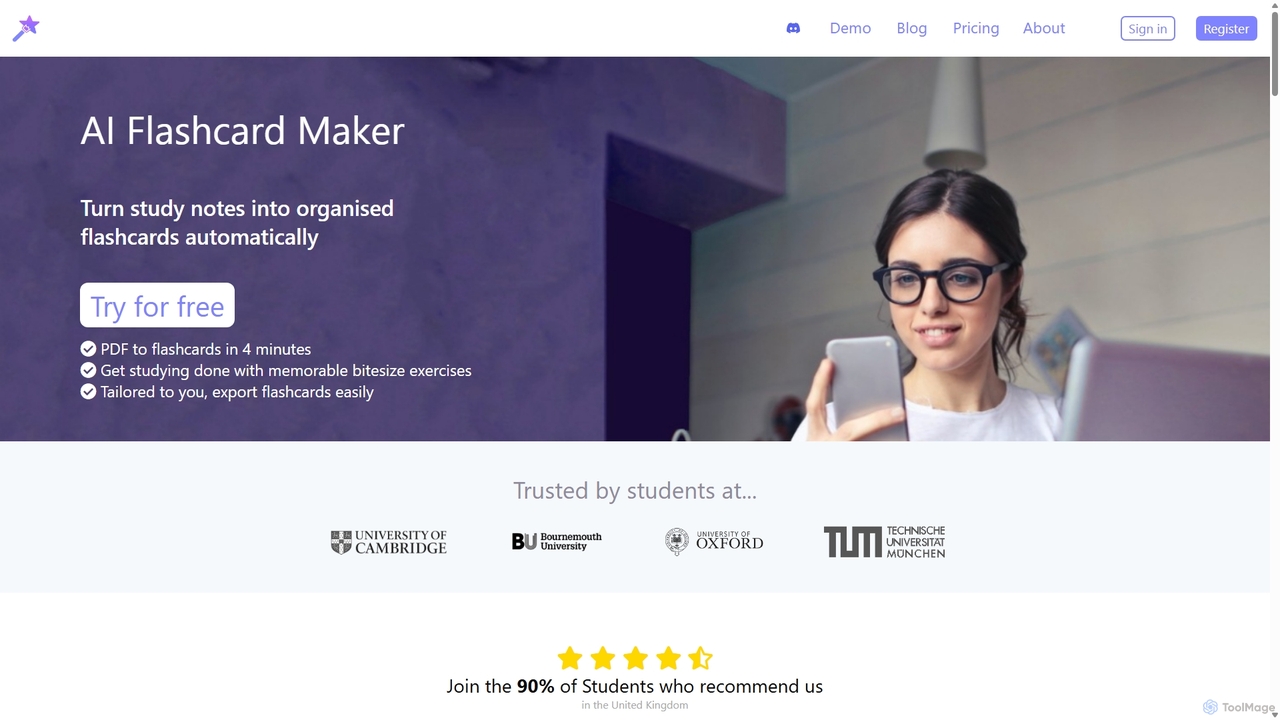
Revision.ai is an AI-powered study tool that transforms learning materials like PDFs, lecture slides, and videos into interactive flashcards and quizzes. It uses cognitive science principles, such as spaced repetition and active recall, to create personalized study plans. The platform's 'Third Brain' system adapts to your performance, identifies knowledge gaps and misconceptions, and helps you study more efficiently to achieve better grades.

Personalized Learning
Visits 5.6KFavorites 166Likes 163

About Ai Enhanced Learning

Ai Enhanced Learning tools are AI-powered platforms that revolutionize education by personalizing the learning experience. These tools utilize machine learning, natural language processing, and data analytics to understand individual learner needs, adapt content delivery, and provide intelligent, real-time feedback. They aim to make education more accessible, efficient, and engaging for students, educators, and lifelong learners across various domains.

Core Features

  • Adaptive Learning Paths: Dynamically adjusts curriculum and content difficulty based on a learner's progress, strengths, and weaknesses.
  • Personalized Feedback: Provides immediate, tailored insights on assignments, quizzes, and performance, guiding learners towards improvement.
  • Intelligent Tutoring Systems: Acts as a virtual tutor, offering explanations, answering questions, and providing practice problems specific to the learner's needs.
  • Content Generation & Curation: Automatically creates or recommends relevant learning materials, summaries, and practice questions.
  • Performance Analytics: Tracks and visualizes learner progress, identifying areas requiring more attention and informing educators.

Use Cases

These tools are widely adopted in various educational settings, from K-12 and higher education to corporate training and individual skill development. Students use them for personalized study, exam preparation, and mastering complex subjects. Educators leverage them to differentiate instruction, automate grading, and gain deeper insights into student performance. Corporate trainers apply them for scalable, customized employee upskilling and compliance training.

How to Choose

When selecting an Ai Enhanced Learning tool, consider its compatibility with your learning objectives and existing educational infrastructure. Evaluate the depth of its personalization capabilities, the quality and breadth of its content library, and its ability to provide actionable feedback. Assess user-friendliness for both learners and instructors, integration options with other platforms (LMS), and the pricing model. Finally, ensure data privacy and security measures meet your requirements.

Featured tool rankings

Ai Enhanced Learning use cases

1

Creating Personalized Study Plans for Students

University students struggling with time management or specific subjects can use AI Enhanced Learning tools to generate customized study schedules. The AI analyzes their academic performance, learning style, and available time, then suggests optimal learning modules, practice tests, and revision sessions, helping them focus on weak areas and prepare effectively for exams.

2

Adaptive Language Learning for Professionals

Business professionals aiming to learn a new language for international assignments can utilize AI-powered language apps. These tools adapt lessons based on the user's proficiency, common mistakes, and industry-specific vocabulary needs. They provide interactive exercises, pronunciation feedback, and real-time conversational practice, accelerating language acquisition relevant to their career.

3

Skill Gap Analysis in Corporate Training

HR departments in large enterprises deploy AI Enhanced Learning platforms to identify and address skill gaps within their workforce. The AI assesses employee competencies against job requirements and future business needs, then recommends personalized training modules and courses. This ensures employees gain relevant skills efficiently, boosting productivity and career development.

4

Interactive Science Simulations for K-12 Education

K-12 science teachers can integrate AI Enhanced Learning tools that offer interactive simulations. Students can conduct virtual experiments, manipulate variables, and observe outcomes in a safe, engaging environment. The AI provides guided exploration and immediate feedback, helping them grasp complex scientific concepts without the need for expensive lab equipment.

5

Automated Essay Grading and Feedback for Educators

High school English teachers facing large class sizes can use AI Enhanced Learning tools for automated essay grading. The AI evaluates grammar, syntax, coherence, and even content relevance, providing instant, objective feedback to students. This frees up teacher time for more in-depth, qualitative feedback and personalized instruction.

6

Personalized Exam Preparation for Certification

Individuals preparing for professional certifications (e.g., PMP, CFA) can leverage AI Enhanced Learning platforms. These tools analyze past performance on practice tests, identify knowledge gaps, and create a tailored study regimen focusing on specific topics. They offer adaptive practice questions and simulated exam environments, maximizing preparation efficiency and success rates.

Ai Enhanced Learning FAQ

What is Ai Enhanced Learning?

Ai Enhanced Learning refers to educational approaches and tools that integrate artificial intelligence to personalize and optimize the learning process. These platforms leverage AI algorithms to adapt content, provide intelligent feedback, and create customized learning paths based on individual student needs, preferences, and performance data. They aim to make learning more efficient, engaging, and effective for diverse learners.

How does Ai Enhanced Learning differ from traditional e-learning?

Traditional e-learning often provides static content and a one-size-fits-all approach, whereas Ai Enhanced Learning is highly dynamic and adaptive. AI tools analyze learner data in real-time to adjust curriculum difficulty, recommend resources, and offer personalized feedback, much like a human tutor. This contrasts with traditional e-learning's fixed modules and generic assessments, leading to a more tailored and effective educational experience.

What are the key benefits of using Ai Enhanced Learning tools?

The key benefits include personalized learning experiences, leading to improved engagement and retention. Learners receive adaptive content and immediate, targeted feedback, addressing their specific weaknesses. For educators, these tools automate administrative tasks like grading and provide valuable insights into student performance, allowing them to focus on higher-level instruction. Overall, they enhance learning efficiency and outcomes for all stakeholders.

Who can benefit most from Ai Enhanced Learning?

A wide range of individuals and organizations can benefit. Students of all ages, from K-12 to higher education, can achieve better academic results through personalized instruction. Lifelong learners and professionals seeking to acquire new skills or certifications find adaptive learning paths highly effective. Additionally, corporate training departments can scale personalized upskilling programs, and educators can differentiate instruction more effectively, making learning more inclusive and impactful.

What should I consider when choosing an Ai Enhanced Learning platform?

When selecting an Ai Enhanced Learning platform, prioritize its ability to genuinely adapt to individual learning styles and progress, not just offer varied content. Evaluate the quality and relevance of its content, the clarity and actionability of its feedback mechanisms, and its integration capabilities with existing learning management systems. Also, consider the platform's user interface, data privacy policies, and overall cost-effectiveness to ensure it meets your specific educational goals and technical requirements.