
ToolMage
Sign in

Best 1 Technical Assessment AI tools for Ai Interviewing

Popular Technical Assessment AI tools in Ai Interviewing include ConnectDevs, helping you work more efficiently.

ConnectDevs
Freemium

ConnectDevs

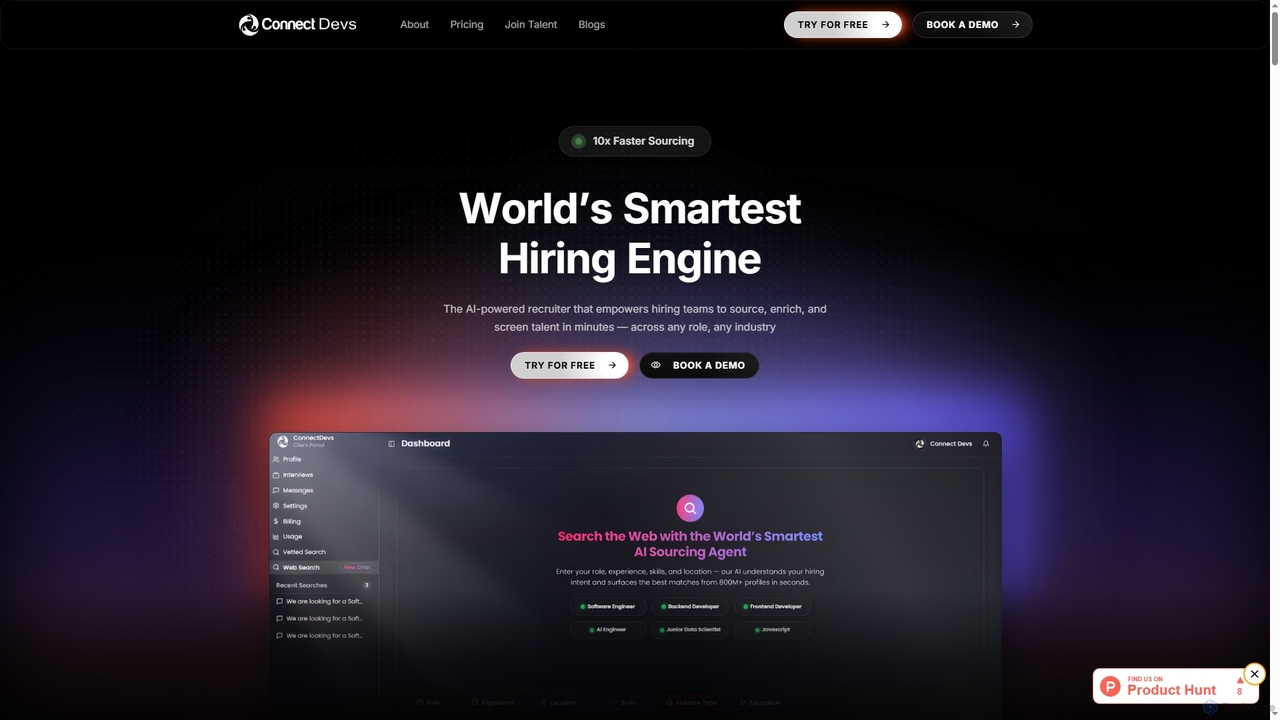
ConnectDevs is an AI-powered hiring engine designed to transform tech recruitment. It offers smart discovery across an 800M+ global talent pool, conducts AI-driven technical interviews, and provides built-in fraud protection to deliver verified, high-fit candidates, saving companies significant time and cost in their hiring process.

Technical Assessment
Visits 4.2KFavorites 125Likes 115

About Technical Assessment

Technical Assessment tools are AI-powered platforms designed to objectively evaluate candidates' specific technical skills, such as coding proficiency, problem-solving abilities, and domain knowledge, as part of the broader AI interviewing process. These tools leverage artificial intelligence to analyze performance in simulated environments or through automated code evaluation, providing data-driven insights into a candidate's technical aptitude. They streamline the hiring process by offering a scalable and consistent method for skill verification, reducing manual effort and potential biases.

Core Features

  • Automated Code Evaluation: Automatically compiles, runs, and scores candidate-submitted code against predefined test cases and performance metrics.
  • Technical Challenge Simulation: Provides interactive coding environments, debugging tasks, or system design problems that mimic real-world scenarios.
  • Skill Gap Analysis: Identifies specific strengths and weaknesses in a candidate's technical profile, often across multiple programming languages or frameworks.
  • Anti-Cheating Mechanisms: Incorporates features like plagiarism detection, proctoring, and focus tracking to ensure assessment integrity.
  • Customizable Assessments: Allows recruiters to tailor challenges, difficulty levels, and skill focus to match specific job requirements.

Applicable Scenarios

Software development companies use these tools to efficiently screen large volumes of applicants for coding roles, ensuring candidates possess the required programming skills before moving to later interview stages. IT departments leverage them to assess the technical readiness of candidates for roles like system administrators or network engineers. Data science teams employ AI assessments to evaluate candidates' analytical and machine learning capabilities through practical challenges.

How to Choose

When selecting a Technical Assessment tool, consider its support for relevant programming languages and technologies, the variety and realism of its challenge types (e.g., coding, debugging, system design), and its integration capabilities with existing Applicant Tracking Systems (ATS). Evaluate the robustness of its anti-cheating features and the granularity of its reporting and feedback mechanisms to ensure comprehensive insights.

Featured tool rankings

Technical Assessment use cases

1

Automated Coding Skill Evaluation

Tech recruiters utilize AI technical assessment tools to automatically evaluate the programming proficiency of software engineer candidates. Candidates submit code solutions to predefined problems, which the AI then compiles, executes, and scores based on correctness, efficiency, and code quality, significantly reducing manual review time and providing objective results.

2

Simulating Real-World Development Environments

Engineering managers employ these platforms to assess candidates' practical problem-solving skills by presenting them with interactive, simulated development environments. This allows candidates to demonstrate their ability to debug, refactor, or build features under conditions that closely mirror actual job tasks, offering deeper insights than theoretical questions.

3

Pre-screening for Data Science and AI Roles

Hiring managers for data science or machine learning positions use AI technical assessments to filter a large pool of applicants. These tools can present challenges involving data manipulation, model building, and algorithm implementation, allowing for an objective evaluation of candidates' analytical and programming skills relevant to complex data tasks.

4

Identifying Technical Skill Gaps in Existing Teams

Learning and Development departments within enterprises can deploy these tools for internal skill audits. By having current employees complete targeted technical assessments, organizations can identify collective skill gaps, inform training programs, and ensure the workforce remains proficient in evolving technologies.

5

Evaluating Cybersecurity Aptitude

Security teams and hiring managers for cybersecurity roles leverage specialized AI technical assessment tools to test candidates' knowledge of secure coding practices, vulnerability identification, and incident response protocols. These assessments often involve simulated attack scenarios or code review tasks to gauge practical security awareness.

6

Scalable Assessment for High-Volume Entry-Level Hiring

Large corporations recruiting for entry-level technical positions, such as junior developers or IT support specialists, use AI technical assessment tools to efficiently evaluate thousands of applicants. The automated scoring and feedback mechanisms enable rapid, consistent, and fair assessment at scale, making the initial screening phase much more manageable.

Technical Assessment FAQ

What are AI Technical Assessment tools?

AI Technical Assessment tools are specialized platforms that use artificial intelligence to objectively measure and evaluate a candidate's specific technical skills, such as coding, problem-solving, and system design, typically within the context of an AI interviewing process. They move beyond traditional resumes to provide data-driven insights into practical abilities.

How do AI Technical Assessment tools work?

These tools typically present candidates with coding challenges, technical quizzes, or simulated project environments. AI algorithms then analyze various aspects of the candidate's performance, including code correctness, efficiency, logic, problem-solving approach, and adherence to best practices, to generate a comprehensive score and detailed feedback.

What types of technical skills can these tools assess?

AI Technical Assessment tools can evaluate a wide range of skills, including proficiency in various programming languages (e.g., Python, Java, C++), data structures and algorithms, database management (SQL), web development frameworks, cloud computing concepts, debugging capabilities, and even system design principles through interactive challenges.

How do AI Technical Assessment tools differ from traditional technical interviews?

Unlike traditional, often subjective, technical interviews conducted by human interviewers, AI tools offer standardized, scalable, and objective assessments. They reduce human bias, provide consistent evaluation criteria for all candidates, and can process a much larger volume of applicants efficiently, offering detailed, quantifiable data rather than qualitative impressions.

What are the key benefits of using AI for technical assessments?

The primary benefits include enhanced objectivity and fairness in evaluation, significant time savings for recruiters and hiring managers, the ability to assess a larger and more diverse talent pool, and access to data-driven insights that inform better hiring decisions. They also ensure a consistent candidate experience and help identify true technical aptitude more accurately.