ToolMage
Sign in

Best 1 Ai Interviewing AI tools

Popular Ai Interviewing AI tools include ConnectDevs, helping you work more efficiently.

ConnectDevs
Freemium

ConnectDevs

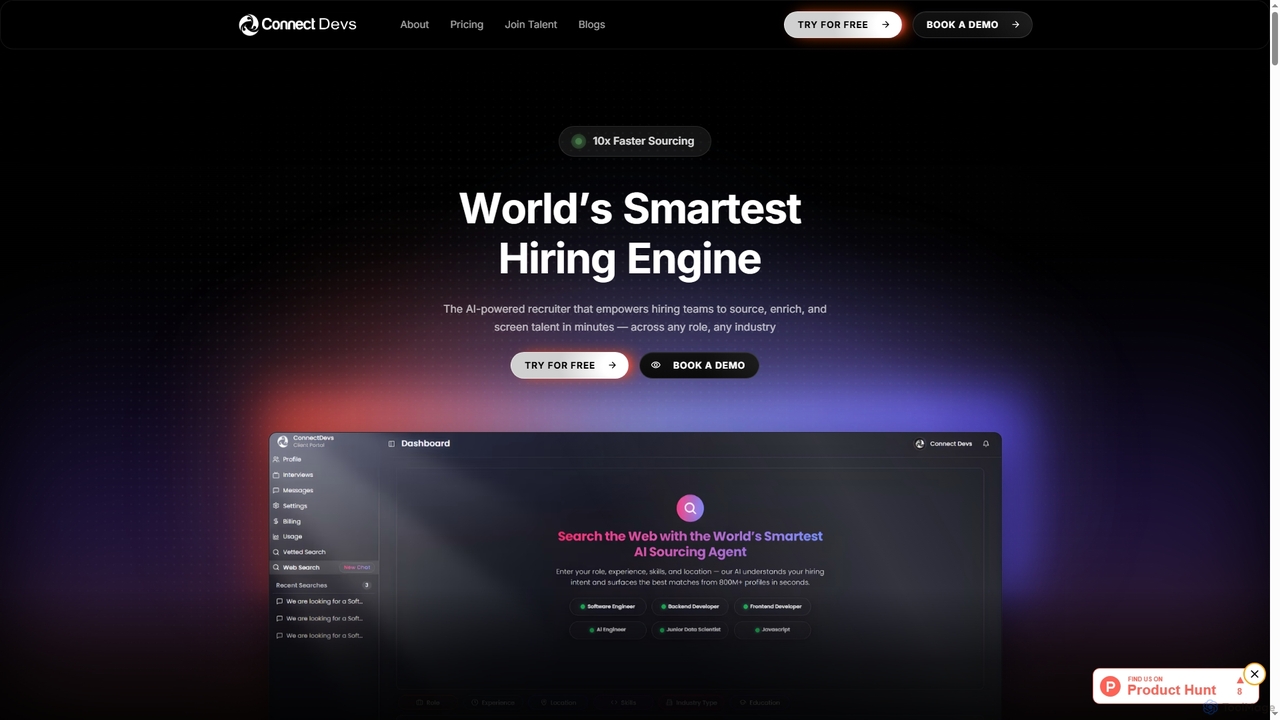
ConnectDevs is an AI-powered hiring engine designed to transform tech recruitment. It offers smart discovery across an 800M+ global talent pool, conducts AI-driven technical interviews, and provides built-in fraud protection to deliver verified, high-fit candidates, saving companies significant time and cost in their hiring process.

Technical Assessment
Visits 9.7KFavorites 182Likes 163

About Ai Interviewing

AI Interviewing tools are AI-powered platforms designed to streamline and enhance the recruitment process by automating various stages of candidate assessment. These tools leverage advanced artificial intelligence, including natural language processing and computer vision, to analyze candidate responses, body language, and vocal cues. They provide objective, data-driven insights, helping organizations identify top talent more efficiently and reduce unconscious bias in hiring.

Core Features

  • Automated Screening: AI analyzes resumes and initial responses to pre-qualify candidates based on job requirements.
  • Video Interview Analysis: Evaluates candidate's verbal and non-verbal communication during recorded or live video interviews.
  • Skill Assessment: Administers and grades tests to assess specific technical or soft skills relevant to the role.
  • Bias Detection: Identifies potential biases in candidate responses or interviewer questions to promote fair hiring.
  • Candidate Feedback: Provides structured feedback to candidates, improving their experience and employer branding.

Use Cases

Recruitment teams and hiring managers utilize AI Interviewing tools to manage high volumes of applications, especially for entry-level or high-turnover roles. They are also valuable for global recruitment, enabling asynchronous interviews across different time zones. Companies seeking to standardize their interview process and ensure consistency in candidate evaluation find these tools indispensable.

How to Choose

When selecting an AI Interviewing tool, consider its integration capabilities with existing ATS (Applicant Tracking Systems), the types of assessments offered (e.g., video, coding, personality), and its compliance with data privacy regulations (GDPR, CCPA). Evaluate the AI's accuracy in bias detection and its customization options for interview questions and scoring criteria to align with your organizational values and job requirements.

Ai Interviewing use cases

1

Streamlining High-Volume Candidate Screening

For large enterprises or recruitment agencies managing hundreds of applications for entry-level positions, AI interviewing tools automate the initial screening phase. Candidates complete pre-recorded video interviews or AI-driven assessments, allowing the system to analyze responses, identify keywords, and score candidates based on predefined criteria. This significantly reduces the manual effort required, enabling recruiters to focus on the most promising candidates and accelerate time-to-hire.

2

Enhancing Objectivity in Candidate Assessment

HR departments aiming to reduce unconscious bias in hiring can leverage AI interviewing platforms. These tools analyze candidate responses and non-verbal cues without human preconceptions, providing a standardized, objective evaluation. By focusing solely on relevant skills and competencies, AI helps ensure a fairer assessment process, promoting diversity and inclusion within the workforce.

3

Conducting Global Asynchronous Interviews

Companies with international teams or remote workforces use AI interviewing for flexible, asynchronous interviews. Candidates from different time zones can complete their interviews at their convenience, and hiring managers can review responses when it suits them. This eliminates scheduling complexities, broadens the talent pool, and ensures a consistent interview experience regardless of location.

4

Assessing Specialized Skills and Technical Aptitude

For roles requiring specific technical skills (e.g., coding, data analysis) or soft skills (e.g., problem-solving, communication), AI interviewing tools can integrate specialized assessments. Candidates might solve coding challenges, respond to situational questions, or engage in simulated scenarios. The AI automatically grades these responses, providing a quick and accurate measure of a candidate's capabilities before live interviews.

5

Improving Candidate Experience and Employer Branding

Organizations can use AI interviewing to provide a more engaging and transparent candidate experience. Tools often offer immediate feedback or clear next steps, reducing the "black hole" effect of traditional applications. A well-designed AI interview process demonstrates technological forward-thinking and respect for candidates' time, positively impacting employer branding and attracting top talent.

6

Standardizing Interview Processes Across Departments

For organizations with multiple departments or hiring managers, AI interviewing ensures a consistent and standardized approach to candidate evaluation. All candidates for a similar role face the same questions and assessment criteria, leading to more comparable data and fairer comparisons. This consistency helps maintain quality standards and ensures compliance with internal hiring policies.

Ai Interviewing FAQ

What are AI Interviewing tools?

AI Interviewing tools are software platforms that use artificial intelligence to automate and enhance various stages of the job interview process. They typically feature automated screening, video interview analysis, and skill assessments. These tools aim to provide objective, data-driven insights into candidates, helping recruiters make more informed hiring decisions and reduce human bias.

How do AI Interviewing tools work?

AI Interviewing tools work by leveraging technologies like natural language processing (NLP) to analyze verbal responses and computer vision to interpret non-verbal cues such as facial expressions and body language. Candidates might complete pre-recorded video interviews or AI-driven assessments. The AI then processes this data against predefined criteria, scoring candidates and highlighting relevant insights for hiring managers.

What are the main benefits of using AI Interviewing in recruitment?

The main benefits of using AI Interviewing include increased efficiency in screening large applicant pools, reduced time-to-hire, and enhanced objectivity in candidate assessment by minimizing human bias. They also offer consistency in the interview process, improve candidate experience through faster feedback, and allow for flexible, asynchronous interviews, especially for global recruitment.

Can AI Interviewing tools eliminate bias in hiring?

While AI Interviewing tools are designed to significantly reduce unconscious human bias by providing standardized, data-driven evaluations, they cannot entirely eliminate bias. The AI's algorithms are trained on data, and if that data contains historical biases, the AI might inadvertently perpetuate them. Regular auditing and careful design of algorithms are crucial to mitigate this risk and promote fairness.

How do AI Interviewing tools integrate with existing HR systems?

Most AI Interviewing tools offer robust integration capabilities with existing HR systems, particularly Applicant Tracking Systems (ATS) like Workday, Greenhouse, or Taleo. This integration allows for seamless data flow, where candidate information, assessment results, and interview feedback can be automatically synced. This streamlines workflows, avoids manual data entry, and provides a unified view of the candidate journey within the HR ecosystem.