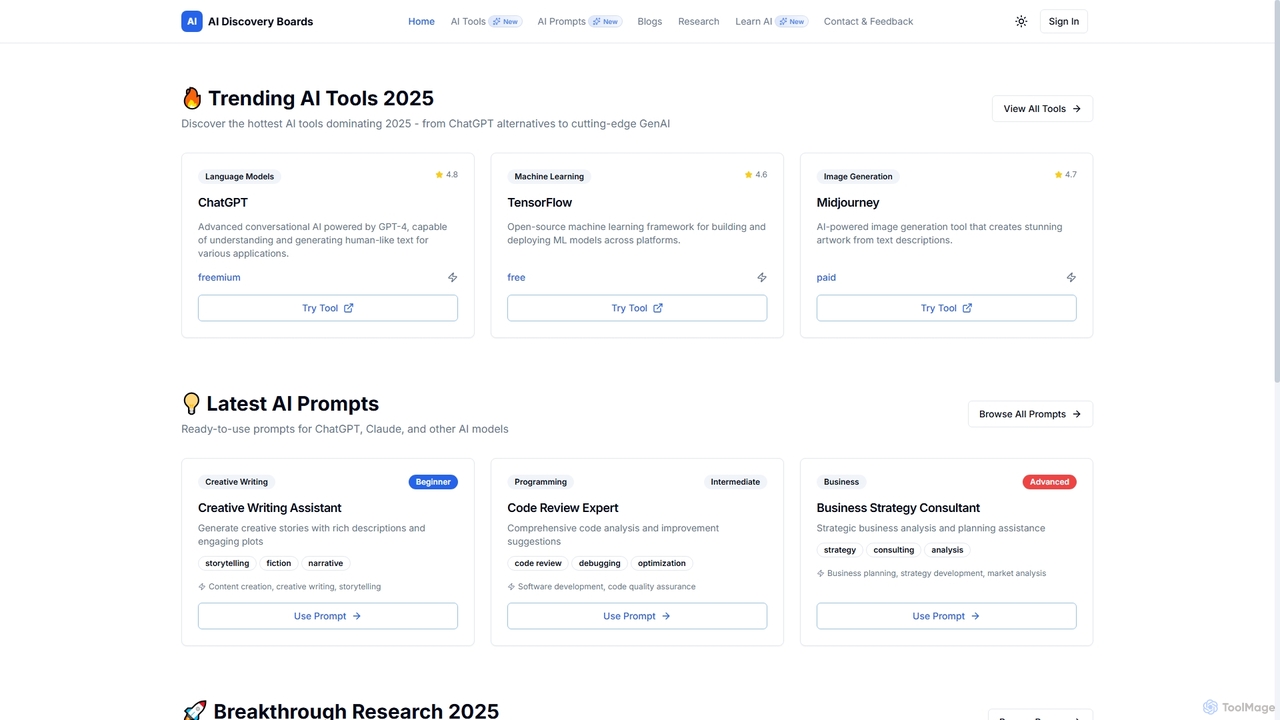
AI Educational Resources are specialized platforms and content libraries designed to teach the principles, techniques, and applications of artificial intelligence. These resources utilize structured curricula and interactive tools to demystify complex topics like machine learning, deep learning, and natural language processing. They provide a clear pathway for learners, from beginners to advanced practitioners, to acquire practical AI skills and theoretical knowledge. Unlike general-purpose learning platforms, they focus exclusively on the AI domain, offering depth and relevance for anyone building a career in this field.
Core Features
- Structured Curricula: Offers organized learning paths from foundational concepts to advanced specializations.
- Interactive Coding Environments: Provides hands-on practice with real AI models and datasets directly in the browser.
- Expert-Led Content: Features courses and tutorials created by leading researchers and industry professionals.
- Project-Based Learning: Guides users through building end-to-end AI projects to solidify their skills.
- Knowledge Assessment: Includes quizzes, assignments, and certification programs to validate learning outcomes.
Use Cases
These resources are essential for students, software developers, data scientists, and researchers. A developer might use them to upskill in a new AI framework, while a student could follow a complete curriculum to start a career in data science. They are also valuable for business leaders and product managers who need to understand AI's strategic implications without deep technical expertise.
How to Choose
When selecting an AI Educational Resource, consider your current skill level and learning goals. Evaluate the depth of the curriculum, the availability of hands-on projects, and the credentials of the instructors. Also, check the platform's community features for peer support and consider whether you need a certificate of completion for professional development.