Ai Model Aggregators Best in category 1 results Unified Api AI Tool

Popular AI tools in the Unified Api field of Ai Model Aggregators include CometAPI, etc., helping you quickly improve efficiency.

CometAPI

CometAPI

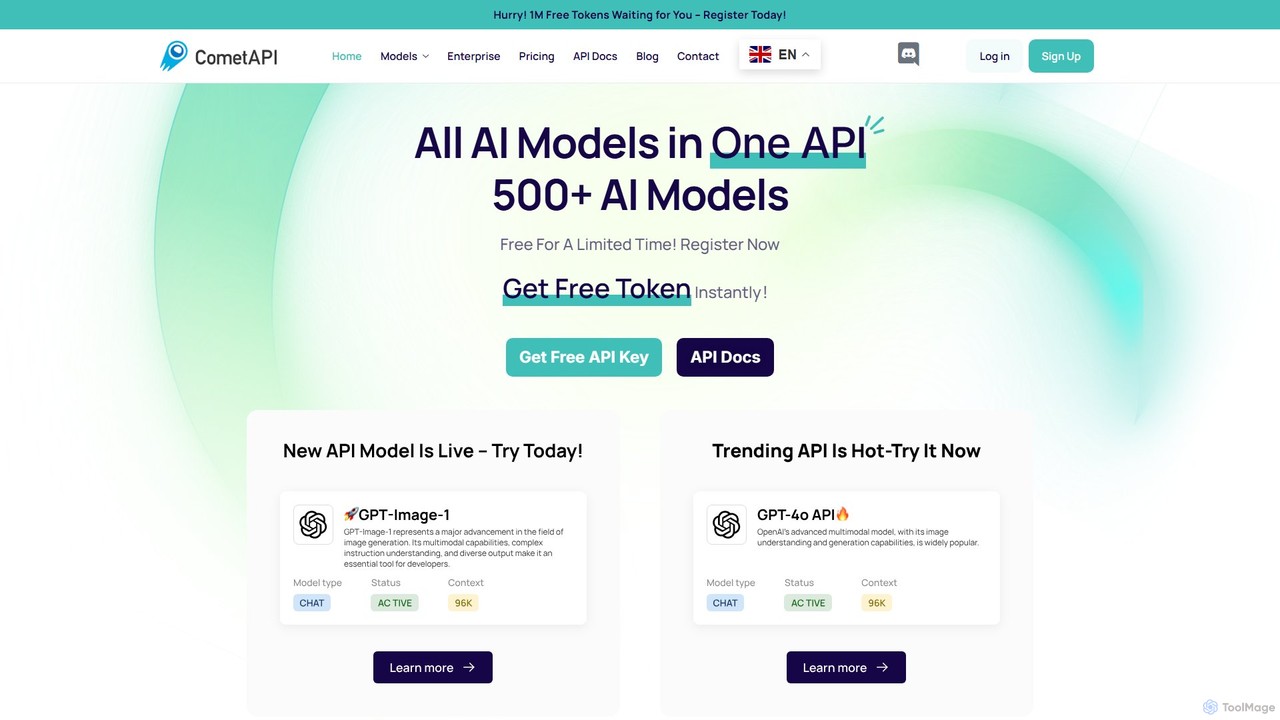
CometAPI is a unified API platform that provides developers with a single API key to access over 500 …

358.4K

About Unified Api

Unified APIs are a specialized type of AI model aggregator, providing a single, standardized interface to access multiple underlying AI models. These APIs abstract away the complexities and unique specifications of individual model providers, allowing developers to interact with diverse AI capabilities through a consistent endpoint. This significantly streamlines the integration process, accelerates development cycles, and enhances flexibility in AI application building. They often include features like intelligent routing, fallback mechanisms, and cost optimization across different models.

Core Features

  • Standardized Interface: Provides a consistent API structure for interacting with various AI models, reducing integration effort.
  • Model Abstraction: Hides the specific API calls and data formats of individual AI providers, simplifying development.
  • Intelligent Routing: Automatically directs requests to the most suitable or cost-effective AI model based on predefined rules or real-time performance.
  • Fallback Mechanisms: Ensures service continuity by automatically switching to an alternative model if a primary model fails or becomes unavailable.
  • Centralized Management: Offers a single dashboard or control plane for managing API keys, usage, and billing across multiple AI services.

Use Cases

Developers building AI-powered applications can leverage Unified APIs to quickly integrate and switch between different large language models (LLMs) or image generation models without extensive code rewrites. This is particularly useful for A/B testing model performance, optimizing costs, or ensuring resilience against single-provider outages.

How to Choose

When selecting a Unified API, consider the breadth of supported AI models and providers, ensuring it covers your current and future needs. Evaluate its routing capabilities, including cost-based, latency-based, or performance-based logic. Look for robust fallback options and comprehensive analytics for usage and error monitoring. Finally, assess the ease of integration, documentation quality, and pricing structure.

Unified ApiUse Cases

1

Rapid Prototyping with Diverse AI Models

AI developers can use a Unified API to quickly experiment with different large language models (LLMs) for a new feature, like content generation or summarization. Instead of writing separate API calls for OpenAI, Anthropic, or Google, they use one interface, allowing them to rapidly test model outputs and performance without significant code changes, accelerating the prototyping phase.

2

Cost Optimization for AI Workloads

Companies with high-volume AI inference needs can configure a Unified API to intelligently route requests to the most cost-effective model available at any given time. For instance, less critical tasks might go to a cheaper model, while premium tasks use a more expensive but higher-performing one, dynamically adjusting based on real-time pricing and usage, significantly reducing operational costs.

3

Ensuring AI Service Resilience and Reliability

For critical applications relying on AI, a Unified API provides built-in fallback mechanisms. If the primary AI model provider experiences an outage or performance degradation, the API automatically switches to a backup model from a different provider. This ensures uninterrupted service for end-users, maintaining application availability and reliability even during external service disruptions.

4

A/B Testing and Model Performance Comparison

Product teams can utilize a Unified API to conduct A/B tests on different AI models for specific features, such as sentiment analysis or image recognition. By routing a percentage of user requests to Model A and another to Model B through the same API endpoint, they can easily compare performance metrics, accuracy, and user satisfaction to determine the optimal model for their application.

5

Simplified Multi-Cloud AI Deployment

Enterprises operating in multi-cloud environments can use a Unified API to abstract away vendor-specific AI services. This allows them to deploy AI applications that can seamlessly leverage models from AWS, Azure, or Google Cloud without being locked into a single ecosystem. It simplifies infrastructure management and provides greater flexibility in choosing the best AI service for each task.

6

Centralized AI Governance and Access Control

IT administrators can manage access to various AI models and services through a single Unified API gateway. This enables centralized control over API keys, usage policies, and permissions for different teams or projects. It simplifies auditing, ensures compliance with data governance policies, and provides a unified view of AI resource consumption across the organization.

Unified ApiFrequently Asked Questions