Ai Model Training Best in category 1 results Data Collection AI Tool

Popular AI tools in the Data Collection field of Ai Model Training include clickworker, etc., helping you quickly improve efficiency.

clickworker

clickworker

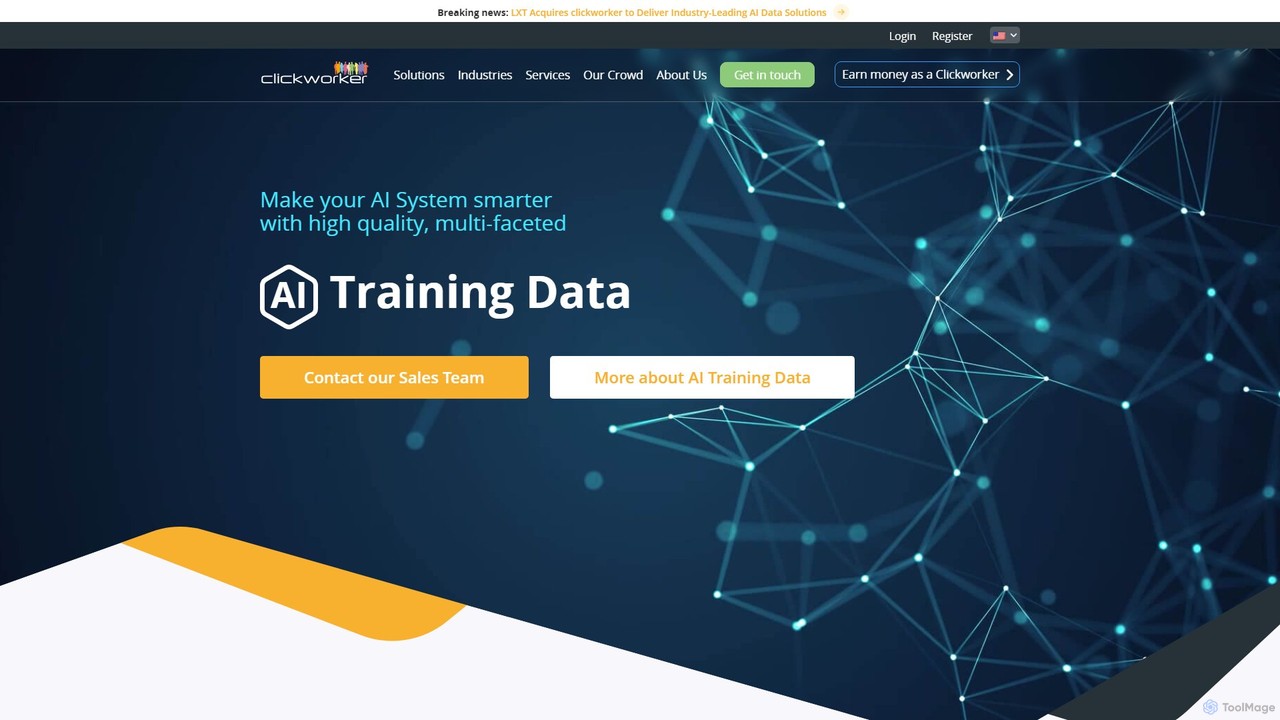
clickworker is a leading crowdsourcing platform that provides high-quality, diverse, and scalable data for training AI and machine …

1.8M

About Data Collection

Data Collection tools are AI-powered solutions designed to systematically gather, extract, and organize raw information from diverse sources, forming the foundational input for AI model training. These tools leverage advanced techniques like web scraping, API integration, and natural language processing to automate the acquisition of large, relevant datasets. Their primary value lies in providing high-quality, structured data essential for developing robust and accurate AI models, significantly reducing manual effort and accelerating the data preparation phase. They are crucial for ensuring models have sufficient and diverse information to learn effectively.

Core Features

  • Automated Web Scraping: Systematically extracts data from websites, including text, images, and structured content, at scale.
  • API Integration: Connects to various data sources and platforms via APIs to fetch real-time or batch data programmatically.
  • Data Cleaning & Preprocessing: Automatically identifies and corrects errors, removes duplicates, and formats raw data for consistency and usability.
  • Real-time Data Feeds: Continuously monitors and collects new data from dynamic sources, ensuring models are trained on the most current information.
  • Multi-source Aggregation: Gathers and consolidates data from disparate sources into a unified dataset for comprehensive analysis.

Applicable Scenarios

Data Collection tools are indispensable for data scientists, machine learning engineers, and researchers who require vast amounts of specific data to train and validate AI models. They are used across industries for tasks such as gathering market intelligence, collecting customer feedback for sentiment analysis, or acquiring domain-specific text for natural language processing model development. These tools streamline the initial, often labor-intensive, phase of any AI project.

How to Choose

When selecting a Data Collection tool, consider its data source compatibility (web, APIs, databases), the volume and velocity of data it can handle, and its built-in data cleaning and preprocessing capabilities. Evaluate its ease of integration with your existing AI development pipeline and data storage solutions. Look for robust error handling, scalability, and compliance with data privacy regulations (e.g., GDPR, CCPA) to ensure ethical and effective data acquisition.

Data CollectionUse Cases

1

Gathering E-commerce Product Data for Recommendation Engines

An e-commerce data analyst uses Data Collection tools to automatically scrape product descriptions, images, prices, and customer reviews from competitor websites and supplier catalogs. This collected data is then used to train a recommendation engine, allowing the e-commerce platform to suggest relevant products to its users, optimize pricing strategies, and identify market trends. The automation saves hundreds of hours compared to manual data entry, ensuring the recommendation system is always up-to-date with fresh product information.

2

Collecting Social Media Data for Sentiment Analysis Models

A marketing team utilizes Data Collection tools to continuously monitor and gather public posts, comments, and mentions across various social media platforms related to their brand and industry keywords. This stream of unstructured text data is then fed into an NLP-based sentiment analysis model. The model processes the data to gauge public opinion, identify emerging trends, and detect potential PR crises in real-time, enabling the team to respond proactively and refine their marketing strategies based on actual consumer sentiment.

3

Automating Financial News Collection for Algorithmic Trading

Financial analysts and quantitative traders deploy Data Collection tools to automatically gather real-time financial news articles, market reports, and company announcements from various news outlets and regulatory filings. This high-velocity, unstructured data is then processed by AI models to identify market-moving events, sentiment shifts, and emerging investment opportunities. The ability to quickly collect and analyze vast amounts of financial information provides a critical edge in algorithmic trading strategies, allowing for rapid decision-making based on the latest market intelligence.

4

Building Datasets for Medical Image Analysis AI

Medical researchers and AI developers in healthcare use specialized Data Collection tools to anonymize and gather large volumes of medical images (e.g., X-rays, MRIs, CT scans) from hospital databases and research archives. These tools ensure patient privacy compliance while efficiently extracting relevant image data. The collected datasets are then used to train AI models for tasks like disease detection, tumor segmentation, and diagnostic assistance, significantly improving the accuracy and speed of medical image analysis and diagnosis.

5

Collecting Environmental Sensor Data for Predictive Maintenance

Industrial engineers and facility managers employ Data Collection tools to continuously gather data from IoT sensors deployed across machinery and infrastructure. This includes temperature, pressure, vibration, and energy consumption readings. The collected time-series data is then used to train predictive maintenance AI models. These models analyze patterns to forecast equipment failures, optimize maintenance schedules, and prevent costly downtime, leading to significant operational efficiencies and extended asset lifespans.

6

Automating Legal Document Data Extraction for Compliance

Legal professionals and compliance officers leverage Data Collection tools to automatically extract specific clauses, dates, parties, and terms from vast archives of legal documents, contracts, and regulatory filings. These tools often incorporate OCR and NLP to process scanned documents and unstructured text. The extracted structured data is then used to train AI models for compliance auditing, contract analysis, and risk assessment, ensuring adherence to legal standards and streamlining due diligence processes across large document sets.

Data CollectionFrequently Asked Questions