ToolMage
Sign in

Best 1 Multi Model AI tools for Ai Orchestration

Popular Multi Model AI tools in Ai Orchestration include LLM Hub, helping you work more efficiently.

LLM Hub
Freemium

LLM Hub

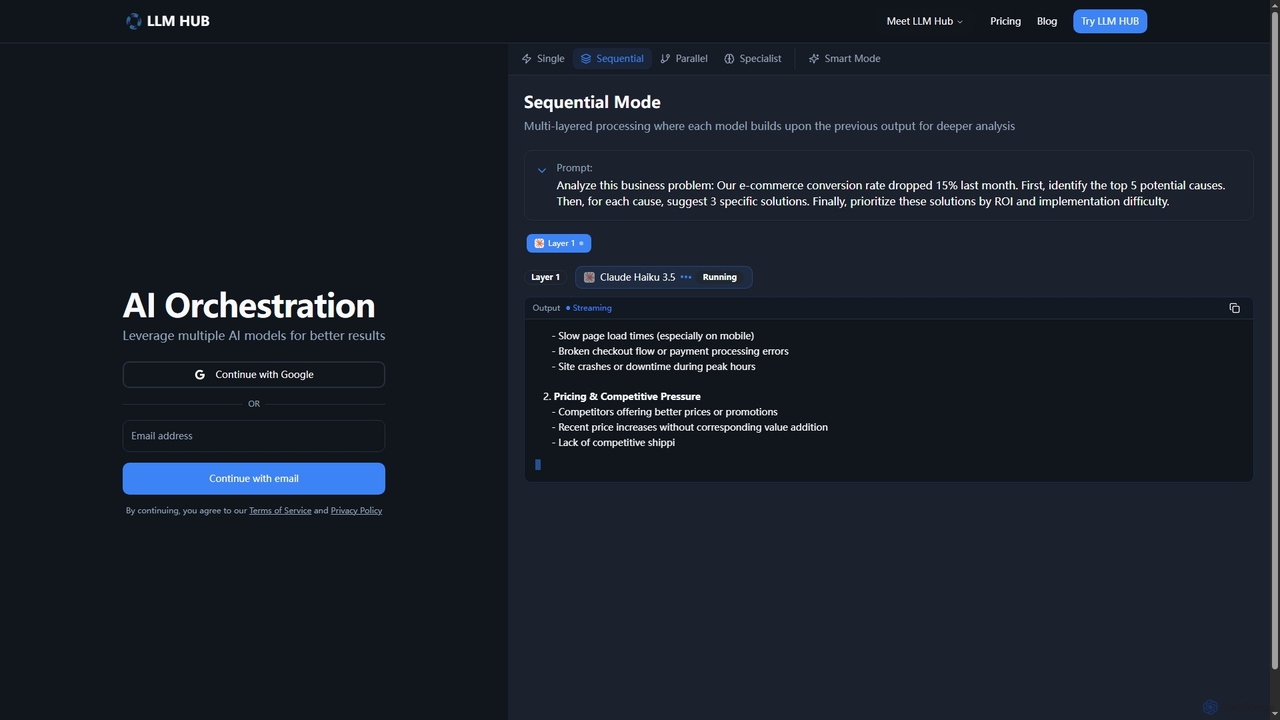
LLM Hub is an advanced multi-model AI orchestration platform designed to leverage the power of 20+ large language models from 5 major vendors. It enables users to combine and chain various AI models through Sequential, Parallel, Specialist, and Smart (Auto-Routing) modes for deeper analysis and superior results on complex tasks.

Multi Model
Visits 5.8KFavorites 135Likes 148

About Multi Model

Multi Model AI tools are a class of systems capable of processing, understanding, and generating information across multiple data types, such as text, images, and audio, simultaneously. These tools leverage unified architectures to interpret the context and relationships between different modalities, moving beyond single-function AIs. This enables them to perform complex tasks like describing an image in detail or creating a video from a text script. As a key component in AI Orchestration, they act as powerful nodes for handling sophisticated, mixed-media workflows that mirror human-like comprehension.

Core Features

  • Cross-Modal Understanding: Analyzes and correlates information from different sources, such as matching a text description to specific content within an image or video.
  • Multi-Input Processing: Accepts a combination of text, images, audio, or video as a single, coherent prompt to guide its analysis or generation.
  • Mixed-Media Generation: Creates outputs that combine different formats, like generating a report that includes both summary text and illustrative images.
  • Unified Data Representation: Internally converts various data types into a common semantic space, allowing for holistic reasoning and analysis across all inputs.

Use Cases

Multi Model tools are widely used in industries like media for automated video analysis and content summarization, in e-commerce for generating product descriptions from images, and in accessibility development for creating real-time descriptions of the visual world for visually impaired users. They are also crucial for researchers analyzing complex, multi-format datasets.

How to Choose

When selecting a Multi Model tool, consider the specific modalities it supports (e.g., text, image, audio, video). Evaluate its performance on key cross-modal tasks relevant to your needs, such as visual question answering or text-to-image generation. Also, assess the API's ease of integration, processing speed for large files, and the cost structure associated with different input types.

Multi Model use cases

1

Intelligent Video Content Analysis

A media analyst needs to quickly understand the content of a two-hour documentary. They upload the video file to a multi-model AI tool. The AI simultaneously transcribes the spoken dialogue (audio), identifies key scenes and objects (video), and recognizes on-screen text (image). It then generates a time-stamped transcript, a visual scene summary, and a concise text summary of the entire film. This process reduces manual logging time by over 90% and makes the content instantly searchable.

2

Enhanced E-commerce Product Listing

An e-commerce manager wants to create rich product listings for a new line of furniture. They upload several photos of a chair from different angles. The multi-model AI analyzes the images to identify its style ('Mid-Century Modern'), material ('Oak wood, linen upholstery'), and features ('Tapered legs, button-tufted back'). Based on this visual analysis, it generates a compelling, SEO-friendly product description and a list of relevant tags, streamlining the content creation process and improving product discoverability.

3

Creating Interactive Educational Materials

An educator is designing a digital lesson on the solar system. They provide a text prompt to a multi-model tool: 'Create a 5-slide presentation about Mars for 5th graders, including key facts and a quiz.' The AI processes the text, generates concise descriptions for each slide, finds or creates relevant images of Mars' surface and rovers, and even composes a short audio narration for the introduction. The result is a rich, multi-sensory learning module created in minutes instead of hours.

4

Automated Accessibility Descriptions (Alt Text)

A web content manager is responsible for ensuring a large news website is accessible to visually impaired users. They use a multi-model tool that scans new articles. For each image, the AI analyzes not only the visual content but also the surrounding text (the article's title and captions) to understand the context. It then automatically generates highly descriptive and contextually relevant alt text, such as 'A scientist in a lab coat points to a chart showing rising global temperatures,' which is far more useful than a generic 'person and chart' tag.

5

Advanced Medical Report Assistance

A radiologist uploads a patient's X-ray (image) and dictates their initial observations into a microphone (audio). A multi-model AI system processes both inputs. It analyzes the X-ray for potential anomalies while cross-referencing them with the doctor's spoken notes. The system then drafts a structured medical report (text), highlighting the areas of concern mentioned by the radiologist and suggesting standard terminology. This acts as a sophisticated assistant, reducing transcription errors and speeding up the reporting workflow.

6

Complex Problem Solving in Engineering

An engineer uploads a technical diagram of a machine part (image) along with a text file detailing a recurring performance issue. The multi-model AI analyzes the visual structure of the diagram, identifies components mentioned in the text, and correlates the described problem with specific stress points or design features on the diagram. It can then generate a report suggesting potential causes for the failure, such as 'Vibrational stress at joint C, as indicated by fracture patterns in similar designs,' providing a valuable second opinion for troubleshooting.

Multi Model FAQ

What is a Multi Model AI?

A Multi Model AI is an artificial intelligence system designed to understand and process information from multiple data types—or modalities—at the same time. Unlike a standard AI that might only work with text or images, a multi-model system can take a combination of text, images, audio, and video as input and reason about the relationships between them. Its key strength is this ability to perform holistic analysis, leading to more nuanced and context-aware outputs.

How to choose the right Multi Model tool?

Choosing the right tool depends on your specific needs. Consider these factors:

  • Supported Modalities: Ensure the tool can process the exact data types you work with (e.g., video, audio, text, 3D models).
  • Task Performance: Evaluate its accuracy and quality on tasks relevant to you, such as image captioning, video summarization, or visual question answering.
  • Integration and API: Check for well-documented APIs and SDKs that allow for easy integration into your existing software and workflows.
  • Cost and Scalability: Understand the pricing model. Costs can vary significantly based on the type and volume of data processed (e.g., video is often more expensive than text).
What's the difference between a Multi Model AI and a standard Large Language Model (LLM)?

The primary difference is the scope of data they handle. A standard Large Language Model (LLM), like early versions of GPT, is an expert in processing and generating text. A Multi Model AI is an evolution of this, designed to natively handle a mix of data types. While many modern LLMs are becoming multimodal (e.g., accepting images as input), the term 'Multi Model' specifically emphasizes the capability to reason across and integrate information from different sources, not just process them individually.

What are the main capabilities of Multi Model tools?

Multi Model tools excel at tasks that require understanding context across different data types. Key capabilities include:

  • Visual Question Answering (VQA): Answering text-based questions about an image (e.g., 'What color is the car in this photo?').
  • Image/Video Captioning: Generating a descriptive text summary for an image or video.
  • Cross-Modal Retrieval: Finding relevant images, videos, or audio clips based on a text description, or vice versa.
  • Mixed-Media Generation: Creating content that combines multiple formats, such as generating a presentation with text and images from a single prompt.
Who can benefit from using Multi Model AI?

A wide range of professionals can benefit from Multi Model AI. Content creators can generate rich media more efficiently. E-commerce businesses can automate product descriptions and tagging. Developers can build more sophisticated applications, such as accessibility tools or intelligent search engines. Researchers and analysts can gain deeper insights from complex datasets that contain mixed media. Essentially, anyone whose work involves interpreting or creating content that combines text, visuals, and audio can find significant value in these tools.