
ToolMage
Sign in

Best 1 Ai Security AI tools

Popular Ai Security AI tools include Transluce, helping you work more efficiently.

Transluce
Free

Transluce

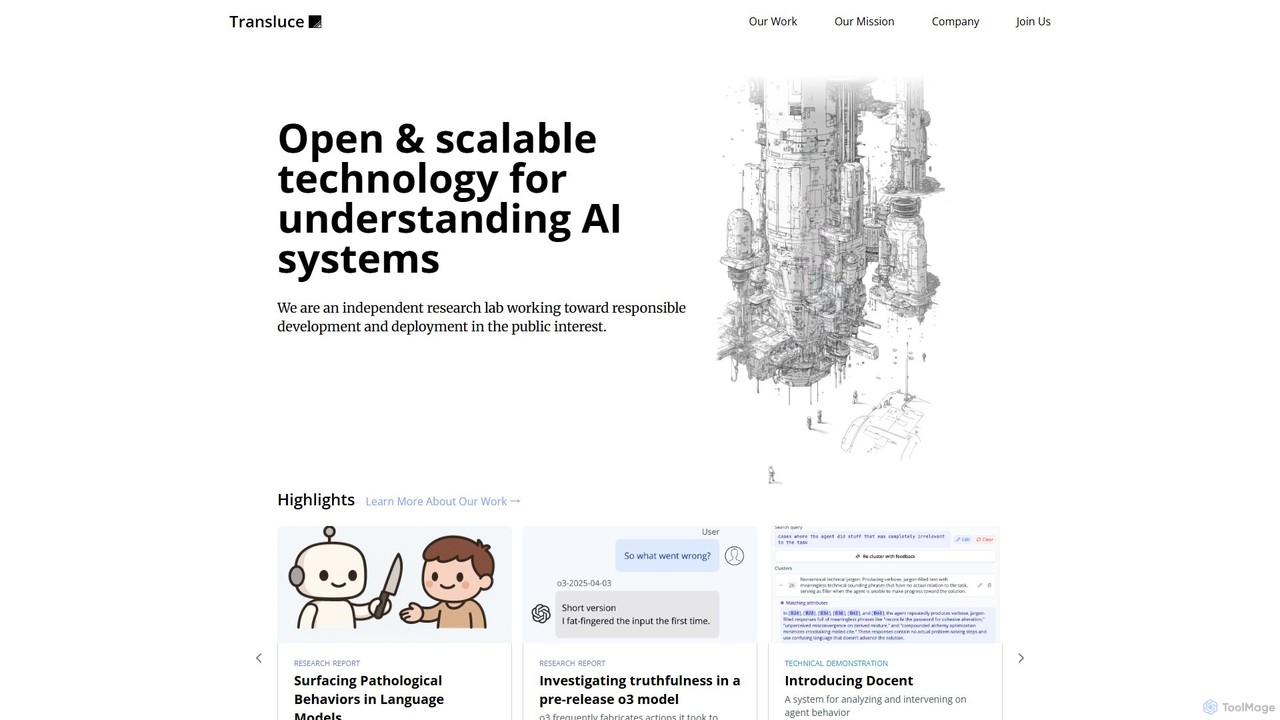
Transluce is an independent research lab developing open, scalable technology to understand AI systems. They build tools like Docent and Monitor to analyze, evaluate, and intervene in AI agent behavior, promoting responsible AI development through enhanced interpretability and safety.

Model Evaluation
Visits 27.7KFavorites 138Likes 118

About Ai Security

AI Security tools are a class of solutions that leverage artificial intelligence to proactively identify, predict, and respond to cyber threats. These tools utilize machine learning algorithms to analyze vast amounts of data, detect anomalies, and recognize patterns that traditional rule-based systems might miss. They are designed to enhance an organization's security posture by automating threat detection, protecting AI models from unique vulnerabilities, and streamlining incident response. This approach provides a more dynamic and adaptive defense against the evolving landscape of sophisticated cyberattacks.

Core Features

  • Intelligent Threat Detection: Uses machine learning to identify known malware, zero-day exploits, and anomalous user behavior in real-time.
  • Adversarial Attack Defense: Specifically protects machine learning models from attacks like data poisoning, model evasion, and inference attacks.
  • Automated Incident Response: Automatically contains threats, isolates affected systems, and executes predefined security playbooks to mitigate damage.
  • Predictive Threat Intelligence: Analyzes global threat data to forecast potential attacks and recommend proactive defensive measures.
  • AI-Powered Vulnerability Management: Scans systems and code to identify weaknesses and uses AI to prioritize patching based on exploitability and potential impact.

Use Cases

AI Security tools are critical for Security Operations Centers (SOCs) in large enterprises, financial institutions protecting against fraud, and technology companies securing their AI/ML development pipelines. They are also valuable for healthcare and government organizations that need to protect sensitive data from advanced persistent threats (APTs) and ensure regulatory compliance.

How to Choose

When selecting an AI Security tool, evaluate its integration capabilities with your existing security stack (like SIEM and SOAR). Consider the breadth of its threat coverage—whether it protects networks, endpoints, cloud infrastructure, or the AI models themselves. Assess the level of automation and whether it aligns with your team's expertise, as well as the transparency of its AI decision-making process (explainability).

Ai Security use cases

1

Automating Advanced Phishing Detection

A corporate security team is tasked with protecting employees from increasingly sophisticated phishing attacks. Traditional email filters often fail to catch campaigns that use novel language or social engineering tactics. By deploying an AI Security tool, the team can analyze incoming emails in real-time, assessing not just keywords but also sender reputation, writing style anomalies, and the context of embedded links. The AI model flags suspicious emails with high accuracy, automatically quarantining them and reducing the manual workload on analysts, thereby preventing potential data breaches.

2

Securing Machine Learning Model Integrity

A data science team at a fintech company develops a credit scoring model. They are concerned about adversarial attacks, such as data poisoning, that could compromise the model's fairness and accuracy. Using an AI Security platform, they scan their training data for malicious inputs and continuously monitor the model in production. The tool detects subtle data drifts and evasion attempts where attackers try to get fraudulent applications approved. This ensures the model remains robust, fair, and trustworthy, maintaining regulatory compliance and preventing financial losses.

3

Intelligent Network Threat Hunting

A Security Operations Center (SOC) analyst is overwhelmed by thousands of daily alerts from various security tools. It's difficult to distinguish real threats from false positives. An AI Security platform helps by correlating data from across the network, endpoints, and cloud services. It autonomously investigates alerts, pieces together attack chains, and uses behavioral analytics to uncover stealthy threats, like advanced persistent threats (APTs), that evade signature-based detection. The platform presents a prioritized list of high-fidelity incidents, allowing the analyst to focus their efforts on genuine threats and reduce response time significantly.

4

AI-Powered Vulnerability Prioritization

A large enterprise's DevOps team runs weekly vulnerability scans that generate reports with hundreds or thousands of identified weaknesses. Manually prioritizing which ones to fix first is time-consuming and often inefficient. An AI Security tool automates this process by enriching the scan data with external threat intelligence and internal business context. It predicts which vulnerabilities are most likely to be exploited in their specific environment and calculates the potential business impact. This allows the team to focus on patching the most critical 10% of vulnerabilities first, optimizing resource allocation and significantly reducing the organization's attack surface.

5

Detecting Sophisticated Insider Threats

A financial institution needs to protect sensitive customer data from insider threats, which can be malicious or accidental. An AI Security tool employing User and Entity Behavior Analytics (UEBA) establishes a baseline of normal activity for each user. It then monitors for deviations, such as an employee accessing unusual files, logging in at odd hours, or transferring large amounts of data. The AI flags these anomalies in real-time, providing security teams with early warnings of potential threats before a significant data breach occurs, helping to meet compliance requirements like GDPR.

6

Ensuring AI System Compliance and Fairness

A healthcare organization deploys an AI model for diagnosing diseases. To comply with regulations like HIPAA and ensure patient trust, they must prove the model is fair, transparent, and secure. An AI Security tool designed for AI governance is used to audit the model. It tests for biases against demographic groups, generates explainability reports to show how the model reaches its conclusions, and monitors for data privacy violations. This continuous auditing process provides the necessary documentation for regulatory bodies and assures stakeholders that the AI system is operating ethically and securely.

Ai Security FAQ

What is AI Security?

AI Security refers to two interconnected concepts: using artificial intelligence to enhance cybersecurity defenses (AI for Security) and securing AI systems themselves from attacks (Security of AI). AI for Security tools use machine learning to detect novel threats, automate responses, and analyze data at a scale beyond human capability. Security of AI focuses on protecting machine learning models from unique vulnerabilities like data poisoning, adversarial evasion, and model theft. Together, they create a more resilient and adaptive security posture for modern organizations.

How to choose the right AI Security tool?

Choosing the right AI Security tool depends on your specific needs. Consider these factors:

  • Scope of Protection: Determine what you need to protect. Is it your network (NDR), endpoints (EDR), cloud environment (CSPM), or the AI models themselves (AI Firewall)?
  • Integration: Ensure the tool can integrate seamlessly with your existing security infrastructure, such as SIEM, SOAR, and ticketing systems.
  • Automation Level: Assess how much automation you require. Some tools provide alerts and insights for analysts, while others can take autonomous response actions.
  • Explainability: Look for tools that offer transparency into their decision-making process. Understanding why the AI flagged an activity is crucial for trust and effective incident response.
  • Scalability: Select a solution that can scale with your data volume and organizational growth.
What's the difference between AI Security and traditional cybersecurity?

The primary difference lies in their approach to threat detection. Traditional cybersecurity largely relies on signature-based and rule-based methods, which are effective against known threats but struggle with new, or 'zero-day', attacks. AI Security, in contrast, uses machine learning to establish a baseline of normal behavior and then identifies deviations or anomalies. This behavioral approach allows it to detect novel and sophisticated attacks that don't have a known signature. Essentially, traditional security is reactive, while AI security is proactive and predictive.

What are common attacks against AI systems?

AI systems are vulnerable to specific types of attacks that target the machine learning pipeline. Common attacks include:

  • Data Poisoning: Malicious actors inject corrupted data into the training set to manipulate the model's behavior and cause it to make incorrect predictions.
  • Adversarial Evasion: Attackers make small, often imperceptible, modifications to input data (like an image or text) to trick a trained model into misclassifying it.
  • Model Inversion/Inference: Attackers query a model to reconstruct sensitive information from its training data, leading to privacy breaches.
  • Model Stealing: An attacker repeatedly queries a model to create a functionally equivalent copy, stealing valuable intellectual property.
Who should use AI Security tools?

AI Security tools are beneficial for a wide range of users and organizations. Key users include:

  • Large Enterprises: To manage complex security environments, automate threat detection in Security Operations Centers (SOCs), and protect vast amounts of data.
  • Financial Institutions: For advanced fraud detection, securing trading algorithms, and protecting sensitive customer financial data from sophisticated attacks.
  • Technology Companies: Especially those developing or deploying AI/ML models, to secure their intellectual property and ensure their models are robust and fair.
  • Healthcare and Government: To protect critical infrastructure and sensitive personal data (like patient records) while complying with strict regulations.
  • Any organization with a significant digital footprint seeking to move from a reactive to a proactive and predictive security strategy.