Langotalk
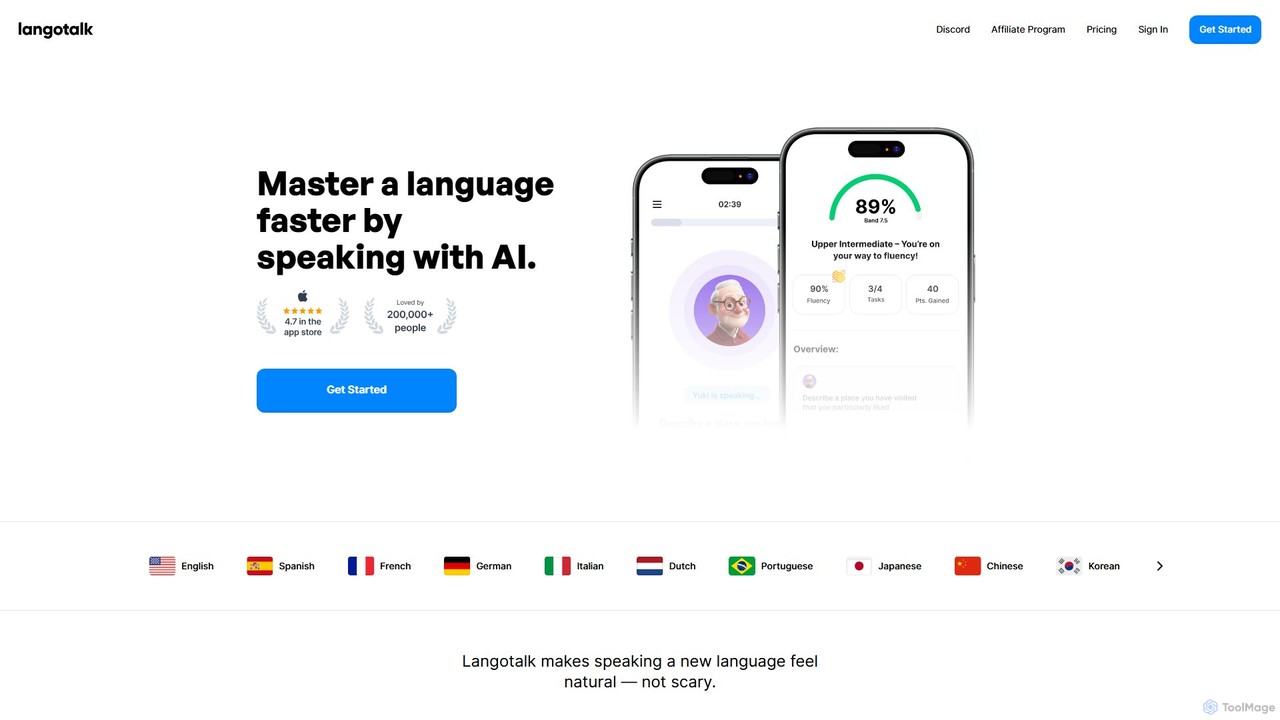
Langotalk is an AI-powered language learning platform that helps you master a new language 6x faster through conversational …
Langotalk is an AI-powered language learning platform that helps you master a new language 6x faster through conversational practice. Speak with advanced AI tutors 24/7, receive instant feedback on your grammar and pronunciation, and get personalized lessons based on your mistakes. It offers a pressure-free environment to build speaking confidence in over 15 languages.
About Conversational Ai
Conversational AI tools are a specialized category of artificial intelligence designed to understand, process, and respond to human language in a natural, interactive way. Leveraging technologies like Natural Language Processing (NLP) and Natural Language Understanding (NLU), these tools can manage multi-turn dialogues and maintain context. They are primarily used to create intelligent chatbots, virtual assistants, and interactive voice response (IVR) systems that automate communication and enhance user engagement. Unlike simple rule-based bots, Conversational AI aims to simulate human-like conversation, adapting its responses based on the user's intent and emotional tone.
Core Features
- Natural Language Understanding (NLU): Deciphers user intent, entities, and sentiment from unstructured text or speech.
- Dialogue Management: Maintains context across multiple turns of a conversation for coherent interactions.
- Multi-channel Deployment: Enables deployment across websites, mobile apps, social media, and messaging platforms.
- Personalization: Adapts responses and recommendations based on user history and preferences.
- Backend Integration: Connects with external systems like CRMs, databases, and APIs to perform actions and retrieve data.
Use Cases
Conversational AI is widely adopted in industries requiring significant customer interaction. In e-commerce, it powers 24/7 support bots that handle order tracking and returns. In healthcare, it facilitates automated appointment scheduling and patient query handling. For internal enterprise operations, it serves as an IT helpdesk assistant, resolving common issues like password resets.
How to Choose
When selecting a Conversational AI tool, evaluate its NLU accuracy and support for your specific industry's terminology. Consider the platform's integration capabilities with your existing software stack (e.g., Salesforce, Zendesk). Assess the balance between no-code/low-code builders for rapid deployment and developer SDKs for deep customization. Finally, analyze the pricing model and its scalability to handle future growth in interaction volume.

Conversational AiUse Cases
Automating Customer Support Queries
A customer support manager in an e-commerce company uses a Conversational AI chatbot to handle high volumes of repetitive questions. The bot is deployed on the website and messaging apps to answer queries about order status, return policies, and product information 24/7. By integrating with the order management system, it provides real-time updates, reducing agent workload by over 40% and allowing the human team to focus on complex customer issues, thereby improving overall service efficiency and customer satisfaction.
Interactive Lead Generation and Qualification
A marketing manager for a B2B SaaS company implements a proactive chatbot on their website. Instead of a static form, the Conversational AI engages visitors, asks qualifying questions about their company size, role, and needs, and determines if they are a good fit. For qualified leads, the bot integrates with sales calendars to schedule a demo directly, increasing qualified lead capture by 25% and shortening the sales cycle by automating the initial contact and scheduling process.
Streamlining Internal IT Helpdesk Support
An IT operations lead in a large enterprise deploys an internal chatbot on platforms like Slack or Microsoft Teams. Employees can interact with the bot for common requests like password resets, software access requests, and basic troubleshooting. The Conversational AI guides them through steps or automatically creates a support ticket with all necessary information, resolving over 50% of Level 1 IT tickets instantly and freeing up IT staff for more complex, strategic tasks.
Personalized Patient Appointment Scheduling
A clinic administrator in a healthcare facility uses a Conversational AI assistant on the clinic's website and phone system. The AI understands natural language requests like "I need to see Dr. Smith next Tuesday afternoon." It checks the doctor's availability in real-time, offers available slots, and books the appointment upon confirmation. This automates the entire scheduling process, reduces no-shows through automated reminders, and allows administrative staff to focus on in-person patient care.
Enhancing In-App User Onboarding
A product manager for a mobile application integrates an in-app conversational guide. When new users open the app for the first time, the AI proactively guides them through key features, answers "how-to" questions in context, and collects feedback on their experience. This interactive onboarding process feels more personal than a static tutorial, leading to higher user activation rates, better feature discovery, and reduced early-stage churn by providing on-demand, contextual help.
Creating Intelligent Voice Response (IVR) Systems
A contact center manager replaces a legacy "press 1 for sales" IVR system with a Conversational AI. Now, callers can state their needs in natural language, such as "I want to check my bill balance." The AI understands the intent, authenticates the user, and can either provide the information directly or intelligently route the call to the most appropriate agent. This significantly improves the caller experience, reduces call misrouting, and shortens average call handling times.