ToolMage
Sign in

Best 2 Ai Writing AI tools

Popular Ai Writing AI tools include FreshRank and 4Posts, helping you work more efficiently.

4Posts

4Posts

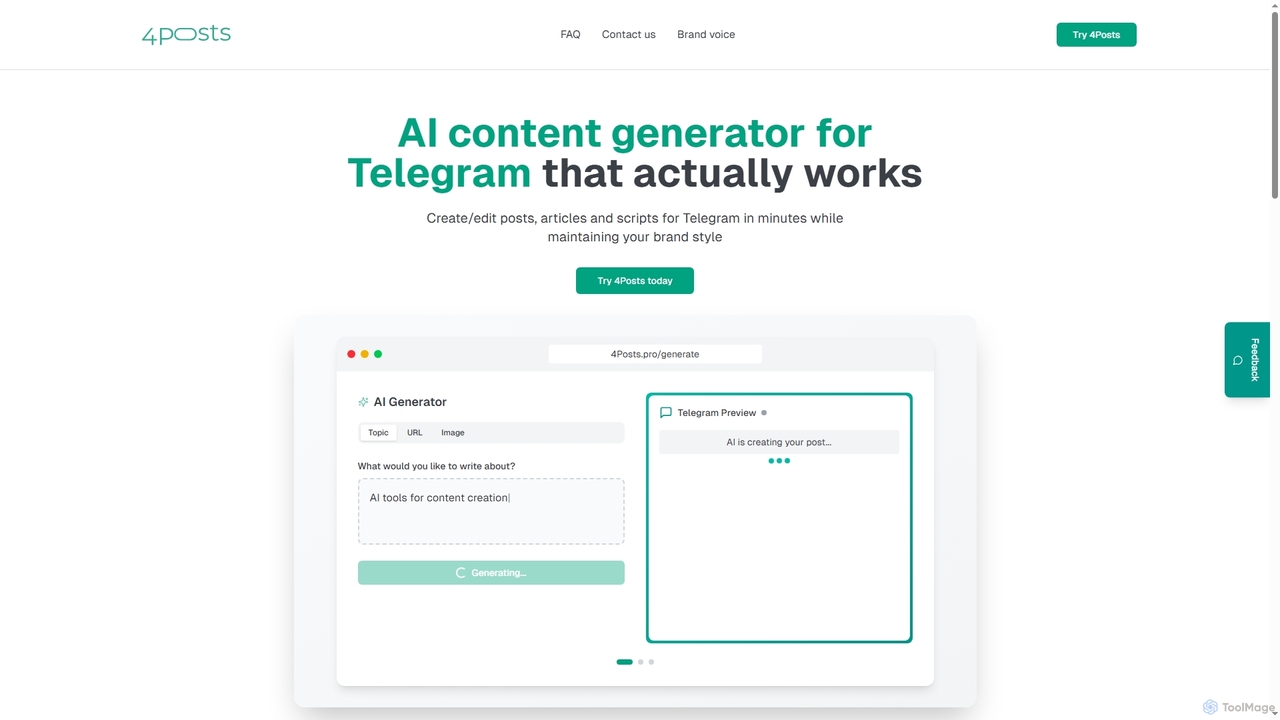
4Posts is an AI-powered content generator designed specifically for Telegram channels. It enables users to quickly create and edit posts, articles, and scripts, while intelligently adapting to and maintaining their unique brand writing style. The platform also offers smart automation for scheduling posts, ensuring maximum reach and consistent channel activity.

Telegram
Visits 4.4KFavorites 100Likes 98
FreshRank
Freemium

FreshRank

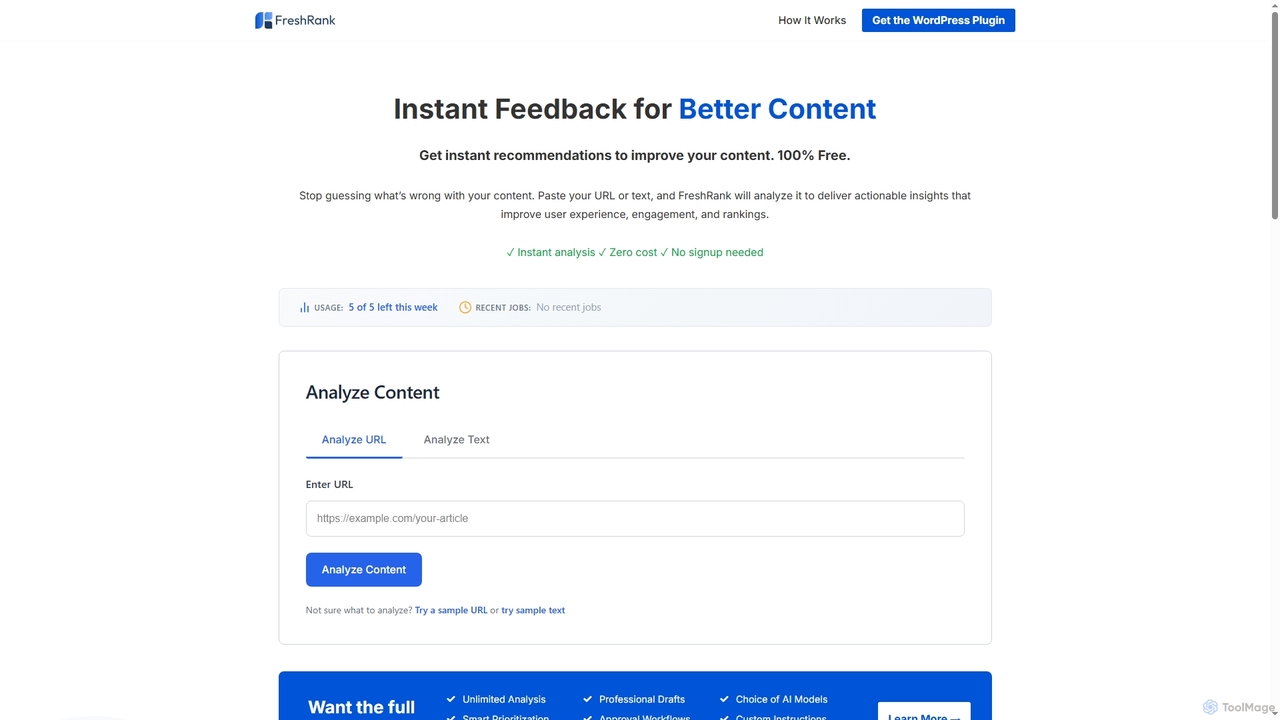
FreshRank is a free AI-powered content optimization tool that provides instant, actionable recommendations to improve your content for better user experience, engagement, and search engine rankings. Analyze URLs or text without signup.

Content Improvement
Visits 4.5KFavorites 138Likes 112

About Ai Writing

AI Writing tools are applications that leverage artificial intelligence to generate, edit, and optimize written content. These tools utilize large language models (LLMs) to understand context, grammar, and style, enabling them to produce human-like text for various purposes. They are widely used for tasks ranging from drafting articles and marketing copy to summarizing documents and improving email communication. By automating repetitive writing tasks, they help users increase productivity and enhance content quality.

Core Features

  • Content Generation: Create original articles, blog posts, social media updates, and ad copy from simple prompts.
  • Text Editing & Paraphrasing: Improve clarity, adjust tone, and rephrase sentences to avoid plagiarism or enhance readability.
  • Grammar & Style Correction: Identify and fix complex grammatical errors, spelling mistakes, and punctuation issues beyond basic checks.
  • Content Summarization: Condense long documents, articles, or reports into concise and accurate summaries.
  • SEO Optimization: Analyze content and suggest relevant keywords to improve its ranking in search engine results.

Use Cases

AI Writing tools are valuable across numerous sectors. Content marketers use them to scale blog production and generate diverse ad copy. Academics and researchers leverage them for literature reviews and manuscript drafting. Business professionals rely on them for crafting clear emails, reports, and presentations, ensuring consistent and professional communication.

How to Choose

When selecting an AI Writing tool, first consider the specific content types you need, such as long-form articles versus short social media captions. Evaluate the quality and coherence of the generated text. Also, check for integration capabilities with your existing workflow tools like WordPress or Google Docs, and compare pricing models based on your expected usage volume and feature requirements.

Ai Writing use cases

1

Generate SEO-Optimized Blog Posts

A content marketer needs to maintain a consistent publishing schedule to attract organic traffic. Using an AI writing tool, they input a target keyword like 'best project management software' and a brief outline. The tool generates a structured, 1500-word article complete with H2/H3 headings, a meta description, and naturally integrated keywords. This process reduces research and drafting time from over four hours to under 30 minutes, allowing the marketer to focus on strategy and promotion.

2

Craft Professional Business Emails

A project manager needs to send a complex project update to a key stakeholder. They are short on time and want to ensure the tone is professional and clear. They input bullet points of the update into an AI writing tool: '- Task A completed, - Task B delayed by 2 days due to X, - New deadline for Task B is Friday.' The AI generates a well-structured, polite email that clearly communicates the status, explains the reason for the delay, and sets clear expectations, saving the manager valuable time while maintaining professional communication standards.

3

Create Engaging Social Media Content

A social media manager for a fashion brand needs to create posts for Instagram, Twitter, and Facebook about a new product launch. Instead of writing each caption from scratch, they provide the AI tool with key product details and the desired 'playful and chic' tone. The AI generates multiple caption variations for each platform, complete with relevant hashtags and emojis, and tailored to character limits. This allows the manager to quickly schedule a week's worth of diverse content, increasing engagement and saving hours of creative work.

4

Accelerate Academic Paper Drafting

A graduate student is working on their thesis and needs to write a literature review. They use an AI writing tool to summarize dozens of dense research papers, quickly extracting key findings and methodologies. They also use the paraphrasing feature to rephrase concepts in their own words, ensuring proper citation and avoiding unintentional plagiarism. The tool's advanced grammar check helps them refine their manuscript to meet the high standards of academic publishing, significantly speeding up the writing process.

5

Write Compelling E-commerce Product Descriptions

An e-commerce manager is launching a new line of 50 skincare products. Writing unique, persuasive descriptions for each is a massive task. They upload a spreadsheet with product names and key features (e.g., 'hydrating, vegan, for sensitive skin') to an AI writing tool. The tool generates engaging, benefit-focused descriptions for all 50 products in a consistent brand voice. This automates a process that would have taken days of manual work, allowing the new product line to go live much faster.

6

Develop Story Ideas and Drafts

A fiction writer is experiencing writer's block while working on a new novel. They use an AI writing tool as a brainstorming partner. They input a character's profile and a plot point, such as 'a detective discovers a hidden clue.' The AI generates several possible scenes, dialogue options, and plot twists. While the writer doesn't use the text verbatim, these suggestions spark new ideas and help them overcome the creative hurdle, allowing them to continue drafting their story with fresh inspiration.

Ai Writing FAQ

What is AI Writing?

AI Writing refers to the use of artificial intelligence tools to generate, refine, and optimize text. These tools are powered by large language models (LLMs) that have been trained on vast amounts of text data. They can perform a wide range of tasks, including drafting articles, writing emails, correcting grammar, paraphrasing sentences, and creating marketing copy. AI writing assistants are used by marketers, writers, students, and business professionals to increase productivity and improve the quality of their written communication.

How do I choose the right AI writing tool?

To choose the right AI writing tool, consider these factors:

  • Content Type: Determine if you need long-form content (articles), short-form copy (social media), or specialized text (academic, technical). Some tools excel in specific areas.
  • Output Quality: Test different tools to evaluate the coherence, accuracy, and style of the generated text. Look for a tool that matches your desired tone and quality standards.
  • Features: Assess if you need additional features like a plagiarism checker, SEO optimization tools, multi-language support, or team collaboration.
  • Ease of Use: The interface should be intuitive and fit into your existing workflow. Check for integrations with platforms like WordPress or Google Docs.
  • Pricing: Compare plans based on word limits, feature access, and the number of users to find a model that suits your budget and usage needs.
Can AI writing replace human writers?

AI writing tools are best viewed as powerful assistants, not replacements for human writers. They excel at automating research, generating drafts, and handling repetitive writing tasks, which significantly boosts a writer's productivity. However, human writers remain essential for providing critical thinking, creativity, emotional nuance, and strategic oversight. Humans ensure the final content is authentic, factually accurate, and aligned with brand goals, a level of judgment AI cannot yet replicate.

Is content generated by AI writing tools original?

Yes, content generated by modern AI writing tools is typically original. These tools use large language models (LLMs) to create text word by word based on statistical patterns, rather than copying and pasting from existing sources. This process results in unique sentence structures and phrasing. However, because LLMs are trained on public data, they may inadvertently replicate common phrases or ideas. Most reputable tools include built-in plagiarism checkers to help users verify the originality of the output before publishing.

How do AI writing tools handle factual accuracy?

AI writing tools do not guarantee factual accuracy. While they can access and process vast amounts of information from their training data, they do not have real-time access to the internet and cannot verify facts. They can sometimes generate plausible-sounding but incorrect information, an issue known as 'hallucination.' Therefore, it is crucial for users to fact-check any specific data, statistics, names, or claims generated by an AI tool before using the content in a professional or public context.