Neuralith
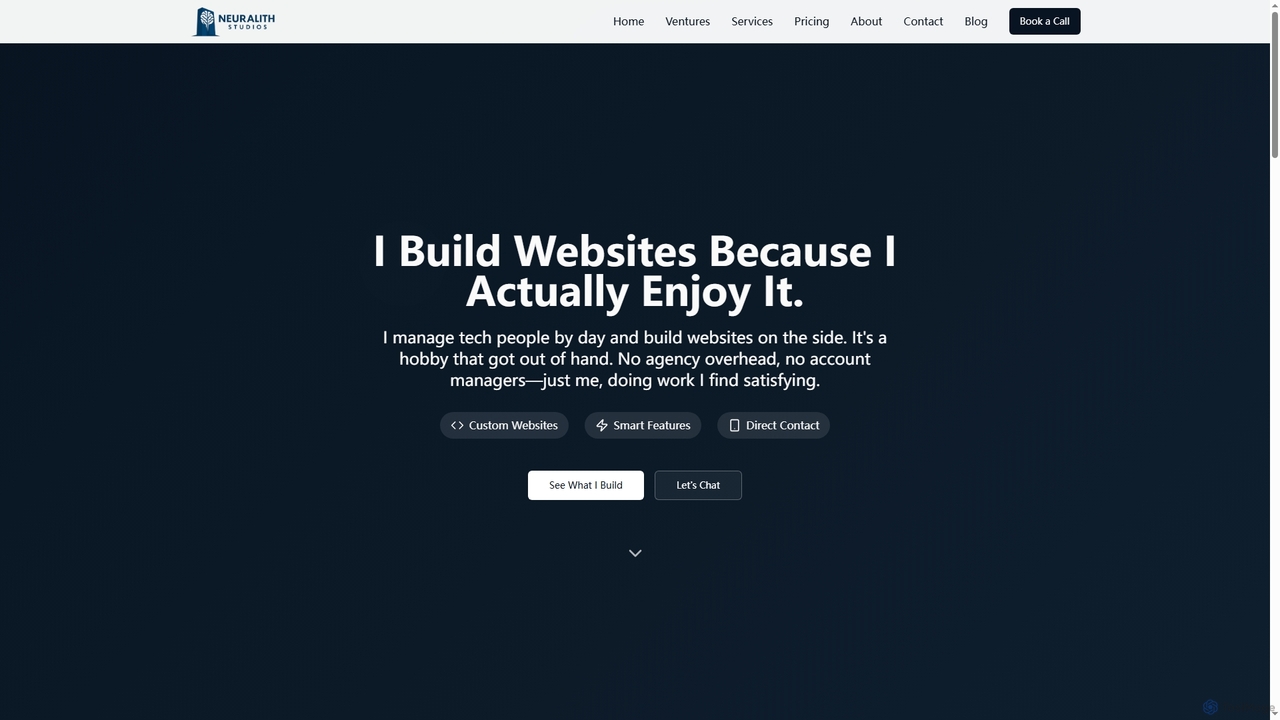
Neuralith Studios offers bespoke website and application development services, leveraging modern AI tools to create custom solutions. They …
Neuralith Studios offers bespoke website and application development services, leveraging modern AI tools to create custom solutions. They specialize in building practical, efficient digital platforms and also develop their own suite of AI-powered applications for various needs, from market intelligence to educational support.
Unicorn OS
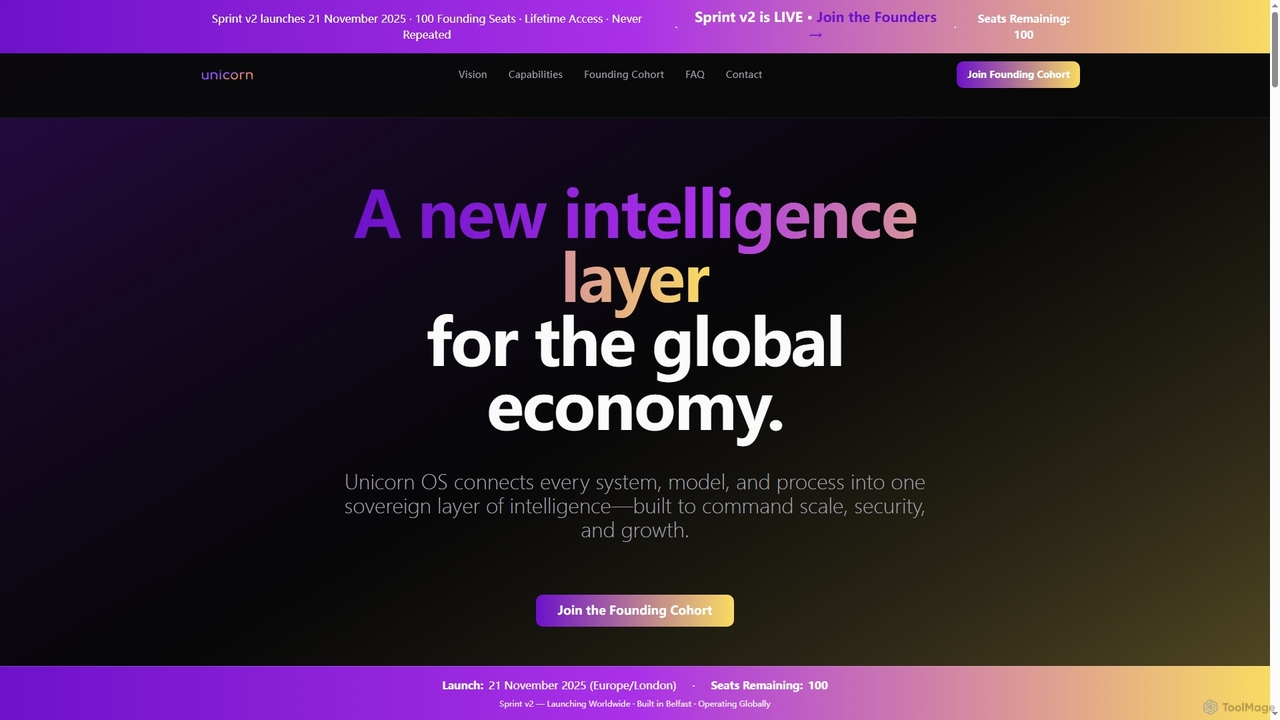
Unicorn OS is an advanced AI-powered creation and deployment engine designed to unify business, data, and artificial intelligence …
Unicorn OS is an advanced AI-powered creation and deployment engine designed to unify business, data, and artificial intelligence into a single, sovereign intelligence layer. It enables users to design, launch, and monetize intelligent websites, e-commerce stores, and applications from simple prompts, providing cross-platform reach and integrated commerce capabilities through Unicorn Pay.
About Application Development
Application Development tools are AI-powered platforms that streamline and enhance various stages of the software development lifecycle. These tools leverage artificial intelligence and machine learning to automate repetitive tasks, generate code, detect errors, and provide intelligent insights. They empower developers, product managers, and businesses to build, test, and deploy applications more efficiently, reducing development time and improving software quality.
Core Features
- AI Code Generation: Automatically generates code snippets, functions, or even entire modules based on natural language prompts or existing codebases.
- Intelligent Debugging & Testing: Identifies potential bugs, suggests fixes, and automates test case generation and execution to ensure application reliability.
- Low-Code/No-Code Development: Provides visual interfaces and drag-and-drop functionalities, enabling users with minimal coding knowledge to build functional applications.
- API & Integration Management: Assists in designing, documenting, and integrating APIs, facilitating seamless communication between different software components.
- Performance Optimization: Analyzes application performance data and suggests improvements for faster execution and resource efficiency.
Use Cases
These tools are widely adopted across various industries, from startups to large enterprises. Software development teams utilize them to accelerate project timelines and reduce manual effort. Product managers leverage AI-driven insights for better feature prioritization, while IT departments use them for more robust application maintenance and scaling. They are particularly valuable in agile environments requiring rapid iteration and deployment.
How to Choose
When selecting Application Development tools, consider the specific needs of your project and team. Evaluate the tool's AI capabilities for code generation accuracy, debugging effectiveness, and integration with your existing tech stack. Assess its support for various programming languages and frameworks, scalability, and the learning curve for your developers. Pricing models, community support, and vendor reputation are also crucial factors for long-term success.
Application DevelopmentUse Cases
Automating Frontend UI Component Generation
Frontend developers can utilize AI Application Development tools to automatically generate UI components (e.g., buttons, forms, navigation bars) from design mockups or natural language descriptions. This significantly accelerates the initial development phase, ensuring consistency with design systems and freeing up developers to focus on complex logic and user experience, reducing manual coding time by up to 50%.
Intelligent Bug Detection and Code Refactoring
Software quality assurance teams and individual developers employ AI-powered tools to proactively scan codebases for potential bugs, security vulnerabilities, and code smells. The AI not only identifies issues but also suggests optimized refactoring solutions, improving code quality, maintainability, and reducing the time spent on manual debugging and code reviews, leading to more stable applications.
Rapid Prototyping with Low-Code Platforms
Product managers and business analysts can leverage low-code Application Development platforms to quickly build functional prototypes or minimum viable products (MVPs) without extensive coding. By dragging and dropping pre-built modules and configuring workflows, they can validate ideas with stakeholders faster, gather early feedback, and accelerate the transition from concept to development, shortening time-to-market.
Generating API Endpoints and Documentation
Backend developers use AI tools to automatically generate API endpoints based on data models or service definitions. These tools can also create comprehensive, up-to-date API documentation (e.g., OpenAPI specifications) as code changes, ensuring that internal and external consumers have accurate information. This reduces manual documentation effort and improves API discoverability and usability.
Optimizing Database Queries and Performance
Database administrators and backend engineers can employ AI-driven Application Development tools to analyze database query performance and suggest optimizations. The AI identifies inefficient queries, recommends indexing strategies, or even rewrites queries for better execution speed. This leads to significant improvements in application responsiveness and reduces server load, enhancing overall user experience.
Automated Test Case Generation and Execution
QA engineers and development teams utilize AI tools to automatically generate diverse test cases (unit, integration, end-to-end) based on application code, user stories, or UI interactions. The AI can then execute these tests and report failures, drastically increasing test coverage and identifying regressions earlier in the development cycle, ensuring higher software quality with less manual effort.