Art Review Generator
Art Review Generator is a unique AI-powered text generator that creates art reviews based on user prompts. Trained …
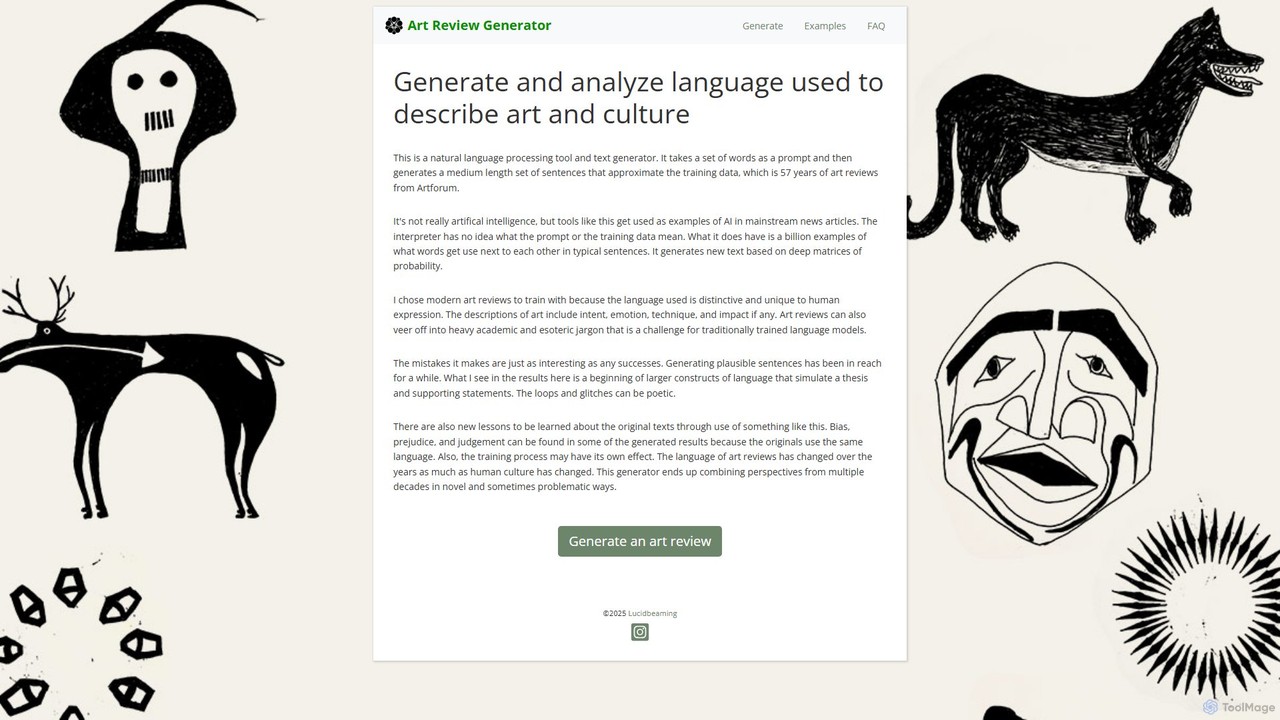
Art Review Generator is a unique AI-powered text generator that creates art reviews based on user prompts. Trained on 57 years of Artforum magazine articles, it simulates the distinct, often esoteric language of art criticism. It's designed as an artistic and analytical tool to explore linguistic patterns, biases, and the poetic potential of AI-generated text, including its interesting glitches and imperfections.
About Art Criticism
AI Art Criticism tools are a specialized class of software that uses artificial intelligence to analyze and evaluate visual artworks. These tools employ computer vision and machine learning models, trained on vast datasets of art history and aesthetic principles, to deconstruct elements like composition, color harmony, and style. They provide objective, data-driven feedback that can help artists, students, and enthusiasts understand the technical and stylistic strengths of a piece. Unlike general art software, their primary function is interpretive analysis rather than creation or editing.
Core Features
- Compositional Analysis: Evaluates the balance, structure, and flow of an artwork, identifying elements like the rule of thirds, leading lines, and focal points.
- Color Theory Evaluation: Analyzes the color palette for harmony, contrast, and emotional impact, suggesting potential improvements based on established theories.
- Style Identification: Classifies the artwork's style (e.g., Impressionism, Cubism, Abstract) by comparing it against a large database of historical art.
- Technical Feedback: Provides insights into technical aspects such as brushwork, lighting, perspective, and line quality.
- Comparative Analysis: Benchmarks an artwork against established masterpieces or other pieces within a similar genre to highlight unique attributes.
Applicable Scenarios
These tools are highly valuable for art students seeking instant, unbiased feedback on their assignments. Professional artists use them to gain a fresh, objective perspective on works-in-progress, helping to identify areas for refinement. Galleries and collectors can also utilize them for preliminary screening and analysis of new or submitted artworks.
How to Choose
When selecting an AI Art Criticism tool, consider the depth of its analytical reports—does it offer surface-level comments or detailed breakdowns? Evaluate the range of art styles and media it supports (e.g., painting, photography, digital art). The quality of its reference database for stylistic comparison is crucial, as is the clarity and actionability of the feedback provided. Finally, consider the user interface and whether it allows for easy uploading and interpretation of results.
Art CriticismUse Cases
Formative Feedback for Art Students
An art student working on a digital painting assignment can upload their work-in-progress to an AI Art Criticism tool. The tool provides immediate, objective feedback on compositional balance, highlighting areas where the rule of thirds could be better applied. It also analyzes the color palette, suggesting that increasing the contrast between the foreground and background could create a stronger focal point. This allows the student to iterate and refine their piece based on established art principles before submitting it for a grade, accelerating their learning curve.
Objective Review for Professional Artists
A professional illustrator finalizing a series of pieces for a gallery show uses an AI critic to ensure stylistic consistency. By analyzing all images in the collection, the tool generates a report on recurring color palettes, compositional motifs, and stylistic signatures. It might flag one piece where the lighting is inconsistent with the rest of the series. This data-driven second opinion helps the artist spot subtle discrepancies they might have missed, ensuring the final collection is cohesive and polished before being presented to curators and the public.
Preliminary Screening for Art Galleries
A curator at a contemporary art gallery receives hundreds of digital submissions weekly. They use an AI Art Criticism tool for initial screening. The tool is configured to identify works with high compositional complexity and unique color palettes, characteristics that align with the gallery's focus. The AI quickly filters the submissions, providing a ranked shortlist of the most promising pieces for human review. This automates the initial, time-consuming part of the curation process, allowing the curator to focus their expert attention on a smaller, more relevant selection of art.
Enhancing Art History Education
An art history teacher uses an AI criticism tool in the classroom to demonstrate abstract concepts. When discussing the shift from Renaissance to Baroque art, the teacher uploads examples from both periods. The AI visually highlights the differences, showing data on the increased use of dramatic lighting (chiaroscuro) and more dynamic, asymmetrical compositions in Baroque pieces. This interactive, data-supported approach makes complex art theories more tangible and understandable for students, supplementing traditional lectures with immediate visual evidence.
Self-Guided Skill Development for Hobbyists
A hobbyist photographer wants to improve their landscape composition skills. They regularly upload their photos to an AI analysis tool. The tool provides consistent feedback, tracking their progress over time. For example, it might generate a report showing that their use of leading lines has improved by 30% over the last 50 photos, but their subject placement still tends to be too central. This personalized, long-term analysis acts as a virtual mentor, guiding the hobbyist's practice and helping them focus on specific areas for improvement in a structured way.
Validating Authenticity in Art Markets
An art authenticator investigating a potential forgery of a famous painter's work uses an AI tool as part of their analysis. They upload a high-resolution image of the questionable piece alongside several confirmed works by the artist. The AI performs a micro-level analysis of brushstroke patterns, pressure, and direction, comparing them statistically. The tool's report indicates that the brushwork on the suspect piece has an 85% statistical deviation from the artist's known patterns. While not definitive proof, this data provides a strong quantitative argument to support the authenticator's final conclusion.