Fast Image
Fast Image is an intuitive online AI image generator that transforms your creativity into stunning artwork. It allows …
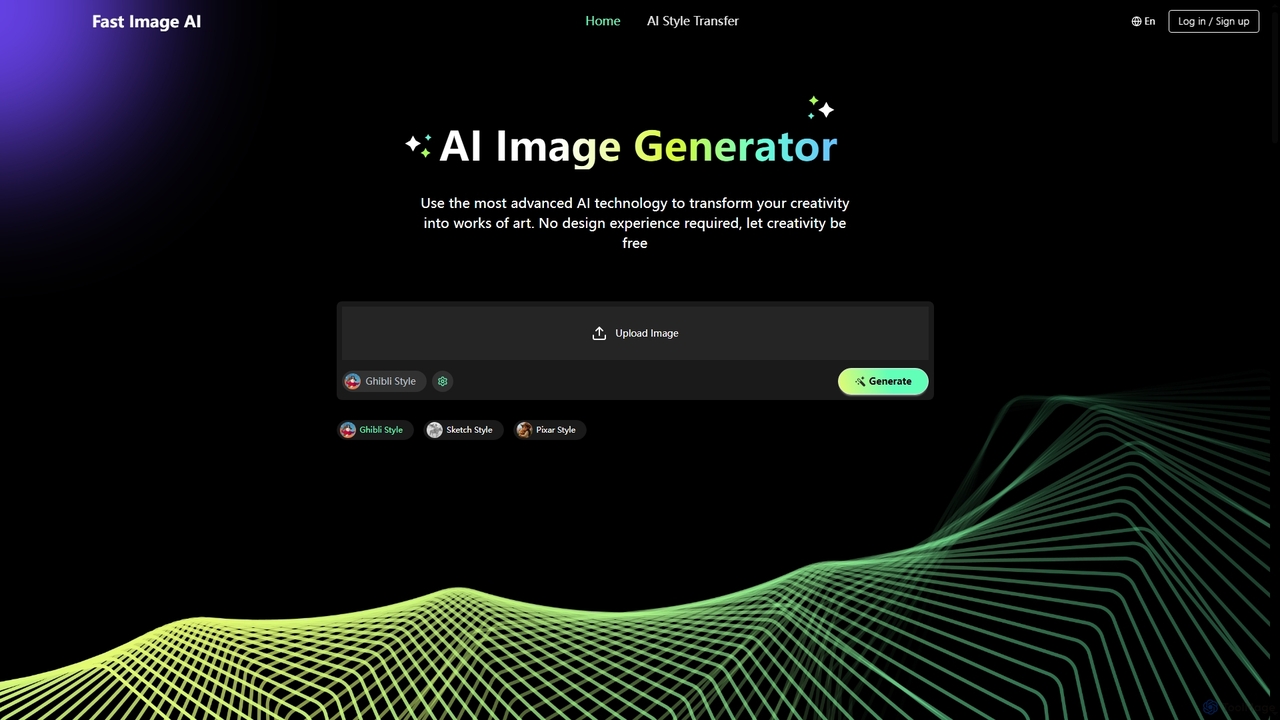
Fast Image is an intuitive online AI image generator that transforms your creativity into stunning artwork. It allows users to convert photos into various artistic styles like Ghibli, Sketch, and Pixar, or generate unique images from text descriptions. With a user-friendly interface and no design experience required, Fast Image makes AI art creation accessible and fast, operating directly in your browser.
About Digital Art
AI Digital Art tools are a class of software that uses artificial intelligence, particularly generative models, to create or manipulate visual artwork. These tools translate text descriptions, sketches, or existing images into new, original artistic outputs. They empower users to generate complex visuals, explore diverse styles, and produce creative content without extensive manual drawing skills. As a specialized area within Art Creation, they focus on algorithmic generation rather than direct manual manipulation.
Core Features
- Text-to-Image Generation: Creates detailed images from written prompts, describing scenes, subjects, and styles.
- Image-to-Image Transformation: Modifies an input image based on text instructions or merges it with the style of another.
- Style Transfer & Mimicry: Applies the aesthetic of a specific artist, movement, or image to a new piece of content.
- Generative Variations: Produces multiple unique versions of an idea from a single prompt, facilitating creative exploration.
- Inpainting & Outpainting: Intelligently fills in missing parts of an image or expands its canvas with contextually appropriate content.
Use Cases
These tools are widely used by concept artists for rapid ideation in game and film development, graphic designers for creating unique marketing materials, and content creators for producing custom visuals for social media. NFT artists also leverage them to generate large, varied collections. They serve both professional workflows and personal creative exploration.
How to Choose
When selecting an AI Digital Art tool, consider the quality and coherence of the underlying AI model. Evaluate the range of artistic styles it can produce and the level of control offered through parameters like negative prompts and seeds. Also, assess the output resolution, speed of generation, and the pricing model (e.g., subscription vs. credit-based).

Digital ArtUse Cases
Concept Art Ideation for Games and Films
A concept artist working on a new fantasy video game needs to visualize a variety of character outfits and environments quickly. Instead of spending days sketching manually, they use an AI Digital Art tool. By inputting descriptive prompts like 'elven warrior with bioluminescent armor in a dark forest,' the tool generates dozens of high-quality visual concepts in minutes. This allows the artist to rapidly iterate on ideas, select the most promising designs, and present a wide range of options to the art director, accelerating the pre-production phase significantly.
Creating Unique Marketing and Ad Visuals
A small e-commerce business needs compelling visuals for a social media campaign but lacks the budget for a professional photoshoot. The marketing manager uses an AI art generator to create unique lifestyle images featuring their product. They input prompts like 'a modern minimalist living room with a blue ceramic vase on a wooden table, morning light.' The AI produces several photorealistic options. They can then refine the images, ensuring brand consistency and creating a series of eye-catching ads that stand out from generic stock photos, all at a fraction of the cost.
Generating Large-Scale NFT Art Collections
An NFT artist plans to launch a collection of 10,000 unique profile pictures (PFPs). Manually creating each one would be impossible. They use an AI Digital Art tool with scripting or batch processing capabilities. The artist first defines a base character prompt and then creates lists of variables for different traits (e.g., hats, glasses, backgrounds). The tool programmatically combines these elements, generating thousands of unique, thematically consistent images. This process enables the creation of large-scale generative art projects that are central to the NFT market.
Designing Custom Book Covers and Illustrations
A self-published author needs a captivating cover for their new sci-fi novel. They have a clear vision but lack the artistic skills to create it. Using an AI art tool, they can experiment with prompts like 'lone astronaut looking at a swirling nebula, vintage sci-fi book cover style.' They generate multiple versions, adjust colors, and refine compositions until they get a cover that perfectly captures the book's mood. This approach provides a cost-effective and highly customizable alternative to hiring a designer or using generic cover templates.
Architectural and Interior Design Visualization
An architect wants to show a client how a proposed building will look in different contexts and artistic styles. They use an AI image tool to transform a basic 3D render. By applying prompts like 'in the style of a watercolor painting' or 'futuristic cyberpunk aesthetic at night,' they can quickly generate multiple artistic visualizations. This helps clients better understand the design intent and emotional impact of the space, making presentations more engaging and persuasive than standard technical renders alone.
Personal Creative Expression and Hobby Art
An individual with a passion for art but limited traditional skills wants to create unique pieces for their home or social media. They use an AI art generator as a creative partner. They can explore abstract concepts by prompting 'the feeling of nostalgia as a geometric pattern' or create portraits of their pets in the style of famous painters. This allows for a new form of artistic expression, where the creativity lies in crafting the perfect prompt and curating the AI's output, making digital art creation accessible to a much broader audience.