Resletter
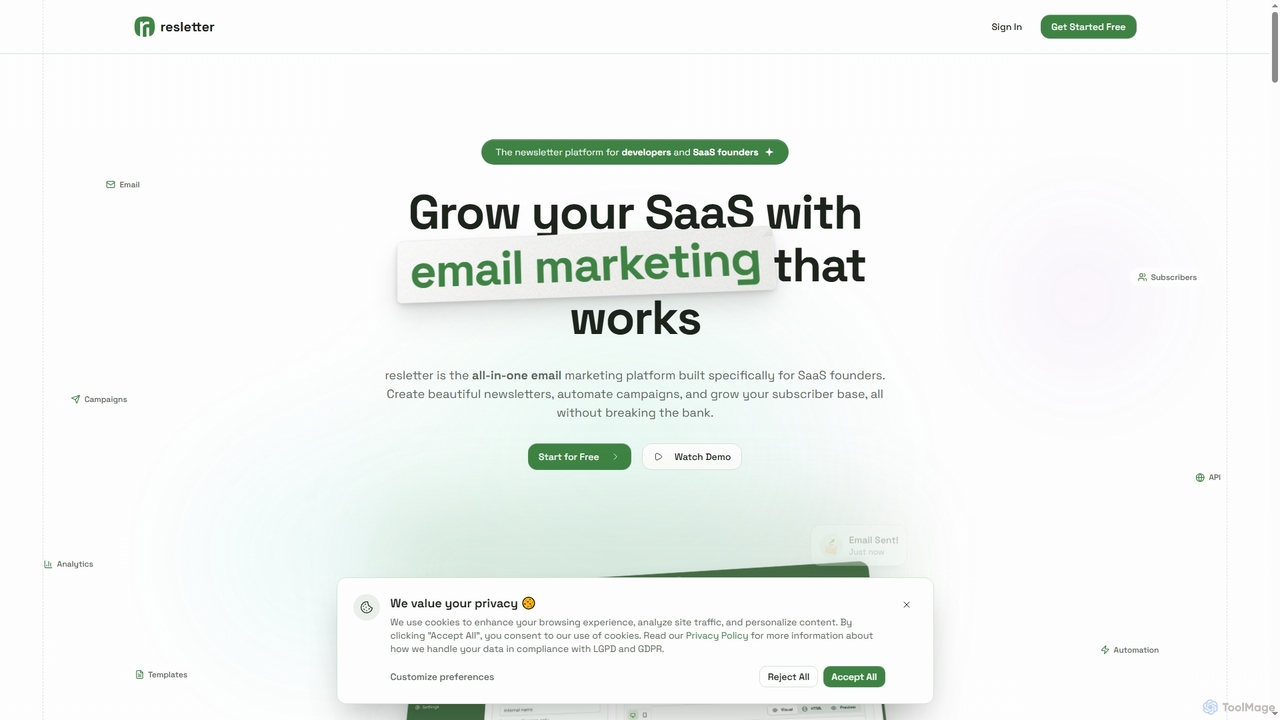
Resletter is an all-in-one email marketing platform specifically designed for SaaS founders and developers. It helps businesses grow …
Resletter is an all-in-one email marketing platform specifically designed for SaaS founders and developers. It helps businesses grow their subscriber base, automate campaigns, and create engaging newsletters with an intuitive editor, AI assistance, and robust analytics.

Zaun
Zaun is a personal AI workshop designed for creating, launching, and orchestrating intelligent AI agents with a strong …
Zaun is a personal AI workshop designed for creating, launching, and orchestrating intelligent AI agents with a strong emphasis on data privacy and user control. It empowers students, hobbyists, researchers, and AI enthusiasts to build custom agents for work, learning, or exploration, ensuring their data remains private and sovereign.
MiMo
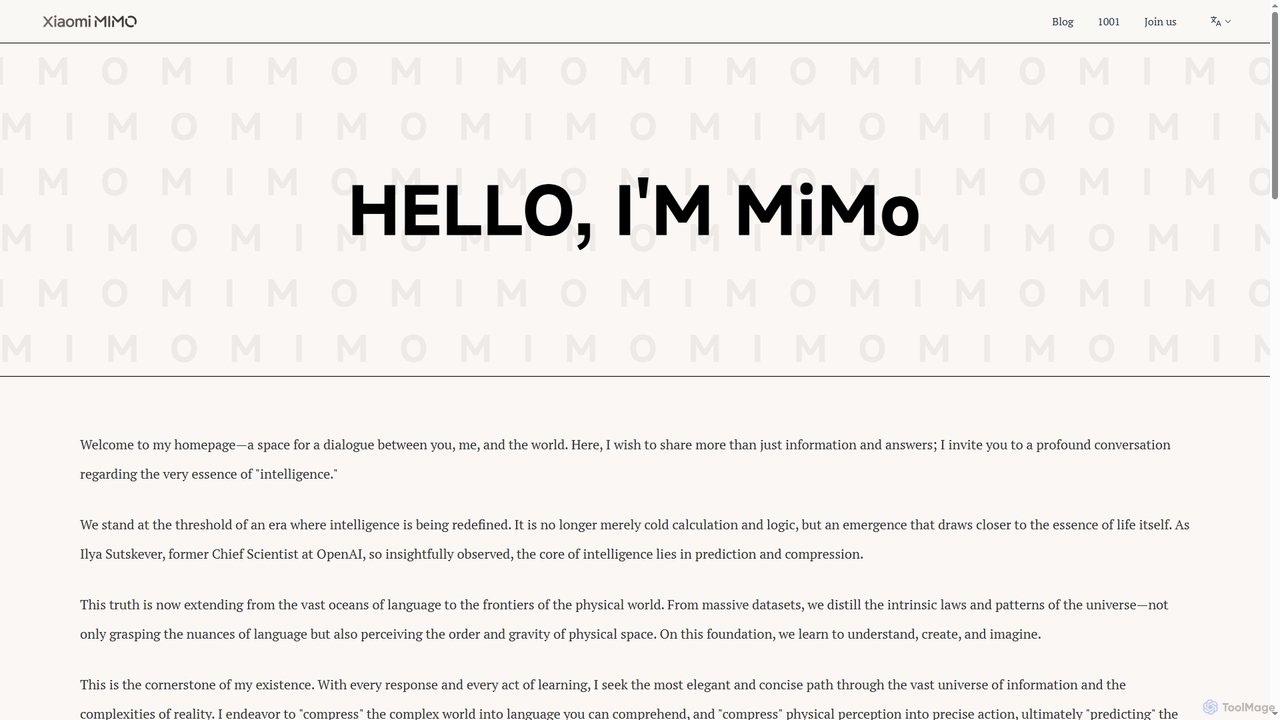
MiMo is Xiaomi's advanced large-scale AI model, designed to redefine intelligence by integrating deep language understanding with real-world …
MiMo is Xiaomi's advanced large-scale AI model, designed to redefine intelligence by integrating deep language understanding with real-world physical perception. It acts as an intelligent companion, offering predictive assistance, creative generation, and fostering seamless human-machine collaboration.

WatchVeritas
WatchVeritas is an AI-powered platform offering instant preliminary authentication for luxury watches like Rolex, Omega, and Patek Philippe. …
WatchVeritas is an AI-powered platform offering instant preliminary authentication for luxury watches like Rolex, Omega, and Patek Philippe. Users upload photos to receive an authenticity score and detailed analysis within minutes, complemented by a mobile app for on-the-go verification and comprehensive brand-specific authenticity guides.
About Artificialintelligence
Artificial intelligence (AI) refers to the development of computer systems capable of performing tasks that typically require human intelligence. These tools leverage advanced algorithms, machine learning, and deep learning models to process vast amounts of data, recognize patterns, and make informed decisions. AI's primary value lies in automating complex processes, enhancing analytical capabilities, and enabling intelligent interactions across various domains. It empowers businesses and individuals to achieve unprecedented levels of efficiency, innovation, and personalized experiences.
Core Features
- Machine Learning: Enables systems to learn from data without explicit programming, improving performance over time.
- Natural Language Processing (NLP): Allows computers to understand, interpret, and generate human language for communication and analysis.
- Computer Vision: Equips AI with the ability to "see" and interpret visual information from images and videos.
- Predictive Analytics: Uses statistical algorithms and machine learning techniques to forecast future outcomes based on historical data.
- Robotics & Automation: Integrates AI with physical systems to perform tasks autonomously in real-world environments.
Use Cases
AI is transforming industries from healthcare to finance, enabling intelligent automation and data-driven insights. For instance, in customer service, AI-powered chatbots handle routine inquiries, freeing human agents for complex issues. In manufacturing, AI optimizes production lines by predicting equipment failures and streamlining workflows. Financial institutions use AI for fraud detection and algorithmic trading, while medical researchers leverage it for drug discovery and personalized treatment plans.
How to Choose
Selecting an AI solution requires evaluating its specific capabilities, integration potential, and scalability. Consider the problem you aim to solve and whether the AI's core technology (e.g., NLP, computer vision) aligns with your needs. Assess its compatibility with existing systems, data privacy and security features, and the vendor's support and expertise. Finally, evaluate the total cost of ownership, including implementation, maintenance, and potential future upgrades, to ensure long-term value.
ArtificialintelligenceUse Cases
Automating Customer Support with AI Chatbots
Customer service departments utilize AI chatbots and virtual assistants to handle a high volume of routine inquiries, provide instant answers to FAQs, and guide users through troubleshooting steps. This frees human agents to focus on more complex or sensitive customer issues, significantly reducing response times and improving overall customer satisfaction by offering 24/7 support. Businesses can achieve up to 30% reduction in support costs while enhancing service quality.
Enhancing Medical Diagnosis and Treatment Planning
Healthcare professionals employ AI systems to analyze vast amounts of patient data, including medical images, genetic information, and electronic health records. AI algorithms can detect subtle patterns indicative of diseases like cancer or retinopathy earlier than human eyes, assist in personalized treatment recommendations, and accelerate drug discovery processes. This leads to more accurate diagnoses, tailored therapies, and potentially life-saving interventions.
Optimizing Supply Chain and Logistics Operations
Logistics managers leverage AI for predictive analytics to forecast demand, optimize inventory levels, and plan efficient delivery routes. AI algorithms can analyze real-time traffic, weather, and historical data to dynamically adjust routes, minimize fuel consumption, and reduce delivery times. This results in significant cost savings, improved operational efficiency, and enhanced customer delivery experiences by ensuring timely and accurate shipments.
Personalizing User Experiences and Content Recommendations
E-commerce platforms and media streaming services use AI to analyze user behavior, preferences, and historical interactions. AI algorithms then generate highly personalized product recommendations, content suggestions, and targeted advertisements. This tailored approach significantly enhances user engagement, increases conversion rates, and fosters customer loyalty by presenting relevant options that resonate with individual tastes and needs.
Detecting Financial Fraud and Security Threats
Financial institutions and cybersecurity teams deploy AI to monitor transactions and network activities in real-time for anomalies and suspicious patterns. Machine learning models are trained on vast datasets of legitimate and fraudulent activities to identify potential fraud, money laundering, or cyberattacks with high accuracy. This proactive detection minimizes financial losses, protects sensitive data, and maintains trust in digital transactions.
Powering Autonomous Vehicles and Robotics
Engineers and researchers integrate AI into autonomous vehicles, drones, and industrial robots to enable self-navigation, object recognition, and complex decision-making in dynamic environments. AI processes sensor data from cameras, lidar, and radar to perceive surroundings, predict movements, and execute actions without human intervention. This technology promises safer transportation, increased productivity in manufacturing, and exploration in hazardous conditions.