Samplette
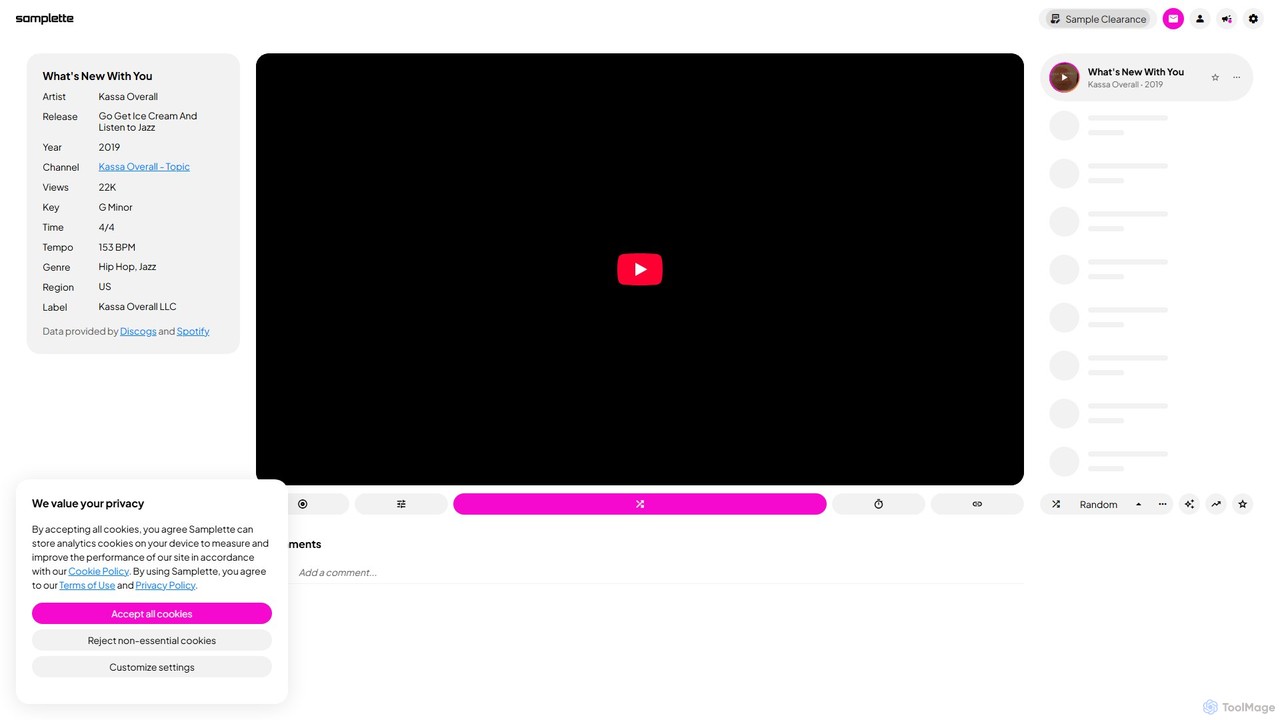
Samplette is an AI-powered music discovery tool that revolutionizes the 'crate digging' experience. It randomly generates music videos …
Samplette is an AI-powered music discovery tool that revolutionizes the 'crate digging' experience. It randomly generates music videos from YouTube's vast library, allowing music producers, DJs, and enthusiasts to find unique and obscure tracks. With advanced filters for genre, region, tempo, and more, it's a powerful engine for musical inspiration and sample finding.

suno_list
A discovery platform and community leaderboard for music created with Suno AI. Explore trending charts, find inspiration from …
A discovery platform and community leaderboard for music created with Suno AI. Explore trending charts, find inspiration from successful prompts, and listen to the best AI-generated songs.
About Music Discovery
AI Music Discovery tools are specialized applications that use artificial intelligence to help you find new music tailored to your personal tastes. They analyze your listening habits, favorite artists, and even the acoustic properties of songs to provide highly accurate recommendations. This technology allows you to break free from repetitive mainstream charts and explore a vast universe of artists, genres, and moods you might not otherwise encounter. Unlike standard streaming service playlists, these tools often employ more advanced algorithms for deep-level audio analysis and contextual understanding.
Core Features
- Personalized Recommendation Engine: Analyzes user data and audio features to suggest new tracks, artists, and albums.
- Mood and Activity-Based Search: Finds music that matches a specific mood (e.g., relaxing, energetic) or activity (e.g., focus, workout).
- Audio Fingerprinting: Identifies songs playing nearby by analyzing a short audio sample.
- Similar Track/Artist Finder: Generates playlists or suggestions based on the sonic qualities of a single "seed" song or artist.
- Trend & Niche Discovery: Uncovers emerging artists, viral tracks, and niche subgenres before they become mainstream.
Use Cases
These tools are invaluable for music enthusiasts looking to broaden their horizons, content creators seeking the perfect soundtrack for their videos, and DJs curating unique sets. Music supervisors also use them to efficiently source tracks for film, TV, and advertising, while fitness enthusiasts can generate dynamic playlists that match their workout intensity.
How to Choose
When selecting a Music Discovery tool, consider the quality of its recommendation algorithm—does it consistently suggest music you enjoy? Evaluate the size and diversity of its music catalog, especially if you're interested in niche genres. Check for integration with your primary streaming services like Spotify or Apple Music for seamless playlist syncing. Finally, assess the user interface for ease of exploration and music management.
Music DiscoveryUse Cases
Finding Royalty-Free Music for Video Content
A content creator needs background music for their weekly YouTube vlog. Instead of spending hours manually searching through stock music libraries, they use an AI Music Discovery tool. They input keywords like "upbeat," "lo-fi," and "instrumental," and specify the desired mood as "inspirational." The AI instantly generates a list of suitable, royalty-free tracks, analyzing the sonic characteristics of each to ensure it fits the video's theme. The creator can preview and select the perfect song in minutes, dramatically speeding up their post-production workflow.
Discovering Niche Genres and Emerging Artists
A dedicated music fan feels stuck in a "music bubble," listening to the same artists repeatedly. They use a Music Discovery app and start with a favorite obscure track. The tool's "similar track" feature analyzes the song's key, tempo, instrumentation, and structure to find other songs with a similar sonic DNA. This leads them down a rabbit hole of discovery, introducing them to a niche subgenre and several emerging artists from around the world. The user builds a new playlist filled with fresh, exciting music that perfectly matches their unique taste.
Curating Themed Playlists for Events or Venues
A cafe owner wants to create a specific "Sunday morning jazz" atmosphere for their customers. Using an AI Music Discovery tool, they select a few quintessential songs that capture the desired vibe. The AI then generates an extended playlist of sonically and thematically similar tracks, ensuring a consistent mood without repetition. It can filter by instrumentation (e.g., "piano trio") and energy level ("calm") to refine the selection, resulting in a professionally curated, multi-hour playlist that enhances the customer experience.
Identifying Songs on the Go
While shopping in a store, a person hears a captivating song they've never heard before. They quickly open a Music Discovery app on their phone that features audio fingerprinting. By letting the app listen for just a few seconds, its AI analyzes the audio waveform and matches it against a massive database of millions of songs. The app instantly identifies the track title, artist, and album, and provides options to save it directly to their Spotify or Apple Music library for later listening.
Building Dynamic Workout Playlists
A runner is training for a marathon and needs a playlist that matches their planned workout: a 10-minute warm-up, a 30-minute high-intensity run, and a 5-minute cool-down. They use an AI tool to specify the duration and desired BPM (beats per minute) for each segment. The AI curates a seamless playlist that gradually increases in tempo and energy for the main run and then slows down for the cool-down. This removes the need to manually skip tracks and keeps the runner motivated and in their target heart rate zone.
Sourcing Music for Professional Projects
A music supervisor for an independent film needs to find a track that conveys a sense of "optimistic melancholy." This abstract emotional brief is difficult to search for in traditional libraries. They use an advanced AI Music Discovery platform that supports semantic search. The AI interprets the emotional context and provides a shortlist of songs that match the specific feeling, analyzing lyrics, musical key, and instrumentation. This saves days of manual searching and provides creative options that might have been otherwise overlooked.