
Applio
Applio is a free, user-friendly desktop application for high-quality voice conversion. Designed for simplicity and performance, it allows …
Applio is a free, user-friendly desktop application for high-quality voice conversion. Designed for simplicity and performance, it allows users to transform their voice in real-time or convert audio files using a library of voice models. Available on Windows, Mac, and Linux, it's an ideal tool for content creators, musicians, and anyone looking to experiment with voice cloning technology.
echovoiceai
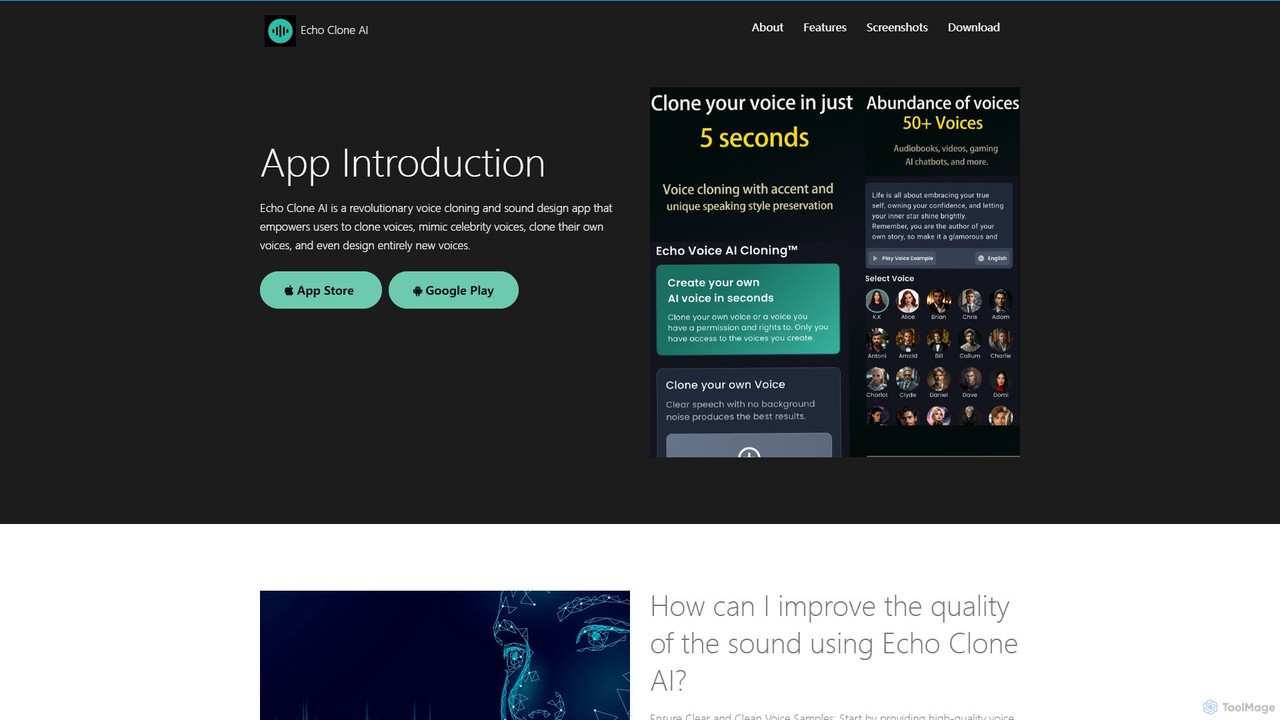
echovoiceai is a powerful AI voice application that specializes in voice cloning and design. It allows users to …
echovoiceai is a powerful AI voice application that specializes in voice cloning and design. It allows users to clone celebrity voices from a library of over 80 options, create a digital replica of their own voice, or design entirely new voices by adjusting parameters like pitch and timbre. It's designed for content creators, gamers, and anyone looking for creative audio tools.
Clony AI
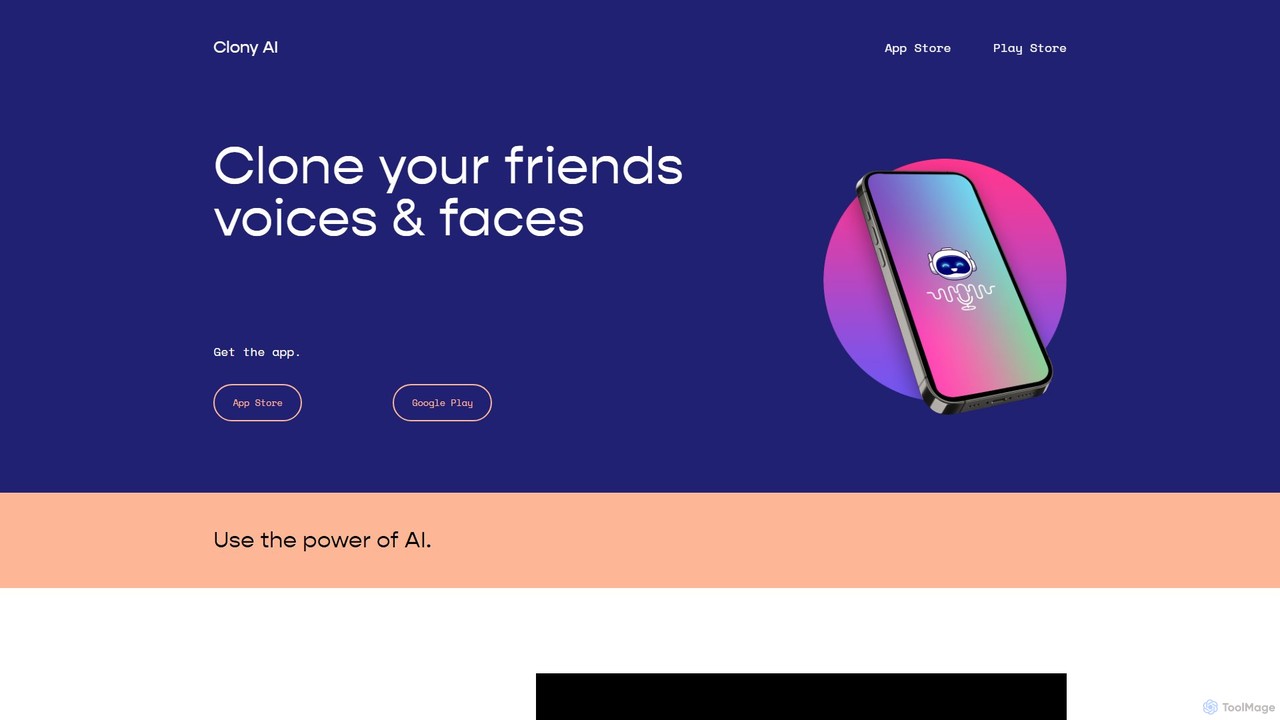
A mobile AI application for cloning voices and faces. Generate text-to-speech in any cloned voice and create animated …
A mobile AI application for cloning voices and faces. Generate text-to-speech in any cloned voice and create animated videos by adding a face to the audio. Ideal for creating fun, personalized content, social media posts, and memes.
About Voice Cloning
Voice Cloning is a specialized AI audio technology that creates a synthetic, digital replica of a specific human voice. These tools use deep learning models to analyze a short audio sample, capturing the unique pitch, tone, and cadence of the speaker. This enables the generation of new, natural-sounding speech in the cloned voice, making it highly valuable for personalized content creation, accessibility solutions, and digital character development. Advanced platforms can even replicate emotional nuances and speaking styles for highly realistic outputs.
Core Features
- Voice Sample Analysis: Analyzes a short audio recording to learn and model the unique characteristics of a voice.
- Custom Voice Generation: Converts text or other voice inputs into speech using the newly created digital voice model.
- Style & Emotion Control: Allows users to adjust the emotional tone, pitch, and speaking style of the generated audio.
- Multi-language Synthesis: Enables the cloned voice to speak in different languages while retaining its core vocal identity.
- API Access: Provides programmatic access for developers to integrate voice cloning capabilities into their own applications.
Use Cases
Voice cloning is widely used in media production, gaming, and corporate communications. For example, podcast creators can correct errors or add new content without re-recording, game developers can generate dynamic dialogue for non-player characters (NPCs), and businesses can create personalized voice assistants or consistent brand voiceovers for marketing materials.
How to Choose
When selecting a Voice Cloning tool, consider the quality and realism of the generated voice. Evaluate the amount of audio data required for cloning and the speed of the process. Also, check for features like emotion control, multi-language support, and API availability for integration. Finally, review the pricing model and ethical usage policies to ensure they align with your project's needs and legal requirements.
Voice CloningUse Cases
Create Personalized Audiobooks and Podcasts
Authors and podcast creators use voice cloning to produce long-form audio content in their own voice without spending weeks in a recording studio. After providing a short voice sample, they can convert entire manuscripts or scripts into high-quality audio. This process drastically reduces production time and costs, allows for easy correction of errors, and ensures a consistent vocal delivery across all episodes or chapters, even if recorded months apart.
Develop Dynamic Video Game Characters
Game developers leverage voice cloning to give unique and dynamic voices to non-player characters (NPCs). Instead of recording thousands of lines of dialogue for every possible scenario, developers can clone an actor's voice and generate new lines as needed during development. This is especially useful for games with branching narratives or procedurally generated content, allowing for a richer, more immersive world without the logistical constraints and high costs of extensive voice acting sessions.
Create Consistent Brand Voiceovers for Marketing
Marketing teams use voice cloning to maintain a consistent brand voice across various channels, such as video ads, corporate training videos, and IVR systems. By cloning the voice of a specific brand spokesperson or a preferred voice actor, companies can quickly generate new audio content for campaigns without needing to schedule new recording sessions. This ensures brand consistency, speeds up content creation, and allows for easy localization of marketing materials by generating the same voice in different languages.
Personalize Accessibility Tools for Users
In the field of accessibility, voice cloning offers profound personalization. For individuals who have lost their ability to speak, tools can clone their voice from old recordings. This allows them to communicate using a synthesized voice that is uniquely their own, rather than a generic robotic one. This technology can be integrated into assistive communication devices, providing a greater sense of identity and personal connection for the user during their interactions.
Automate Personalized Voicemail and Call Center Messages
Businesses can use voice cloning to automate personalized outbound communications. For instance, a sales team can clone the voice of each representative to leave personalized voicemail drops for hundreds of leads. Similarly, call centers can use a cloned, friendly voice for automated messages and IVR prompts, creating a more human and consistent customer experience compared to standard, robotic text-to-speech systems. This enhances engagement and brand perception.
Localize Educational and Training Content at Scale
Educational institutions and corporate trainers use voice cloning to efficiently localize e-learning modules. An instructor can record a course in one language, and their cloned voice can then be used to generate audio for the same course in multiple other languages. This maintains the instructor's familiar and authoritative tone across all versions, creating a more engaging and consistent learning experience for a global audience, while saving significant time and resources on multi-language voiceover production.