Automation Best in category 1 results Growth Hacking AI Tool

Popular AI tools in the Growth Hacking field of Automation include SocialFollow, etc., helping you quickly improve efficiency.

SocialFollow

SocialFollow

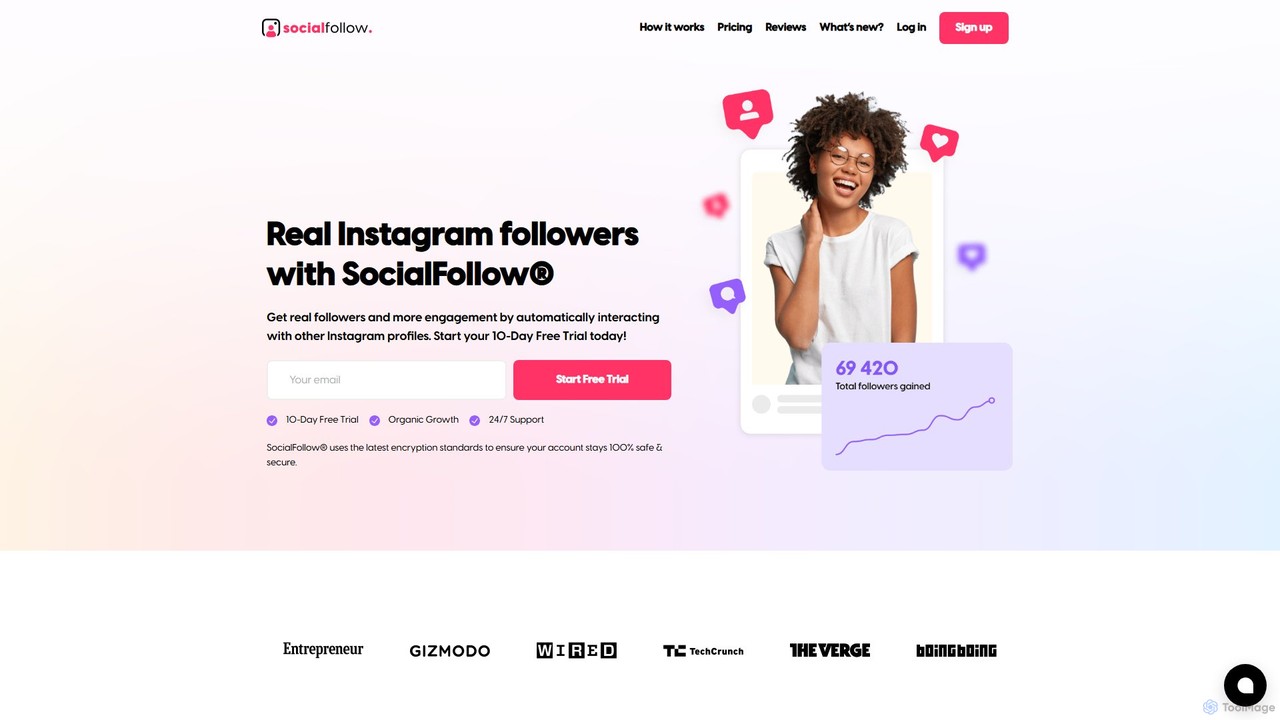
SocialFollow is an AI-powered Instagram growth tool designed to help influencers, businesses, and individuals gain real, active followers …

13.4K

About Growth Hacking

Growth Hacking tools are a specialized category of automation software designed for rapid, data-driven experimentation to accelerate business growth. They leverage AI and automation to test marketing strategies, optimize user acquisition funnels, and enhance customer retention at scale. These tools enable teams to quickly identify and double down on the most effective growth tactics across various channels. Their core value lies in replacing manual processes with efficient, automated workflows for continuous optimization.

Core Features

  • Automated Outreach Sequences: Create and deploy multi-step, multi-channel (email, social media) campaigns to engage leads automatically.
  • A/B Testing & Experimentation: Systematically test variations of landing pages, ad copy, and email subject lines to find optimal performers.
  • Data Scraping & Enrichment: Extract contact information from websites and social platforms, then enrich it with additional data points.
  • Funnel Analytics: Track user behavior through the entire customer journey to identify drop-off points and opportunities for improvement.
  • Referral & Viral Marketing Automation: Build and manage automated referral programs to encourage word-of-mouth growth.

Use Cases

Growth Hacking tools are primarily used by startup founders, growth marketers, sales development teams, and product managers. They are essential for B2B lead generation through platforms like LinkedIn, optimizing user onboarding for SaaS products, and scaling e-commerce sales through personalized outreach and conversion rate optimization.

How to Choose

When selecting a Growth Hacking tool, consider its integration capabilities with your existing CRM and marketing stack. Evaluate the specific channels it supports (e.g., email, LinkedIn, Twitter) and the quality of its data sources for enrichment. Also, assess the platform's analytics and reporting features to ensure you can accurately measure the impact of your experiments. Finally, consider the balance between feature complexity and ease of use for your team.

Growth HackingUse Cases

1

Automated B2B Lead Generation on LinkedIn

A B2B sales development representative (SDR) needs to generate a consistent pipeline of qualified leads. Using a growth hacking tool, they define their ideal customer profile in LinkedIn Sales Navigator. The tool then automates the process of visiting profiles, sending personalized connection requests, and triggering a multi-step message sequence upon connection. This allows the SDR to engage hundreds of prospects per week with minimal manual effort, significantly increasing meeting booking rates compared to manual outreach.

2

A/B Testing SaaS User Onboarding Emails

A product marketer for a SaaS company wants to improve the user activation rate. They use a growth hacking tool to create two different email onboarding sequences. Sequence A focuses on highlighting key features, while Sequence B is case-study-driven. The tool automatically splits new sign-ups into two groups and sends the corresponding sequence. After a month, the analytics clearly show that Sequence B leads to a 15% higher activation rate. The company can then confidently switch all users to the more effective sequence.

3

Building a Viral Waitlist for a Product Launch

A startup is preparing to launch a new mobile app and wants to build hype and an initial user base. They set up a landing page with a waitlist form powered by a growth hacking tool. After signing up, each person receives a unique referral link. The tool automatically tracks referrals and moves people up the waitlist for each friend they refer. This gamified system encourages sharing and helps the app acquire thousands of sign-ups organically before it even launches, creating a strong foundation for launch day.

4

Scraping Competitor Pricing for Market Analysis

A product manager at an e-commerce company needs to stay competitive on pricing. They configure a growth hacking tool to automatically scrape the pricing pages of their top five competitors every day. The tool extracts product names, prices, and discount information, then organizes it into a dashboard. This provides the product manager with real-time market intelligence, allowing them to adjust their own pricing strategies dynamically and identify opportunities to offer more competitive deals without manual daily checks.

5

Personalizing Website Content for Ad Campaigns

A digital marketer is running multiple Google Ads campaigns targeting different industries. To increase conversion rates, they use a growth hacking tool that personalizes the website's main headline based on the visitor's source. When a user clicks an ad for the 'finance industry', the landing page headline reads 'The 1 Solution for Finance Teams'. If they click an ad for 'healthcare', it changes to 'Secure Solutions for Healthcare Providers'. This dynamic content matching improves relevance, reduces bounce rates, and has been shown to lift conversions by over 20%.

6

Automating Social Media Engagement for Brand Building

A social media manager for a growing brand wants to increase their presence and engagement on Twitter. They use a growth hacking tool to monitor specific keywords and hashtags relevant to their industry. The tool can automatically like tweets containing these keywords or follow users who post about relevant topics. This creates initial touchpoints and brings the brand to the attention of a wider, relevant audience, leading to a steady increase in followers and mentions without the manager having to spend hours manually searching and engaging.

Growth HackingFrequently Asked Questions