
B2B Solutions Best in category 1 results Vendor Management AI Tool

Popular AI tools in the Vendor Management field of B2B Solutions include UpTrade, etc., helping you quickly improve efficiency.

UpTrade

UpTrade

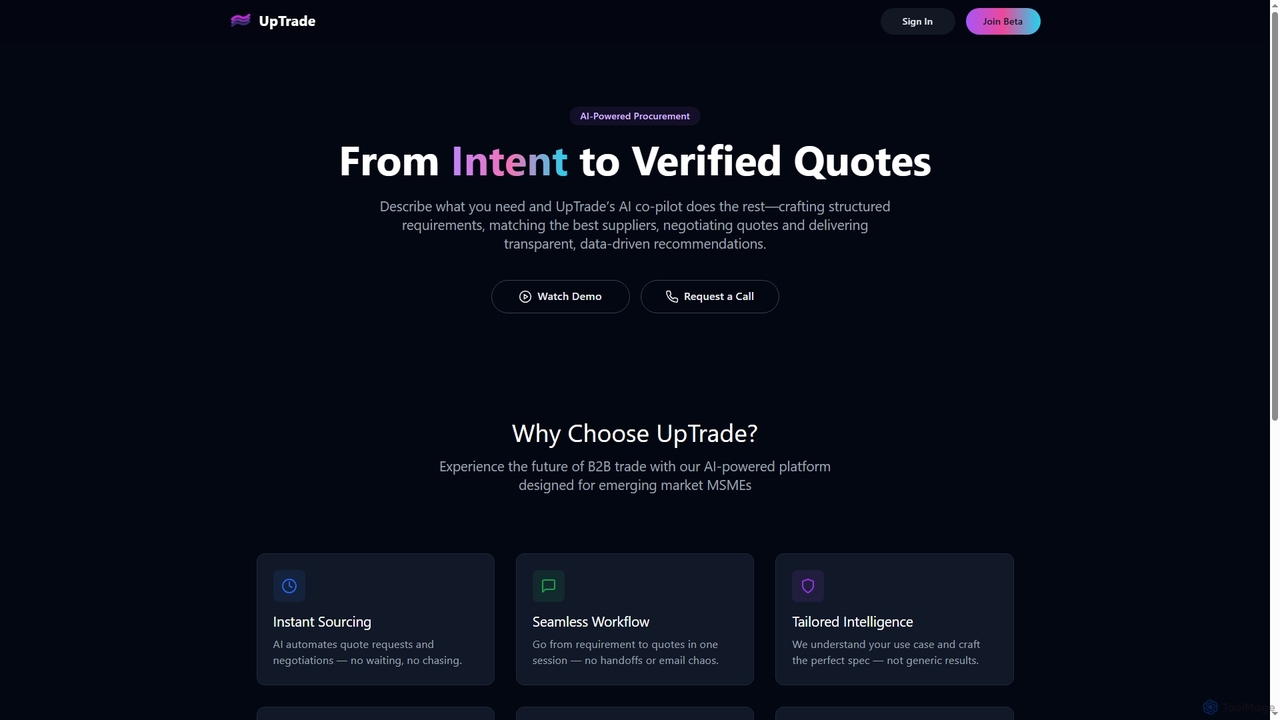
UpTrade is an AI-powered B2B procurement platform designed for emerging market MSMEs. It automates the entire sourcing cycle, …

3.3K

About Vendor Management

AI Vendor Management tools are specialized platforms that use artificial intelligence to automate and optimize the entire supplier lifecycle. These tools leverage machine learning and natural language processing to analyze supplier data, predict risks, and monitor performance in real-time. They help businesses move from reactive to proactive supplier relationship management, enabling data-driven decision-making. By automating routine tasks, these systems reduce administrative overhead and mitigate supply chain disruptions.

Core Features

  • Predictive Risk Assessment: Uses AI models to analyze data from various sources to forecast potential supplier risks, such as financial instability or operational failures.
  • Automated Performance Tracking: Continuously monitors supplier performance against key performance indicators (KPIs) and service-level agreements (SLAs), providing objective scoring.
  • Intelligent Contract Analysis: Employs Natural Language Processing (NLP) to extract key terms, obligations, and renewal dates from contracts, automating compliance checks.
  • Automated Onboarding: Streamlines the process of vetting and onboarding new suppliers by automating data collection, verification, and compliance checks.
  • Spend Analytics and Optimization: Analyzes procurement data to identify spending patterns, detect anomalies, and suggest opportunities for cost savings.

Use Cases

AI Vendor Management tools are crucial for industries with complex supply chains like manufacturing, retail, and technology. Procurement managers, supply chain directors, and compliance officers use them to manage large supplier portfolios, ensure regulatory adherence, and maintain operational resilience. For instance, a global electronics manufacturer can use these tools to monitor thousands of component suppliers for potential disruptions.

How to Choose

When selecting an AI Vendor Management tool, consider its integration capabilities with your existing ERP and financial systems. Evaluate the sophistication of its AI models for risk prediction and the level of customization available. Assess the depth of its analytics and reporting features. Finally, ensure the platform is scalable to support your company's growth and the increasing complexity of your supplier network.

Vendor ManagementUse Cases

1

Proactive Supply Chain Risk Mitigation

A global manufacturing firm relies on a complex network of international suppliers. A supply chain manager uses an AI vendor management tool to continuously monitor geopolitical news, financial reports, and shipping data related to their key suppliers. The AI flags a tier-1 supplier showing signs of financial distress and predicts a 70% chance of production disruption within the next quarter. This early warning allows the manager to activate a pre-vetted alternative supplier, preventing a costly production halt and ensuring on-time delivery of final products.

2

Automating Supplier Performance Reviews

A large retail chain works with hundreds of suppliers for its diverse product range. Previously, quarterly performance reviews were a manual, time-consuming process prone to subjective bias. By implementing an AI vendor management system, the procurement team automates the collection of data on delivery times, product quality defect rates, and invoice accuracy. The system generates objective, data-backed performance scorecards for each supplier, highlighting top performers and identifying those needing improvement. This frees up the team to focus on strategic supplier development rather than data compilation.

3

Streamlining Vendor Onboarding and Compliance

A financial services firm must adhere to strict regulatory requirements when onboarding new vendors. The compliance team uses an AI tool to automate the entire process. When a new vendor is proposed, the system automatically sends out required forms, uses OCR to extract information from submitted documents, and runs background checks against global compliance and sanctions lists. The AI verifies tax information and insurance certificates, reducing the onboarding cycle from weeks to just a few days while creating a complete, auditable trail for regulatory purposes.

4

Optimizing Procurement Spend with AI Analytics

A fast-growing tech company's procurement spend has become increasingly complex. The CFO uses an AI vendor management platform to analyze spending across all departments. The AI identifies several instances of different teams paying vastly different rates for the same software license from the same vendor. It also flags redundant subscriptions and suggests consolidating purchases under an enterprise agreement. Armed with this data, the CFO's office renegotiates contracts and implements a centralized procurement policy, resulting in a 15% reduction in software spending within six months.

5

Ensuring Contractual Compliance with NLP

A large enterprise manages thousands of active vendor contracts. The legal and procurement teams use an AI tool with Natural Language Processing (NLP) capabilities to digitize and analyze this entire portfolio. The system automatically extracts and tracks key data points like renewal dates, pricing terms, and service-level agreements (SLAs). It sends automated alerts for upcoming contract expirations and flags any instances where a vendor's performance, as tracked by the system, fails to meet their contractual SLA obligations. This proactive approach prevents missed renewals and ensures the company receives the service levels it pays for.

6

Identifying and Developing Strategic Suppliers

An operations director wants to build a more resilient and innovative supply chain. They use an AI vendor management platform to analyze performance, quality, and collaboration data across their entire supplier base. The AI identifies a small group of suppliers who consistently exceed performance targets and actively contribute to product improvement suggestions. Based on this insight, the director initiates a strategic partnership program with these high-potential suppliers, offering them longer-term contracts and co-investment in new technologies. This fosters stronger relationships and drives innovation throughout the supply chain.

Vendor ManagementFrequently Asked Questions