
Backend Best in category 1 results Backend As A Service AI Tool

Popular AI tools in the Backend As A Service field of Backend include SurrealDB, etc., helping you quickly improve efficiency.

SurrealDB

SurrealDB

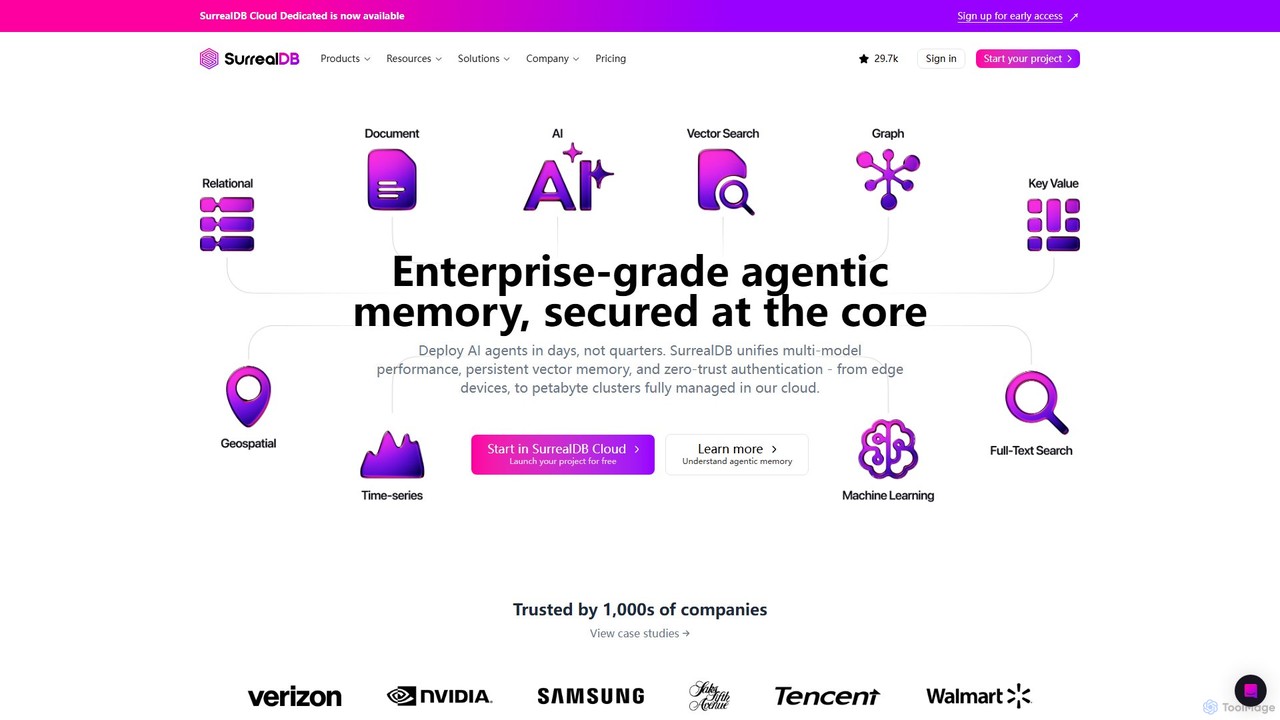
SurrealDB is a next-generation, multi-model cloud database designed for modern applications. It simplifies backend development by unifying document, …

116.9K

About Backend As A Service

Backend as a Service (BaaS) are cloud-based platforms that provide pre-built backend functionalities, abstracting away server-side infrastructure management for developers. These tools offer ready-to-use services like user authentication, database management, and cloud storage, enabling developers to focus primarily on frontend development and user experience. By handling the complexities of server operations, BaaS accelerates development cycles, reduces operational overhead, and simplifies scaling for various applications.

Core Features

  • User Authentication & Authorization: Manages user sign-up, login, password recovery, and access control for applications.
  • Database Management: Provides managed NoSQL or SQL databases for storing and retrieving application data without server setup.
  • Cloud Storage: Offers scalable storage solutions for files, media, and other application assets.
  • Push Notifications: Enables sending real-time notifications to mobile and web application users.
  • Serverless Functions: Allows execution of custom backend logic without provisioning or managing servers.

Applicable Scenarios

BaaS platforms are ideal for mobile and web application development teams seeking to rapidly build and deploy applications without investing heavily in backend infrastructure. Startups can leverage BaaS for quick prototyping and market entry, while small to medium-sized businesses benefit from reduced operational costs and simplified scaling as their user base grows. It's also highly effective for IoT applications requiring robust data handling and real-time capabilities.

How to Choose

When selecting a BaaS provider, evaluate its feature set against your application's specific needs, including database types, authentication methods, and API capabilities. Consider the platform's scalability and reliability to ensure it can handle future growth. Assess the pricing model for transparency and cost-effectiveness, and examine the ease of integration with your chosen frontend frameworks and existing tools. Finally, review vendor lock-in implications and the availability of community support or documentation.

Backend As A ServiceUse Cases

1

Accelerate Mobile App Development with Pre-built Backends

Mobile app developers can use BaaS to quickly integrate essential features like user login, data storage, and push notifications without writing server-side code. This allows them to launch MVPs faster, gather user feedback, and iterate on the frontend, significantly reducing time-to-market for new applications.

2

Streamline Web Application Prototyping and Testing

For web development teams, BaaS provides a robust and scalable backend foundation for rapid prototyping. Developers can connect their frontend directly to BaaS services for user management, real-time data synchronization, and file storage, enabling them to test concepts and validate user interfaces efficiently before committing to full-scale backend development.

3

Manage Data from IoT Devices and Sensors

IoT solution architects can leverage BaaS for collecting, storing, and processing data from numerous connected devices. BaaS offers scalable databases and real-time capabilities to handle high volumes of sensor data, enabling immediate insights and triggering automated actions, simplifying the backend infrastructure for complex IoT ecosystems.

4

Provide a Unified Backend for Cross-Platform Apps

Teams building applications for multiple platforms (iOS, Android, Web) can utilize BaaS to maintain a single, consistent backend. This eliminates the need to develop and manage separate backend services for each platform, ensuring data consistency, simplifying API management, and reducing development effort across the entire application suite.

5

Implement Essential Backend Services for Games

Game developers can integrate BaaS for features like player authentication, leaderboard management, cloud save functionality, and in-game purchases. BaaS handles the server infrastructure, allowing game studios to focus on core gameplay mechanics and user experience, while ensuring a scalable and reliable backend for their games.

6

Build Real-time Chat and Collaboration Features

Developers creating applications with real-time communication needs, such as chat apps or collaborative tools, can use BaaS for its real-time database and messaging capabilities. This enables instant message delivery, presence detection, and live data synchronization, providing a seamless and interactive user experience without complex server setup.

Backend As A ServiceFrequently Asked Questions