
ToolMage
Sign in

Best 1 Cost Management AI tools for Budgeting

Popular Cost Management AI tools in Budgeting include Storiara, helping you work more efficiently.

Storiara
Freemium

Storiara

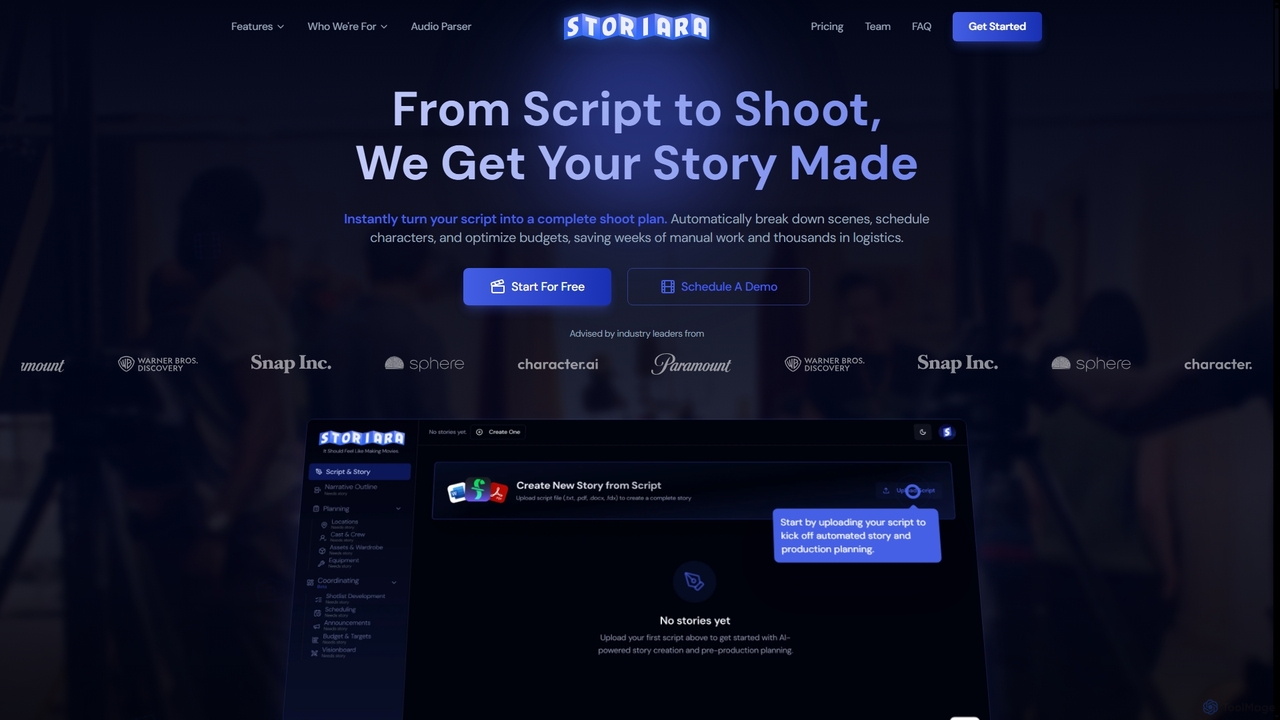
Storiara is an AI-powered production platform that transforms scripts into complete shoot plans, automating pre-production tasks like scheduling, budgeting, storyboarding, and call sheet generation. It helps filmmakers save weeks of manual work and thousands in logistics, getting stories made faster and more efficiently.

Cost Management
Visits 6.5KFavorites 135Likes 127

About Cost Management

Cost Management tools are AI-powered solutions designed to continuously monitor, analyze, and optimize an organization's expenditures. Leveraging advanced algorithms, these tools identify spending patterns, detect anomalies, and provide actionable insights to reduce operational costs and improve financial efficiency. They play a crucial role within the broader budgeting framework by ensuring actual spending aligns with planned budgets and identifying areas for savings.

Core Features

  • Real-time Expense Tracking: Automatically monitors and categorizes expenditures across various accounts and departments.
  • Anomaly Detection: Uses AI to flag unusual spending patterns or potential fraud, alerting users to deviations.
  • Cost Forecasting & Prediction: Predicts future spending based on historical data and market trends, aiding proactive planning.
  • Optimization Recommendations: Suggests strategies for cost reduction, such as identifying underutilized resources or negotiating better vendor terms.
  • Budget Variance Analysis: Compares actual spending against allocated budgets, highlighting discrepancies and their root causes.

Use Cases

Businesses across various sectors utilize Cost Management tools to gain granular visibility into their financial outflows. For instance, a SaaS company might use them to track cloud infrastructure costs, identifying idle resources or inefficient configurations. Manufacturing firms can monitor raw material procurement and production overheads to optimize supply chain spending.

How to Choose

When selecting an AI Cost Management tool, consider its integration capabilities with existing financial systems (ERP, accounting software) and the level of automation offered for expense categorization and reporting. Evaluate the accuracy of its forecasting models and anomaly detection features, as well as the granularity of insights provided. Scalability to accommodate growing data volumes and user-friendly dashboards for clear visualization are also critical.

Cost Management use cases

1

Optimizing Cloud Infrastructure Spend

For IT departments and DevOps teams, managing cloud costs is critical. AI Cost Management tools automatically analyze cloud resource usage (e.g., AWS, Azure, GCP), identify idle instances, over-provisioned services, and inefficient configurations. This allows teams to right-size resources, implement auto-scaling policies, and leverage spot instances, leading to significant savings on monthly cloud bills without impacting performance.

2

Detecting Financial Fraud and Anomalies

Finance teams in large enterprises face the challenge of monitoring vast transaction volumes for suspicious activity. AI-powered Cost Management solutions continuously analyze expense data, flagging unusual spending patterns, duplicate invoices, or out-of-policy purchases that human review might miss. This proactive detection helps prevent financial losses, ensures compliance, and strengthens internal controls.

3

Managing SaaS Subscriptions and Licenses

Many modern businesses accumulate numerous SaaS subscriptions, often leading to redundant or underutilized licenses. Cost Management tools track all active subscriptions, their usage rates, and renewal dates. They identify unused licenses or overlapping functionalities, enabling businesses to consolidate services, negotiate better terms, and eliminate unnecessary recurring expenses.

4

Streamlining Project Cost Tracking

Project managers need precise control over project budgets to ensure profitability. AI Cost Management tools integrate with project management software to track labor hours, material costs, and vendor expenses in real-time against project milestones. They provide alerts when spending approaches budget limits and offer insights into cost overruns, allowing for timely adjustments and better resource allocation.

5

Optimizing Marketing Campaign Budgets

Marketing teams invest heavily in various channels, making budget optimization crucial. These tools analyze spending across digital ads, content creation, and agency fees, correlating expenses with campaign performance metrics. AI can identify underperforming channels or campaigns, recommend budget reallocation to maximize ROI, and forecast future campaign costs more accurately.

6

Negotiating Vendor Contracts and Procurement

Procurement departments can leverage AI Cost Management for strategic sourcing. The tools analyze historical purchasing data, vendor performance, and market prices to identify opportunities for bulk discounts, better payment terms, or alternative suppliers. They provide data-driven insights to strengthen negotiation positions, ensuring the best value for goods and services.

Cost Management FAQ

What are AI Cost Management tools?

AI Cost Management tools are software solutions that use artificial intelligence to automate the tracking, analysis, and optimization of an organization's expenses. They go beyond basic budgeting by providing real-time insights, detecting anomalies, and offering data-driven recommendations to reduce spending and improve financial health. Their core purpose is to ensure efficient resource utilization and maximize cost savings.

How do AI Cost Management tools differ from traditional budgeting software?

Traditional budgeting software primarily focuses on planning and allocating funds, often requiring manual data input and periodic review. AI Cost Management tools, while supporting budgeting, emphasize continuous monitoring, automated expense categorization, and predictive analytics. They use AI to detect subtle spending anomalies, forecast future costs with higher accuracy, and proactively suggest optimization strategies, offering a more dynamic and intelligent approach to financial control.

What are the key benefits of using AI for cost management?

The primary benefits include enhanced financial visibility through real-time data, significant time savings from automated expense processing, and improved accuracy in forecasting and anomaly detection. AI tools can uncover hidden cost-saving opportunities, prevent financial leakage due to fraud or inefficiencies, and provide actionable insights for strategic decision-making, ultimately leading to a healthier bottom line.

Who can benefit most from AI Cost Management tools?

Businesses of all sizes, particularly those with complex operations, multiple departments, or significant recurring expenses, can benefit. This includes finance departments, procurement teams, IT managers (for cloud costs), project managers, and even small business owners looking to gain better control over their spending. Any entity aiming to optimize resource allocation and reduce operational costs will find these tools valuable.

What features should I look for in an AI Cost Management solution?

Key features to prioritize include robust integration capabilities with existing financial systems, advanced AI for anomaly detection and predictive analytics, and customizable reporting dashboards for clear visualization of spending patterns. Look for automated expense categorization, multi-currency support, and scalability to handle growing data. User-friendliness and strong security protocols are also essential.