SparkReceipt
SparkReceipt is an AI-powered receipt scanner and expense tracker designed for entrepreneurs, freelancers, and small businesses. It uses …
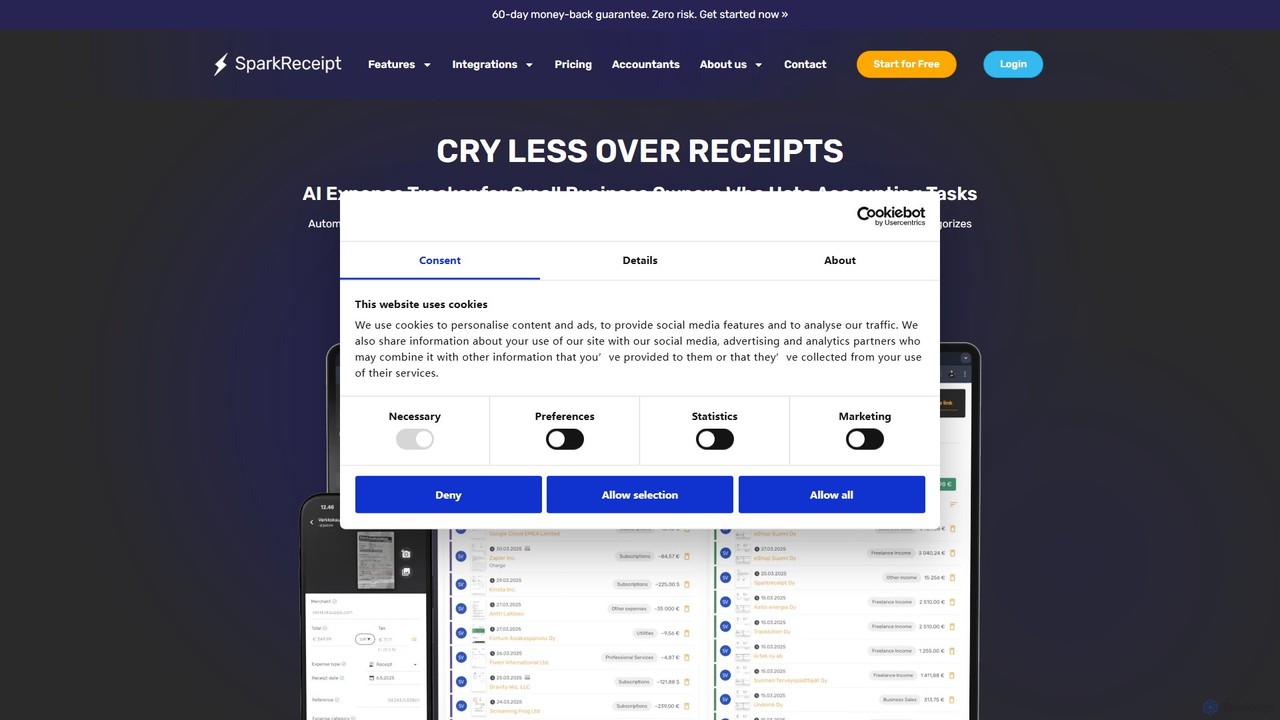
SparkReceipt is an AI-powered receipt scanner and expense tracker designed for entrepreneurs, freelancers, and small businesses. It uses advanced OCR technology to automatically extract data from receipts, simplifying expense management. With features like multi-currency support and secure cloud storage, it helps users digitize their financial records, save time, and stay organized for tax season.
About Accounting
AI Accounting tools are specialized software solutions that leverage artificial intelligence to automate and streamline financial processes. These tools utilize machine learning algorithms to process transactions, reconcile accounts, and generate reports, significantly enhancing accuracy and efficiency in financial management. They transform traditional bookkeeping and financial analysis by reducing manual effort and providing deeper insights for businesses of all sizes.
Core Features
- Automated Data Entry: Intelligently extracts and categorizes financial data from invoices, receipts, and bank statements.
- Intelligent Reconciliation: Automatically matches transactions across bank accounts, ledgers, and payment systems, identifying discrepancies.
- Predictive Analytics: Analyzes historical financial data to forecast cash flow, identify trends, and predict future financial performance.
- Real-time Reporting: Generates up-to-date financial statements, dashboards, and custom reports for immediate insights.
- Compliance and Audit Support: Helps ensure adherence to financial regulations and simplifies the preparation for audits through organized data.
Use Cases
AI Accounting tools are invaluable for small business owners managing daily expenses, large enterprises automating month-end close procedures, and accounting firms handling multiple client ledgers. They are also used by financial departments to enhance budgeting, forecasting, and strategic financial planning.
How to Choose
When selecting an AI Accounting tool, consider its integration capabilities with existing ERP or CRM systems, the level of automation offered for specific tasks, and its compliance with local financial regulations. Evaluate data security measures, scalability to accommodate business growth, and the intuitiveness of the user interface for your team.
AccountingUse Cases
Automating Invoice Processing and Expense Tracking
For small business owners and finance departments, AI accounting tools can automatically extract data from incoming invoices and receipts, categorize expenses, and initiate payment workflows. This eliminates manual data entry errors, significantly reduces processing time, and ensures accurate record-keeping, allowing teams to focus on strategic financial analysis rather than repetitive tasks.
Streamlining Bank and Credit Card Reconciliation
Accountants and bookkeepers often spend hours manually matching transactions between bank statements, credit card statements, and internal ledgers. AI accounting tools can automate this reconciliation process by intelligently identifying and matching corresponding entries, flagging discrepancies for human review. This drastically reduces the time spent on reconciliation, improves accuracy, and accelerates month-end closing procedures.
Generating Predictive Financial Forecasts
Financial managers and business strategists can leverage AI accounting tools to move beyond historical reporting. By analyzing past financial data, market trends, and even external economic indicators, these tools can generate highly accurate cash flow forecasts, revenue predictions, and budget projections. This enables proactive decision-making, better resource allocation, and more robust strategic planning for future growth.
Enhancing Audit Preparedness and Compliance
For businesses facing regular audits or strict regulatory requirements, AI accounting tools provide a structured and transparent financial record. They can automatically flag unusual transactions, maintain an immutable audit trail, and ensure data integrity. This significantly reduces the time and effort required for audit preparation, minimizes compliance risks, and provides peace of mind for financial controllers and auditors.
Optimizing Cash Flow Management
Business owners and financial analysts can utilize AI accounting tools to gain real-time visibility into their cash flow. By integrating with bank accounts and payment systems, these tools provide up-to-the-minute insights on incoming and outgoing funds. This allows for better liquidity management, identification of potential cash shortages or surpluses, and more informed decisions regarding investments or debt management.
Automating Tax Preparation Data Gathering
Tax professionals and businesses can significantly reduce the burden of tax season with AI accounting tools. These tools can automatically categorize transactions, generate reports required for tax filings (e.g., profit and loss statements, balance sheets), and even identify potential deductions or credits based on financial data. This streamlines the data gathering process, minimizes errors, and ensures timely and accurate tax submissions.