AiToolHunt
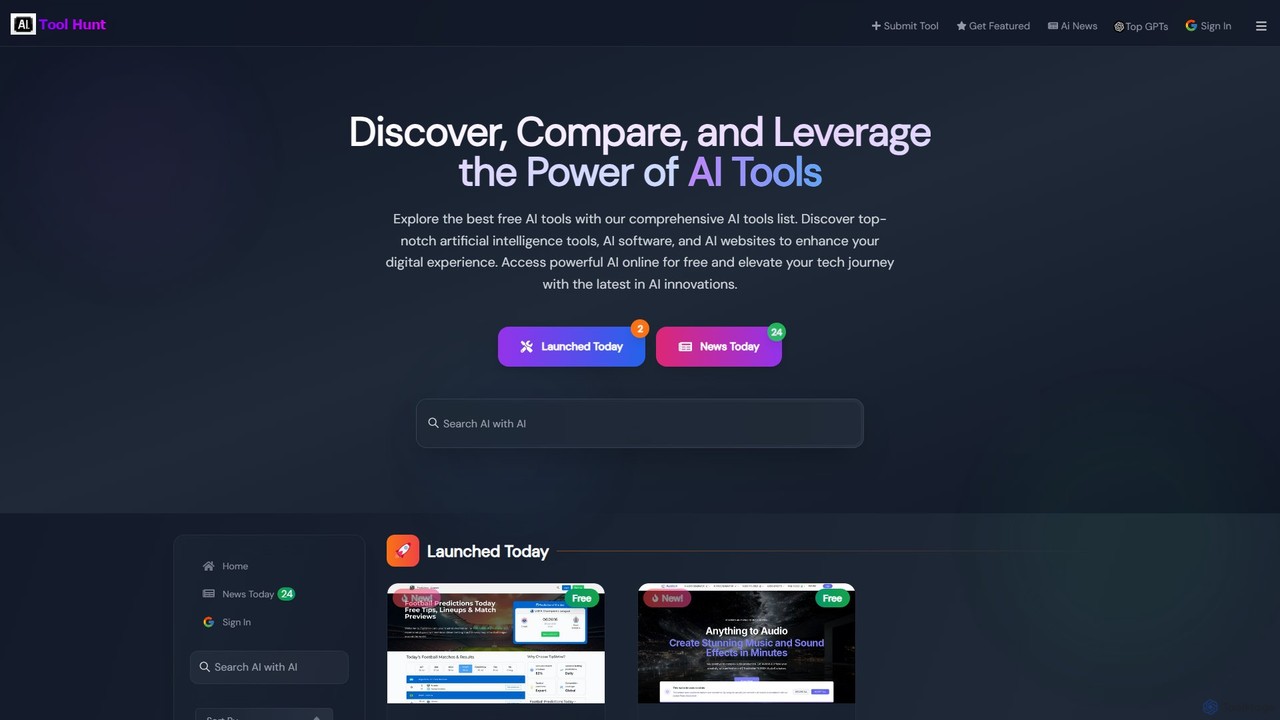
AiToolHunt is a comprehensive directory and discovery platform for AI tools, offering a curated list of over 18,000 …
AiToolHunt is a comprehensive directory and discovery platform for AI tools, offering a curated list of over 18,000 AI software, websites, and applications. It enables users to explore, compare, and find the best free and premium AI tools across various categories, from productivity and content creation to business and marketing. The platform also features daily AI news and highlights newly launched tools, making it a central hub for AI enthusiasts and professionals.
About Aggregator
AI Aggregators are tools that consolidate data, content, or services from multiple sources into a single, unified interface. They leverage APIs and AI-powered data processing to fetch, normalize, and present information from disparate platforms. This provides businesses with a comprehensive overview, simplifying monitoring, comparison, and management tasks without needing to switch between numerous applications. The core value lies in transforming scattered information into centralized, actionable intelligence.
Core Features
- Multi-Source Integration: Connects to a wide range of platforms, APIs, and data feeds to pull information automatically.
- Unified Dashboard: Presents all aggregated data in a single, customizable interface for easy viewing and analysis.
- Data Normalization: Standardizes information from different sources into a consistent format for direct comparison.
- Centralized Management: Enables users to interact with or manage multiple services from one central hub.
- AI-Powered Filtering & Summarization: Uses AI to filter out noise, identify trends, and summarize large volumes of information.
Use Cases
AI Aggregators are widely used in market intelligence, social media management, and software development. Market analysts use them to track competitor activities and industry news. Social media managers monitor brand mentions across all platforms. Developers utilize AI model aggregators to access various large language models through a single API, streamlining development and cost management.
How to Choose
When selecting an AI Aggregator, first evaluate its source coverage to ensure it supports the platforms you need. Assess the depth of integration—whether it's for viewing only or allows for interaction. Consider the customization options for dashboards and alerts. Finally, analyze the pricing model, which may be based on the number of sources, data volume, or user seats, to find a plan that aligns with your business requirements.

AggregatorUse Cases
Market Intelligence and Competitor Monitoring
A market analyst for a tech startup uses an AI aggregator to monitor the digital landscape. The tool is configured to track news outlets, tech blogs, social media platforms, and press release wires for mentions of key competitors and industry keywords. Every morning, the analyst reviews a unified dashboard that summarizes new articles, sentiment trends, and competitor product launches. This allows them to quickly compile a daily intelligence report for the leadership team, saving hours of manual searching and ensuring no critical information is missed.
Unified Social Media Management
A social media manager for a retail brand is responsible for five different social channels. Instead of logging into each platform separately, they use an aggregator tool. This tool provides a single stream of all mentions, comments, and direct messages. They can reply, like, and retweet directly from the aggregator's interface. It also allows them to schedule posts across all channels from one content calendar, ensuring a consistent brand voice and saving significant time in daily community management and content distribution.
Centralized AI Model Access for Developers
A development team is building an application that requires natural language processing. Instead of integrating with multiple AI provider APIs (like OpenAI, Anthropic, Google) separately, they use an AI model aggregator. This provides a single API endpoint to access various models. The team can easily switch between models like GPT-4 and Claude 3 for testing or cost optimization without changing their application's code. The aggregator handles the authentication and request formatting for each underlying service, significantly simplifying the development and maintenance workflow.
Financial Data Aggregation for Investment Analysis
An investment analyst at a hedge fund needs to track market data from multiple sources, including stock exchanges, financial news wires, and regulatory filings. Using a financial data aggregator, they create a custom dashboard that pulls real-time stock prices, relevant news articles, and SEC filings for their portfolio companies. The aggregator normalizes the data, allowing for easy comparison and trend analysis. This centralized view enables the analyst to react faster to market changes and make more informed investment decisions without constantly switching between different data terminals and websites.
Content Curation for Niche Publications
A content curator for a weekly newsletter on renewable energy uses an AI aggregator to discover relevant content. They set up feeds from industry journals, university research portals, and specific hashtags on social media. The aggregator's AI features help by filtering out promotional content and summarizing long research papers into key bullet points. This allows the curator to quickly scan dozens of sources each day, identify the most impactful stories, and draft the newsletter in a fraction of the time it would take to browse each source individually.
E-commerce Product and Price Monitoring
An e-commerce manager for a consumer electronics brand uses an aggregator to monitor their products across multiple online marketplaces like Amazon, Best Buy, and Walmart. The tool aggregates product listings, customer reviews, and pricing information into a single dashboard. This allows the manager to quickly spot unauthorized sellers, track competitive pricing strategies, and monitor customer sentiment across all channels. By receiving automated alerts for significant price drops or negative review spikes, they can react swiftly to protect brand reputation and maintain pricing integrity.