ChatGiraffe
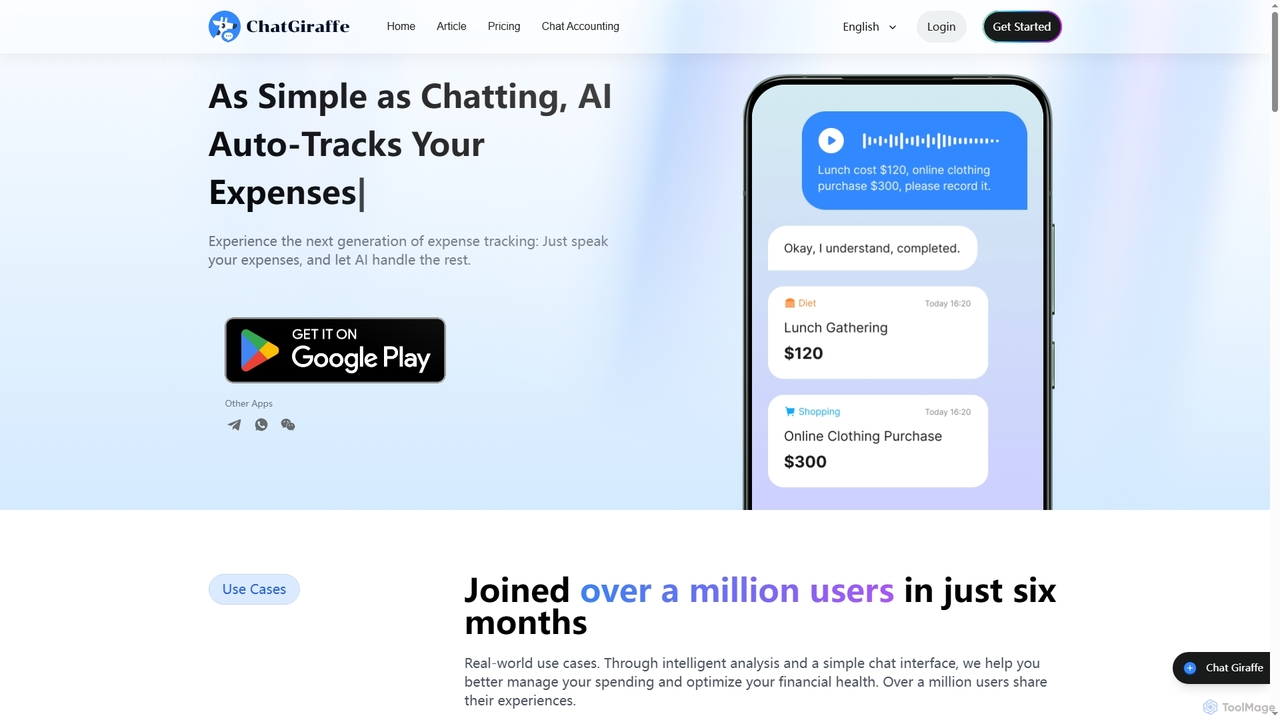
ChatGiraffe is an AI-powered expense tracker and bookkeeping tool designed to simplify financial management. It helps individuals and …
ChatGiraffe is an AI-powered expense tracker and bookkeeping tool designed to simplify financial management. It helps individuals and businesses gain proficiency in managing their finances by leveraging artificial intelligence for smarter expense tracking and financial oversight.
KeeperTax
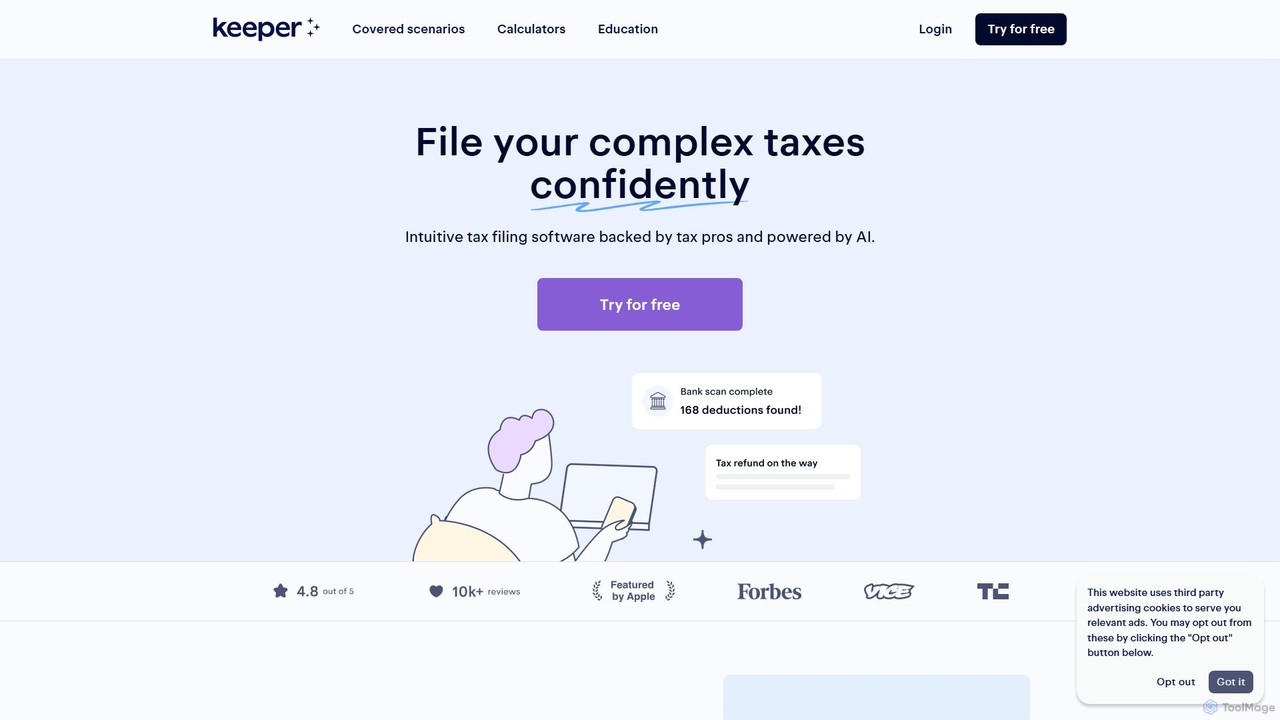
KeeperTax is an AI-powered tax filing platform designed for freelancers, gig workers, and creators. It automatically scans your …
KeeperTax is an AI-powered tax filing platform designed for freelancers, gig workers, and creators. It automatically scans your bank and credit card statements to discover tax-deductible expenses, ensuring you don't miss any write-offs. Every tax return is reviewed and signed by a tax professional, combining AI efficiency with human expertise for maximum refunds and audit protection.
AI Receipt Tracker
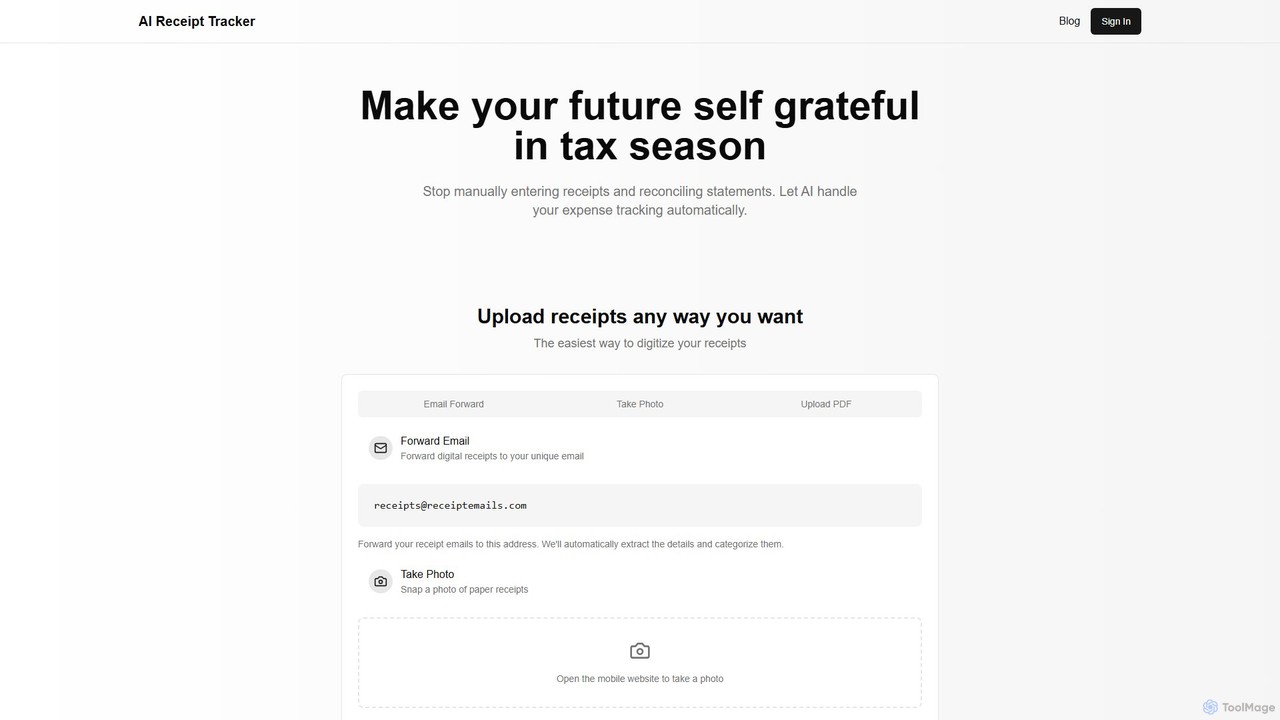
AI Receipt Tracker automates your expense management by intelligently scanning and categorizing receipts. Simply forward emails, snap photos, …
AI Receipt Tracker automates your expense management by intelligently scanning and categorizing receipts. Simply forward emails, snap photos, or upload PDFs to digitize your expenses. It provides instant financial insights, tracks spending patterns, and matches receipts to bank statements, making tax season and bookkeeping effortless for freelancers, small businesses, and individuals.
About Bookkeeping
AI Bookkeeping tools are a class of software that uses artificial intelligence to automate the recording, classification, and management of financial transactions. These tools leverage technologies like Optical Character Recognition (OCR) to read invoices and receipts, and machine learning to intelligently categorize expenses without manual input. Their primary value lies in drastically reducing administrative work, minimizing human error, and providing businesses with real-time, accurate financial insights to make informed decisions.
Core Features
- Automated Data Entry: Utilizes OCR to automatically extract data from receipts, bills, and invoices, eliminating manual typing.
- Smart Categorization: Employs machine learning to learn from user behavior and automatically assign transactions to the correct accounting categories.
- Bank Reconciliation: Automatically syncs with bank accounts and credit cards to match transactions with recorded entries, simplifying reconciliation.
- Real-time Reporting: Generates up-to-the-minute financial statements, such as profit and loss, balance sheets, and cash flow reports.
- Invoice Management: Automates the creation, sending, and tracking of customer invoices, including payment reminders.
Use Cases
These tools are particularly beneficial for small to medium-sized businesses, freelancers, and e-commerce entrepreneurs who need to manage their finances efficiently without a dedicated accounting team. Accounting firms also use them to streamline bookkeeping services for multiple clients, improving accuracy and productivity.
How to Choose
When selecting an AI Bookkeeping tool, consider its integration capabilities with your bank, payroll, and e-commerce platforms. Evaluate the accuracy of its OCR technology, the intelligence of its categorization engine, and the customizability of its financial reports. Also, assess the pricing model to ensure it aligns with your business's transaction volume and growth.
BookkeepingUse Cases
Automate Expense Tracking for Freelancers
A freelance graphic designer uses an AI bookkeeping tool to manage business expenses. By simply taking photos of receipts for software subscriptions, office supplies, and client lunches with their smartphone, the tool's OCR technology instantly captures the vendor, date, and amount. The AI then correctly categorizes each expense, making it easy to track deductions and generate a comprehensive report for tax filing, saving hours of manual spreadsheet work each month.
Streamline Invoicing and Payments for Agencies
A small digital marketing agency automates its billing process. The tool is set up to generate and email recurring monthly invoices to all clients automatically. It integrates with payment gateways, allowing clients to pay online directly. The system tracks which invoices are paid, pending, or overdue, and sends automated, polite payment reminders, significantly improving cash flow and reducing the time spent on accounts receivable management.
Real-time Financial Visibility for E-commerce Stores
An online store owner connects their Shopify platform and business bank account to an AI bookkeeping tool. The software automatically imports all sales data, transaction fees, shipping costs, and ad spend. It provides a real-time dashboard showing daily revenue, expenses, and net profit. This allows the owner to monitor financial health instantly and make data-driven decisions on pricing and marketing without waiting for month-end reports.
Simplify Bank Reconciliation for Startups
A tech startup with multiple bank accounts and credit cards uses an AI tool to simplify its monthly closing process. The tool securely connects to their financial institutions and imports all transactions daily. Its matching algorithm automatically reconciles 95% of entries against issued invoices and recorded expenses. The finance manager only needs to review a few exceptions, reducing the bank reconciliation process from a full day to under an hour.
Efficient Accounts Payable Management
A local restaurant manages its supplier invoices by forwarding them to a dedicated email address provided by their AI bookkeeping tool. The AI automatically parses the PDF or image, extracting the vendor name, invoice number, due date, and amount. It then creates a bill entry in the system and adds it to a payment schedule, sending alerts when due dates are approaching to prevent late fees and maintain good vendor relationships.
Scalable Bookkeeping for Accounting Firms
An accounting firm provides bookkeeping services to 50 small business clients. By using a multi-tenant AI bookkeeping platform, each client's data is securely managed in a separate workspace. The firm's accountants can access a centralized dashboard to oversee all clients, automate data entry and categorization, and efficiently perform reconciliations. This allows the firm to serve more clients with higher accuracy and less manual effort, increasing profitability.